Loading... Please wait...
 USD



Blog
Recent Posts
Cost to Set a Loose Diamond in a Ring: What Affects the Price
Posted on
The setting fee is only part of the total. The cost to set a loose diamond into a ring depends on the setting style, metal, fit between the diamond and setting, and whether side stones or metalwork are involved.
If you're bringing an existing diamond or considering a new band, it’s reasonable to want a clear estimate before deciding. This guide explains what affects the price, how jewelers’ setting services and inclusions can differ, and how a custom-ring design affects the work and budget. You’ll see why a straightforward setting can cost less than adapting a ring to fit a stone, and which details matter when comparing options. The goal is to help you choose a setting that suits your diamond and budget without paying for unnecessary work.
Key Takeaways
- Separate the center-stone setting fee from the cost of the mounting, side stones, and any metalwork needed to make the diamond fit.
- Compare jeweler quotes by what they include, such as liability coverage, delivery, and additional materials, not just the headline fee.
- A custom ring’s cost depends on its design complexity, metal, and how the existing diamond fits the setting; a semi-mount can avoid some design work.
- Before choosing a loose natural diamond, review its actual magnified photographs, 360° video, and listing details to understand its appearance beyond the grading report.
Cost of setting an existing diamond in a new band
These figures describe different scopes, so separate the mounting, setting labor, and any fitting changes.
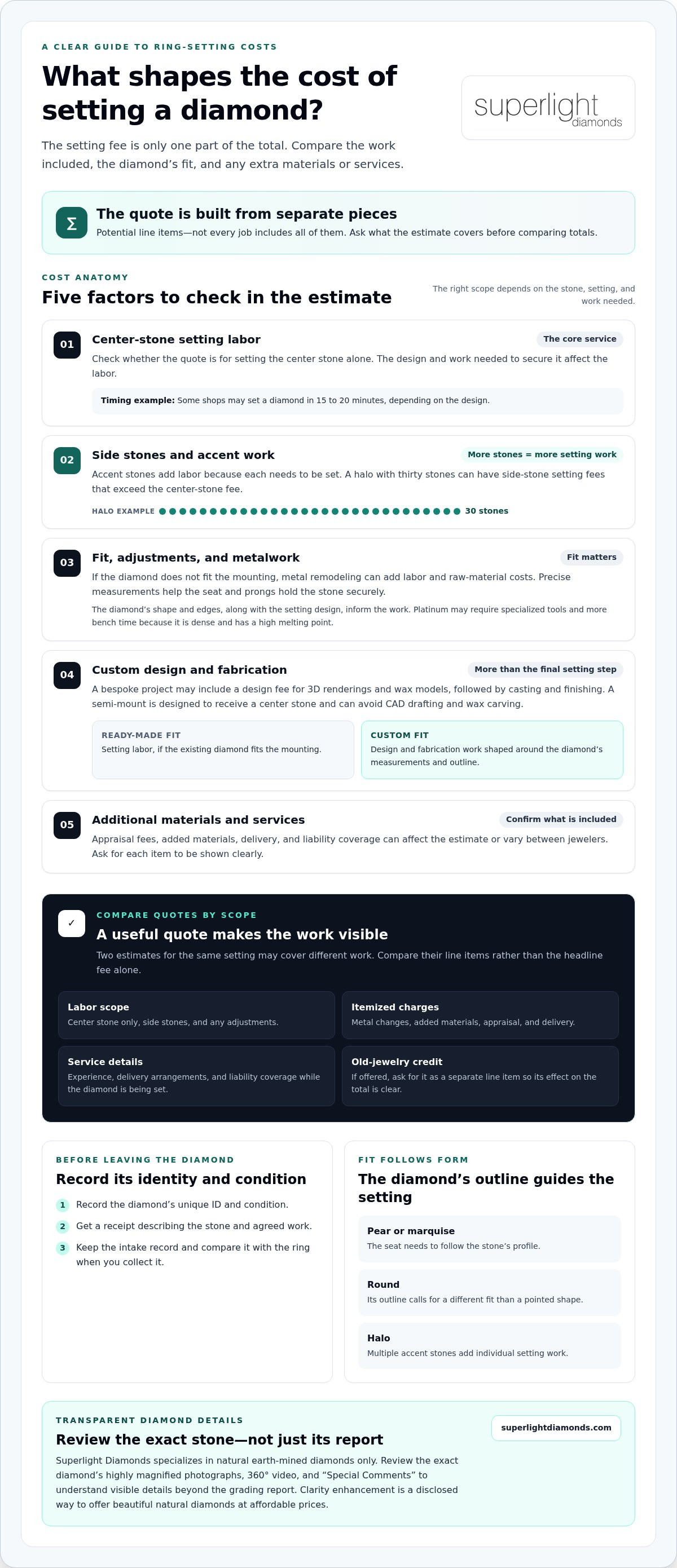
Accent stones add labor. A halo with thirty stones can have side-stone setting fees that exceed the center-stone fee. The design and work needed to secure the center stone also affect the total, not just its carat size.
Diamond hardness resists scratching but doesn’t prevent chipping. A pointed shape or exposed corner can be vulnerable to impact, while gemstones vary in toughness. The setter considers the stone’s shape, edges, and setting design when assessing risk. Platinum work may require specialized tools and more bench time because the metal is dense and has a high melting point.
Timing depends on design and required work. Some shops may set a diamond in 15 to 20 minutes, depending on the design. A mismatch between the diamond and setting can require metal remodeling, adding labor and raw-material costs. Appraisal fees or added materials can also affect the total.
Comparing jewelers and service inclusions
Compare written quotes by scope and included services, not just the setting fee. Before leaving a loose diamond, record its unique ID and condition, then get a receipt describing the stone and agreed work.
Comparing Quotes and Service Inclusions
Compare each jeweler’s quoted labor, experience, delivery, and liability coverage side by side. Two quotes can cover different work, even if they describe the same setting. Check whether the price covers setting the center stone alone or includes side stones and adjustments. Diamond insurance may not cover damage during mounting, so ask whether the jeweler’s service includes liability coverage.
Itemized Quote Details
An itemized quote separates setting labor, side stones, metal changes, added materials, appraisal, and delivery. This breakdown shows what each charge covers and makes estimates easier to compare. Check that the document identifies your jewelry, describes the agreed work, and states whether liability coverage applies while the diamond is being set. If the quote includes a credit for old jewelry, ask for it as a separate line item so its effect on the total is clear.
Keep a copy of the intake record and compare it with the ring when you collect it. The unique ID helps distinguish your diamond, while a written condition description records its state before work begins. These records give you and the jeweler a clear reference if questions arise about the completed setting.
Using customer-owned diamonds in a custom ring
A custom ring is designed around the diamond you already own, rather than a standard setting alone. Its dimensions and outline guide the design, fabrication, and final fit.
Setting a Customer-Provided Diamond
The cost to set a loose diamond into a ring depends on whether the stone fits a ready-made mounting or needs a custom setting. A customer-provided diamond must be measured so its seat and prongs can hold it securely. For a bespoke design, the diamond’s measurements inform the model before the ring is made. This distinction separates basic setting labor from design and fabrication work.
Custom Setting Cost Components
A bespoke design fee covers creating 3D renderings and wax models, while casting and finishing are later production stages. A semi-mount, a setting designed to receive a center stone, can reduce labor by avoiding CAD drafting and wax carving. These components explain why a custom project involves more than the final setting step.
Diamond and Setting Choices
The cost to set a loose diamond into a ring also reflects how closely the design must follow its shape and size. A pear or marquise outline calls for a seat shaped to its profile, while a round stone has a different outline. Halo designs add multiple accent stones, each requiring individual setting work. A simpler design with fewer details can reduce fabrication, while precise measurements help the setting accommodate the existing diamond.
Superlight Diamonds: Round Brilliant Diamonds
Superlight Diamonds offers natural earth-mined diamonds, including Round Brilliant Diamonds, for buyers comparing a loose stone with a future ring setting. Its online selection also includes Princess Cut, Cushion Cut, and Clarity Enhanced Diamonds, with clarity enhancement providing an affordable way to enjoy a beautiful natural diamond.
Before choosing a setting, match the diamond’s shape and measurements to the design you have in mind. Review the exact stone’s highly magnified photographs, 360° video, and “Special Comments” to understand visible details that a grading report may not show. These disclosures help you make a considered choice based on the diamond itself, not just its grading information.
Explore the diamond selection at Superlight Diamonds, or contact the team with questions.
Choose a Diamond That Fits Your Ring Plans
Your next step is to choose a diamond whose shape and proportions suit the ring you want. The cost to set a loose diamond into a ring is only one part of that decision; the stone’s appearance and fit also influence which setting works well. Superlight Diamonds specializes in natural earth-mined diamonds, including Round Brilliant, Princess Cut, and Clarity Enhanced Diamonds. Clarity enhancement is a way to offer beautiful natural diamonds at affordable prices, with the process disclosed clearly. Review the details of the specific diamond you’re considering and decide what best balances appearance, fit, and budget. For help exploring diamond options for your ring plans, contact Superlight Diamonds. A thoughtful choice can make your ring feel personal while keeping your priorities in focus.
Frequently Asked Questions
What is the average labor cost to set a diamond in an existing ring setting?
The final labor depends on the setting’s condition and the work required to secure the diamond. Replacing a loose center stone in an intact setting, for example, involves different work from repairing worn prongs or setting additional accent stones.
How do setting costs vary by metal, such as gold or platinum?
Platinum setting work can require specialized tools and more bench time because the metal is dense and has a high melting point. Gold work depends on the design and any adjustments needed to fit the stone. A jeweler’s quote should state whether metalwork is included, especially if the existing head or prongs need changes to hold the diamond securely.
Is it cheaper to reset a diamond in an existing ring or buy a new setting?
Resetting is generally less expensive when the current setting fits the diamond and remains structurally sound, because you avoid purchasing another mounting. A new setting may make more sense if the existing ring needs substantial repair or cannot accommodate the stone’s shape. Compare the total work involved, including repairs, resizing, and any new metal, rather than labor alone.
What extra fees may apply, such as resizing, prong work, or appraisal?
Additional charges can arise for ring resizing, repairing or replacing worn prongs, remodeling metal, and appraisal. For example, a ring that needs a larger head to hold a bigger center stone requires more than basic setting labor. Ask for each task and any added materials to appear as separate quote items, so the total reflects the actual work.
Can any jeweler set a loose diamond, or are there size and condition limits?
Not every setting can accommodate every diamond without adjustment. The stone’s measurements, shape, and condition must suit the mounting, and damaged or fragile edges can affect how it should be secured. A round diamond and a pear-shaped diamond need different seat shapes. The setting’s prongs and overall structure must also support the stone properly.