Loading... Please wait...
 USD



Recent Posts
EGL Diamond Certification and How It Applies to Enhanced Stones
Posted on
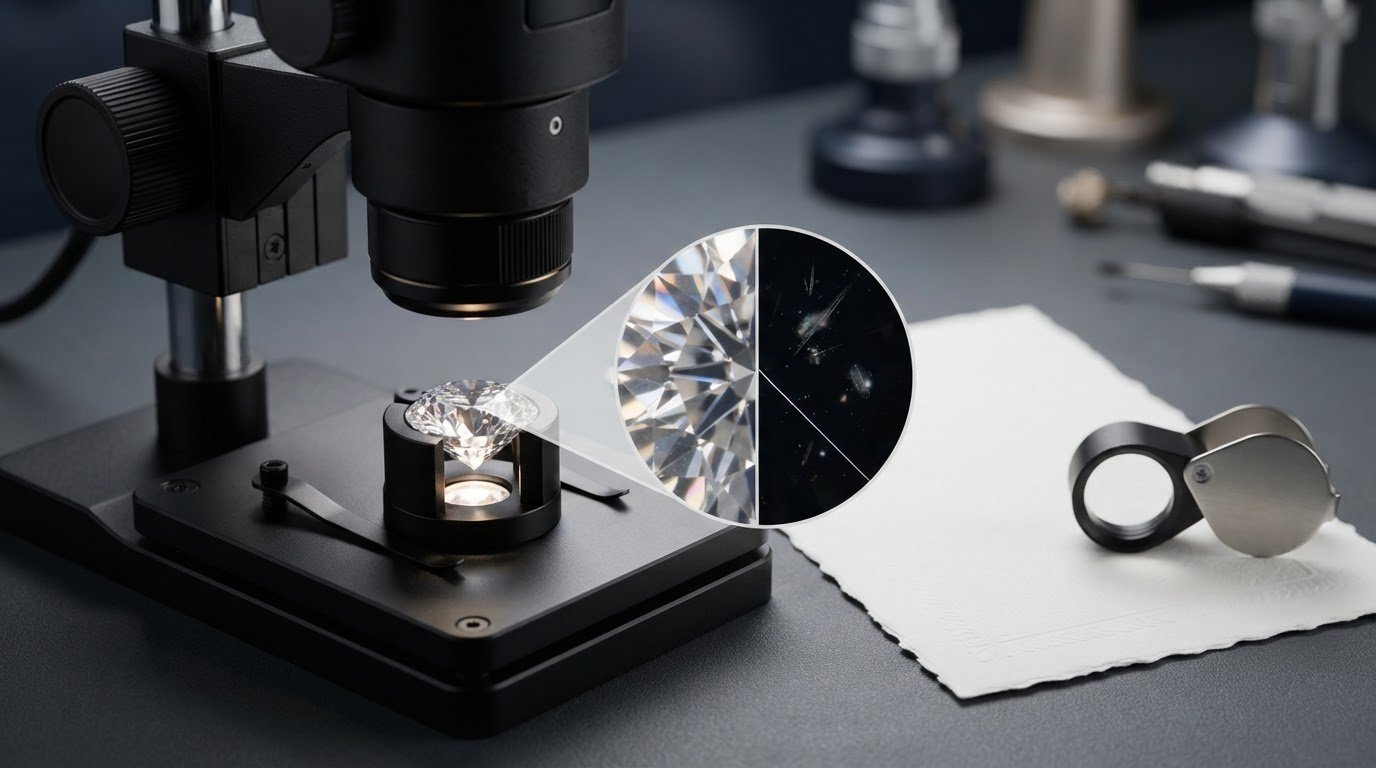
A clarity grade alone doesn’t tell the whole story. EGL certifies clarity-enhanced diamonds, while GIA does not, so EGL diamond certification standards for enhanced stones should be understood alongside the treatment. The report describes the diamond, but the treatment matters when interpreting its grade.
It’s reasonable to want a report you can rely on when comparing diamonds. This article explains what an EGL report can tell you, how clarity enhancement affects grading, and which details to examine when assessing a stone’s appearance.
You’ll also learn why the report is only part of the picture: magnified images and videos of the exact diamond can help you understand what its recorded grades mean in practice.
Key Takeaways
- Learn what a diamond report records, including its measurements and the characteristics used to describe its quality.
- Understand why clarity enhancement matters when reading a diamond’s clarity information and comparing stones.
- See how treatment disclosures help distinguish a diamond’s natural characteristics from features affected by enhancement.
- Use magnified photos and 360° videos of the exact diamond to add visual context to its report.
What is the EGL Diamond Certification?
An EGL report records a laboratory’s assessment of a diamond’s characteristics. Certification practices can vary, so an EGL report should be understood as a separate assessment of a diamond’s characteristics. For enhanced stones, interpret the grades alongside treatment details and the diamond’s appearance.
What an EGL Report Describes
A grading report describes assessed quality and identifying details, including carat weight, color, clarity, measurements, and proportions. This information helps you compare a documented stone with the diamond you’re considering. Cut assessment examines proportions, symmetry, and polish, which influence how the diamond returns light. A clarity diagram may map inclusions and blemishes.
EGL Grading History and Reputation
The first European Gemological Laboratory opened in 1973. EGL International became known for diamond reports, but its grading has faced criticism for inconsistent assessments. Similar grades from different laboratories may not describe identical appearances. Read the issuing laboratory’s assessment as one part of evaluating a stone, not as a universal description of its appearance.
EGL and GIA Grading Standards
EGL assesses color, clarity, and cut through characteristics such as color comparisons, clarity features, and cut proportions. Treatment is relevant when interpreting clarity grades for enhanced stones. Established in 1931, GIA is credited with standardizing the Four Cs, which many gem laboratories adopted. Hearts and Arrows reports describe visible optical symmetry and complement, rather than replace, cut information. Read EGL diamond certification standards for enhanced stones alongside report details.
Verifying EGL Report Details
Compare the report number, measurements, carat weight, shape, and clarity diagram with the diamond. A microscopic girdle inscription may include the report number, helping match the document to the stone. EGL USA reports state “Member of the EGL USA Group” and use certificate numbers preceded by US or CA. European EGL reports print the country of origin on the cover card.
Clarity-enhanced diamonds
Clarity enhancement can reduce the visibility of certain inclusions in a natural diamond. Knowing the treatment helps you interpret the report, compare appearance, and understand care considerations.
Clarity Enhancement Methods
Laser drilling and fracture filling address different visible clarity features. Laser drilling creates a narrow channel to reach an inclusion, while fracture filling places a glass-like material into a surface-reaching fracture to make it less noticeable. These treatments don’t change a diamond’s natural origin, but they can affect how clarity characteristics appear. The specific method matters because it influences what the report describes and how the stone should be handled.
Enhancement Disclosure on EGL Reports
EGL certifies clarity-enhanced diamonds, and the report should be read for treatment descriptions or comments alongside its clarity grade. Look for wording that identifies enhancement, then compare it with the clarity diagram and the diamond itself. A clarity grade describes the assessed appearance; it doesn’t explain every treatment detail by itself. For an enhanced stone, the report’s remarks help clarify what the grade represents.
There isn’t one fixed price difference between an enhanced diamond and an untreated diamond with a comparable appearance. Value depends on factors such as carat weight, color, cut, clarity, and the visibility of inclusions. Enhancement can make a natural diamond with visible inclusions more affordable while preserving its appeal.
Care depends on the treatment. Heat used during repairs or jewelry work can affect fracture filling, and harsh cleaning methods may also pose a risk to treated areas. Laser-drilled and fracture-filled diamonds have different care considerations, so let the treatment type guide cleaning and repair decisions. Don’t assume every cleaning, resizing, or recutting method is suitable for every enhanced stone.
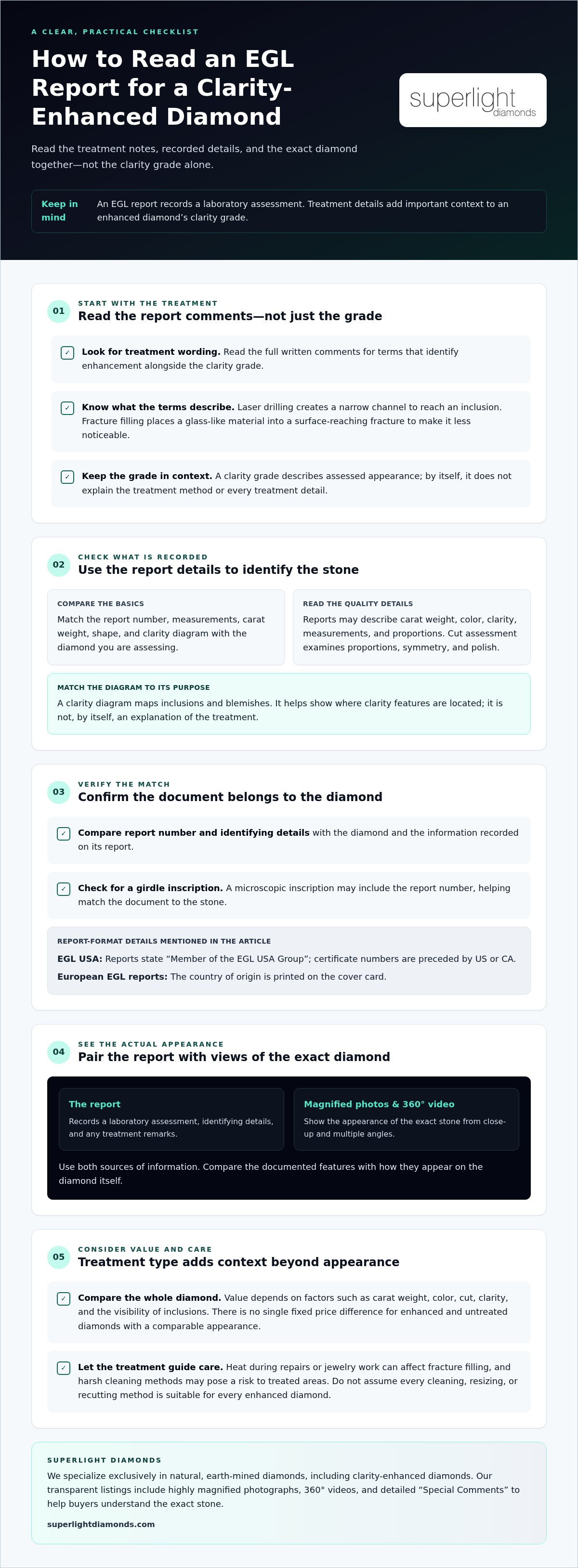
How does EGL identify laser-drilled, fracture-filled, or other enhanced diamonds on a report?
EGL reports assess diamonds, including clarity-enhanced stones. To understand a specific report, read its treatment remarks alongside the clarity grade and identifying details. A clarity grade describes the assessed clarity; by itself, it doesn’t explain the method used to improve the stone’s appearance.
Start with the report’s written comments and look for terms describing enhancement. “Laser drilling” refers to a narrow channel reaching an inclusion, while “fracture filling” describes material placed in a surface-reaching fracture. These terms identify different treatments, so don’t treat them as interchangeable. Read the full comments rather than relying only on the grade summary.
Next, compare the written description with the clarity plot, which maps clarity characteristics. The plot helps you understand where features are located, while report comments provide treatment context. Keep their roles distinct: a diagram is not a treatment explanation, and a clarity grade alone doesn’t tell you whether an inclusion was treated.
Match the report to the diamond using its report number and recorded identifying details. If the girdle has a microscopic inscription, compare that number with the document. Then examine magnified views of the exact stone. A report and a 360-degree video offer different information: one records a laboratory assessment, while the other shows the diamond’s appearance from multiple angles.
For enhanced diamonds, transparency means considering the report’s treatment remarks, clarity diagram, and actual stone together. View magnified diamond images to see how documented features appear on the stone itself.
Superlight Diamonds: Round Brilliant Diamonds
Superlight Diamonds specializes exclusively in natural, earth-mined diamonds, including Round Brilliant and clarity-enhanced diamonds. Its large online selection and competitive pricing help buyers compare options with value in mind.
With more than 20 years of experience serving tens of thousands of customers, Superlight Diamonds emphasizes transparent listings. Highly magnified photographs, 360° videos, and detailed “Special Comments” show characteristics that a grading report may not make obvious. Review the images and comments for the exact diamond alongside its report to assess its appearance and disclosed details.
These tools can help you compare natural diamonds and decide which features matter most to you. Explore the Superlight Diamonds selection through the website’s Diamond Finder, or browse its no-reserve eBay auctions.
Choose a Diamond That Fits Your Priorities
Before choosing, decide which qualities matter most to you. You might prioritize the diamond’s face-up size, how its shape suits your style, or the visibility of inclusions in everyday viewing. This personal balance can make comparisons more useful than focusing on one grade in isolation. Understanding EGL diamond certification standards for enhanced stones gives you context for reading reports, while your preferences help determine which documented characteristics matter most.
If you’d like guidance as you weigh those priorities, contact Superlight Diamonds. Take the time you need to make a choice that feels right for you.
Frequently Asked Questions
What is EGL?
EGL, or European Gemological Laboratory, is a diamond-grading organization that issues reports describing assessed stone characteristics. Its first laboratory opened in 1973. An EGL report can help buyers compare details such as carat weight, color, clarity, and cut. Check which EGL entity issued a report, since EGL USA and EGL International are separate organizations.
Which is Better - EGL or GIA?
Neither report alone determines which diamond is right for you, and laboratories can differ in grading consistency. GIA is known for standardizing the Four Cs, while EGL reports have faced criticism for inconsistent grading. Compare the diamond’s actual appearance and report details rather than relying on a grade alone. GIA does not certify clarity-enhanced diamonds, while EGL does.
What does EGL certify for clarity-enhanced diamonds?
EGL assesses clarity-enhanced diamonds and issues reports describing their graded characteristics. The report can help you understand carat weight, color, clarity, and proportions, along with any treatment comments it contains. A clarity grade describes the assessed clarity, while a treatment note provides separate context. Read both when comparing enhanced stones.
Do EGL reports for enhanced diamonds include treatment type and durability disclosures?
EGL reports can identify clarity enhancement, but don’t assume every report offers detailed durability guidance or describes every treatment method. Read the report’s comments for specific treatment wording, then consider the stone’s care needs separately. For example, fracture filling can be affected by heat during jewelry work, so treatment information matters when planning repairs or cleaning.
How do EGL enhanced-diamond grading standards compare with GIA and IGI?
EGL, GIA, and IGI assess diamond characteristics, but their grades may not be directly interchangeable. GIA established the Four Cs framework, and EGL introduced the SI3 clarity grade in 1992. EGL grading has been described as less consistent than GIA or IGI grading. Compare each report’s definitions and the diamond’s visible appearance, especially when clarity enhancement is involved.