Loading... Please wait...
 USD



Blog
Recent Posts
Bringing Your Own Loose Diamond to a Jeweler and the Costs
Posted on

A jeweler may set a loose diamond you bought elsewhere, but acceptance depends on the jeweler’s policy. Some jewelers accept outside stones only for certain settings, or charge a separate setting fee. Good etiquette when bringing your own loose diamond to a jeweler is to confirm they’ll work with it before you buy the stone.
It’s reasonable to want a setting that suits your diamond and to understand the full cost before committing. A clear conversation upfront can establish what documentation the jeweler needs and how the stone will be inspected and handled.
This article explains what jewelers may require, what extra costs can arise, and what to discuss before moving forward. You’ll also learn how a loose diamond’s shape and condition can affect the setting, helping you make an informed decision.
Key Takeaways
- Confirm the jeweler will set an outside diamond before you buy it, since policies and accepted settings vary.
- Compare the full cost of setting a separate stone, including possible inspection, insurance, and shipping expenses.
- Clarify what documentation and inspection the jeweler requires, and how the diamond will be handled during the work.
- Consider the diamond’s shape and condition when choosing a setting, as these can affect its fit and protection.
Do Jewelers Allow Outside Diamonds?
Most custom jewelers accept outside diamonds, but policies and setting options vary. Good etiquette is to ask about acceptance before purchasing the stone and explain the setting you have in mind.
Supplying a Diamond Versus Buying In-House
Bringing your own diamond lets you select the stone separately, while buying in-house keeps the diamond and setting purchase with one jeweler. Compare the full arrangement, including any inspection or setting charges. Before choosing a stone, share its shape and measurements and ask whether it will work with your preferred setting. This grounds the decision in fit as well as appearance.
Choosing a Respectful and Trustworthy Jeweler
A trustworthy jeweler explains how the stone will be handled and records its condition before work begins. Ask whether setting or repair work happens on-site and who will have access to the diamond. For an engagement ring, get clear answers about the proposed setting and documentation. A jeweler who listens to your concerns and explains the process plainly makes it easier to decide.
Diamond Documentation and Grading Reports
Bring the grading report if you have one, along with purchase records or existing photographs that help identify the diamond. Diamonds are typically certified by IGL (International Gemological Laboratories), though reports can come from different laboratories. A grading report provides useful details about the stone, but it doesn’t replace an in-person inspection. The jeweler may require documentation before agreeing to set an outside diamond.
Inspection, Measurement, and Verification
A jeweler may examine a customer-provided diamond under magnification, assess its condition, and measure it for the setting. Measurements help determine whether the stone fits the mounting; an inspection may reveal chips or inclusions near the surface. Ask how the jeweler will document identifying features and existing damage before work begins. If the report includes a laser inscription, compare its number with the report during inspection.
Additional setting, insurance, and shipping costs
Setting an outside diamond can involve a separate fee for inspection, measurement, setting, and liability. The jeweler’s work includes assessing the stone and securing it in the chosen mounting. Ask for an itemized estimate that separates the setting charge from any other work. That makes it easier to compare the total cost with buying a diamond and setting together.
A custom setting made for a particular diamond can cost more than a mass-produced stock ring. The design may need to account for the stone’s measurements, shape, and condition. For example, an heirloom diamond with a thin girdle or small chip may need a more protective setting. Discuss these factors before approving the design, as they affect both the setting choice and the work involved.
Insurance and shipping can add costs when the diamond and setting are purchased separately. While the stone is loose, you’re responsible for insuring it, and it carries a risk of loss or damage. If the finished ring isn’t insured when you receive it, ask about coverage. For shipping, clarify who arranges and pays for transport, and how the diamond is documented in transit.
To document your diamond’s condition before handing it over, take clear photos and record visible markings, flaws, and existing damage. Make sure the intake receipt describes the stone and lists the authorized work. Keep a copy of the receipt and grading report, and confirm how the jeweler will store the diamond during the job. These records provide a reference if questions arise about its condition or handling.
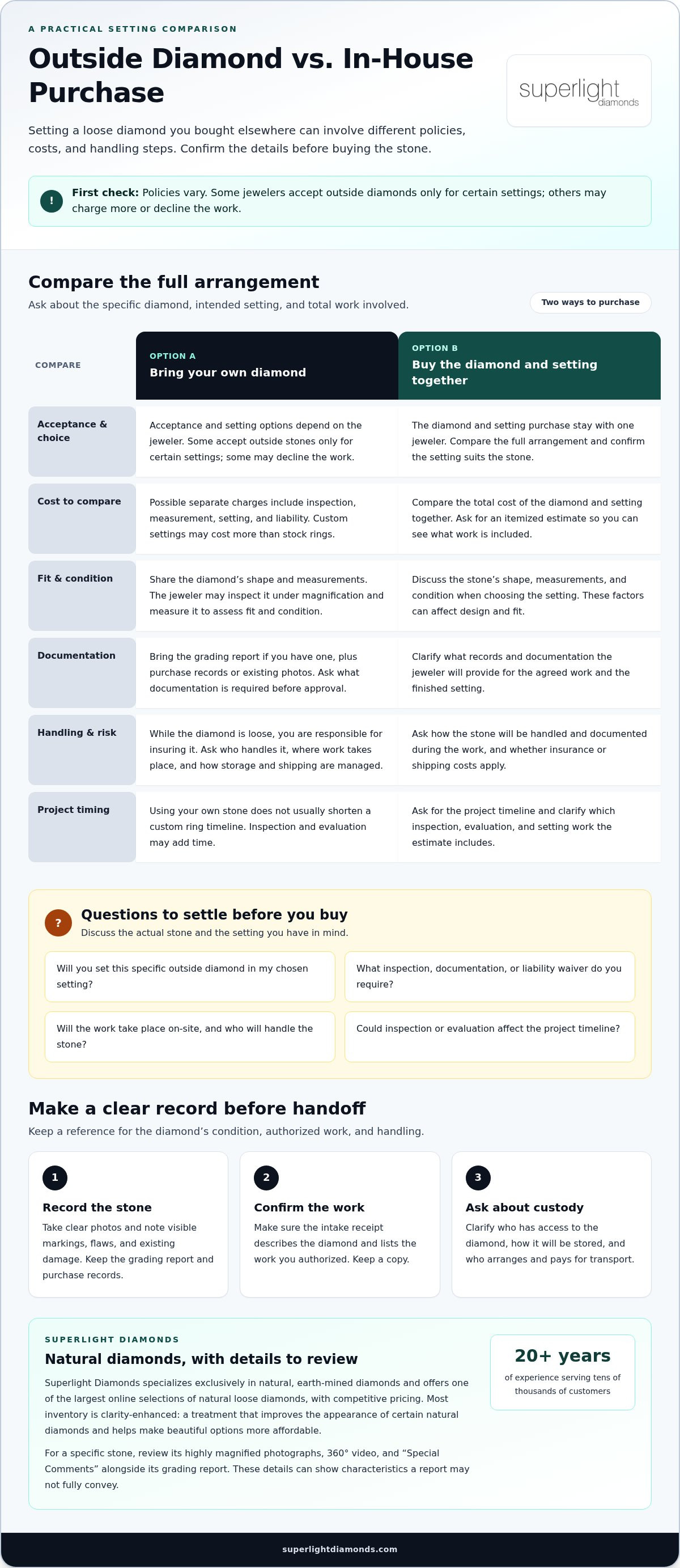
Confirming that a jeweler will set a diamond purchased elsewhere
Get the jeweler’s agreement before purchasing a loose diamond elsewhere. Policies vary: some jewelers accept outside stones only for certain settings, while others charge more or decline the work. The jeweler may require an examination under magnification before deciding whether the diamond is suitable for setting.
Discuss the specific stone and setting, rather than making a general request to set a diamond. Share its shape, measurements, grading report, and the setting you’re considering. Ask whether the jeweler needs to inspect it before approving the job, what documentation they require, and whether a liability waiver applies. For an engagement ring, clarify how the setting will fit the diamond and the wearer’s finger.
- Will you set this specific outside diamond in my chosen setting?
- What inspection, documentation, or waiver do you require?
- Will the work take place on-site, and who handles the stone?
- Could inspection or evaluation affect the project timeline?
Getting clear answers before purchase helps you compare the full arrangement with buying a diamond and setting from one jeweler. Bringing your own stone doesn’t usually shorten a custom ring’s timeline; inspection and evaluation may add time. If the jeweler identifies a fit or condition concern, discuss it before authorizing the setting rather than after work begins. A direct conversation also establishes what the jeweler will document and which work the quoted arrangement includes.
To compare stones before deciding, review loose diamond options alongside the setting requirements you’ve discussed.
Superlight Diamonds: Round Brilliant Diamonds
Superlight Diamonds offers Round Brilliant Diamonds and one of the largest online selections of natural loose diamonds, with competitive pricing. It specializes exclusively in natural, earth-mined diamonds, and most of its inventory is clarity-enhanced. This treatment improves the appearance of certain natural diamonds and helps make beautiful options more affordable.
To assess a specific stone, review its highly magnified photographs, 360° video, and “Special Comments” alongside its grading report. These listing details can show characteristics that a report may not fully convey. Superlight Diamonds also offers Princess Cut, Cushion Cut, and Clarity Enhanced Diamonds. With more than 20 years of experience serving tens of thousands of customers, it helps buyers compare stones with clear product information.
Explore the available diamonds at superlightdiamonds.com.
Make Your Next Diamond Choice with Confidence
The etiquette of bringing your own loose diamond to a jeweler starts with clear expectations. Your next decision is choosing a stone that suits your design and budget. Compare the diamond’s appearance and documented characteristics, rather than relying on a grading report alone. Superlight Diamonds offers Round Brilliant, Princess Cut, and Clarity Enhanced Diamonds, with details to help you assess individual stones.
If you’re still weighing whether to source a diamond separately, consider how its shape and measurements will work with the setting you have in mind. A well-informed choice can make conversations with your jeweler more specific and productive. Explore the available natural diamonds at Superlight Diamonds as you consider your options, and move forward with confidence.
Frequently Asked Questions
Can Any Diamond Be Used in a Custom Ring?
Not every diamond suits every ring design. The stone’s shape, depth, girdle condition, and surface-reaching inclusions can affect its fit and how much protection it needs. For example, a pointed shape may need protective prongs, while a deep stone may require a taller setting. A jeweler evaluates the diamond and mounting together to determine a suitable design.
Is Bringing Your Own Diamond the Right Choice?
Bringing your own diamond may suit buyers who already own a stone or want to select it separately from the setting. Compare that flexibility with the convenience of purchasing both from one jeweler. Consider the combined setting, insurance, and shipping expenses, as well as the extra coordination involved. If you’re working with an heirloom, preserving its original character may also shape your decision.
Will jewelers set a loose diamond brought in by a customer?
Yes, some jewelers set customer-owned diamonds, but acceptance depends on their policies and the proposed setting. A jeweler may inspect the stone before deciding whether its shape and condition suit the work. Contact the jeweler before purchasing a diamond specifically for a planned ring. That timing helps avoid owning a stone that doesn’t fit the intended setting.
What should I ask a jeweler before handing over a loose diamond?
Ask what work the jeweler will perform, where it will happen, and who will handle the stone. Clarify the expected timeline, how the diamond will be identified in the paperwork, and what a liability waiver covers. Read the authorization receipt carefully before signing. If the jeweler proposes a replacement described only as “like kind and quality,” ask for the terms in plain language.
How much does it cost to set a customer-owned loose diamond?
There’s no single setting charge for every customer-owned diamond. The total depends on fees for inspection, measurement, setting, and liability, and on whether the ring needs a custom mounting. Insurance and shipping can add expenses when the stone and setting are handled separately. Request an itemized estimate that distinguishes setting work from additional services before approving the project.