Loading... Please wait...
 USD
USD


Blog
Recent Posts
Diamond Feather Inclusions: Understanding the Durability Risk
Posted on
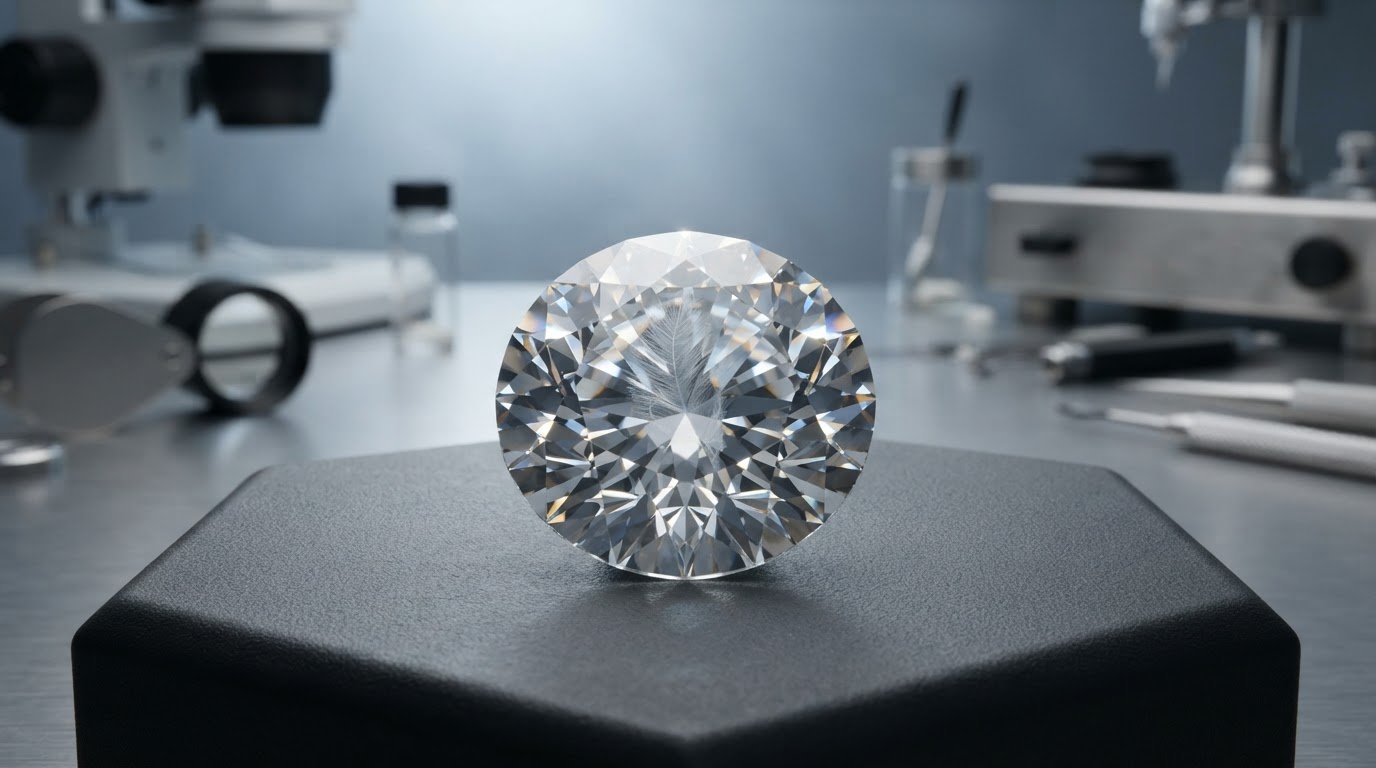
A feather on a grading report doesn’t automatically mean a diamond is fragile. The diamond feather inclusions durability risk depends more on the feature’s size and position, and whether it reaches the surface, than on its presence alone. If you’re balancing appearance, durability, and budget, knowing what to look for can help you compare stones more confidently.
It’s reasonable to wonder whether a feather could make a diamond more likely to chip or break. Many feathers aren’t a durability concern, but a grading report alone may not provide enough detail to assess an individual stone. This guide explains what feathers are, which characteristics deserve a closer look, and how to review the available information before buying.
Superlight Diamonds specializes exclusively in natural, earth-mined diamonds. Most of our inventory consists of clarity-enhanced natural diamonds, a process that helps make beautiful diamonds more affordable. Clarity enhancement is separate from assessing a feather’s durability. We provide highly magnified photographs, 360° videos, and listing-specific Special Comments so you can review the exact diamond alongside its report.
Key Takeaways
- The diamond feather inclusions durability risk depends on the individual feature. Consider its documented characteristics rather than judging by the notation alone.
- Use the grading report to locate the feather, then review magnified photographs and 360° video of the exact diamond.
- Compare the diamond’s appearance and disclosed characteristics with your preferences and budget instead of relying on clarity grade alone.
- Superlight Diamonds specializes in natural, earth-mined diamonds. Most of our inventory is clarity-enhanced to make beautiful natural diamonds more affordable.
Diamond feather inclusions and durability risk: what the feature means
A feather is a break or fracture within a diamond, named for the light, wispy shape it can show under magnification. It’s one type of internal inclusion considered during clarity grading. The Diamond Clarity and Inclusions overview explains how inclusions are described and assessed. A grading plot is useful for locating a feature, but it isn’t a complete durability assessment. The diamond feather inclusions durability risk depends on the individual feature and its position, not simply on whether a feather appears on the report.
Two diamonds with feather notations may differ in size, shape, depth, and location. The notation alone doesn’t establish that either diamond is likely to chip or break. It also doesn’t prove that a stone has no durability concern. Assess the inclusion in the context of the actual diamond.
Which feather characteristics may matter for durability?
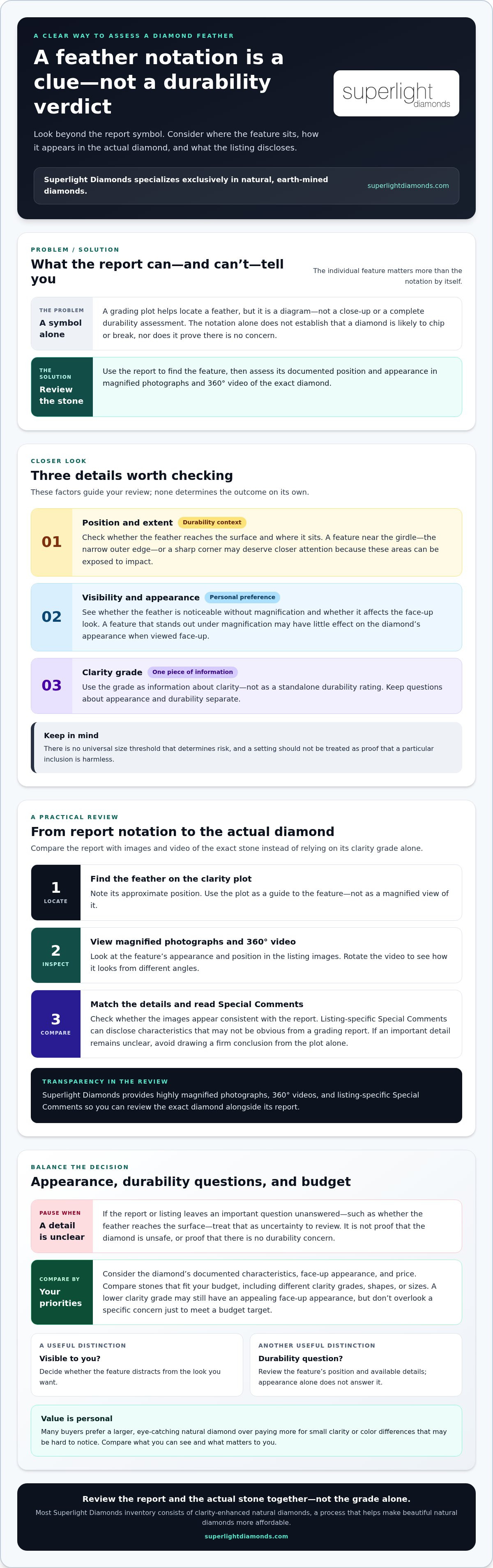
Start with the feather’s position and extent. A feature that reaches the surface may deserve closer attention than one contained within the diamond. Location matters too: a feather near the girdle, the narrow outer edge, or a sharp corner can be more relevant to chipping concerns because these areas may be exposed to impact. These details help frame the question, but they don’t determine the outcome on their own.
- Durability: Note whether the feather reaches the surface and where it sits, especially in relation to the girdle or a sharp corner.
- Visibility: Check whether you can see it without magnification and whether it affects the diamond’s face-up appearance.
- Clarity grade: Use the grade as information about clarity, not as a standalone durability rating.
A feather that stands out under magnification may have little effect on the diamond’s face-up appearance. A feature you can see without magnification may matter to your personal preferences, even if that visibility doesn’t establish a durability concern. Keep appearance and durability as separate questions. There’s no universal size threshold that determines risk, and a setting shouldn’t be treated as proof that a particular inclusion is harmless.
How to assess a diamond feather inclusion using the actual stone
A grading report provides useful context, but it can’t show every detail of how an inclusion appears in an individual diamond. Compare the report with photographs and video of the exact stone instead of relying on its clarity grade alone. This side-by-side review helps you understand what the plot indicates and what the listing images show.
- Locate the notation. Find the feather symbol on the report’s clarity plot and note its approximate position. Use the plot to guide your review, remembering that it’s a diagram rather than a close-up view.
- Inspect the listed diamond. Look at highly magnified photographs to examine the feather’s appearance and position. Then review the 360° video, rotating the view to see how the feature looks from different angles.
- Compare the details. Check whether the images appear consistent with the report and read the listing’s Special Comments for additional context. If the feature is difficult to distinguish, don’t draw a firm conclusion from the plot alone.
What photographs, video, and listing comments can reveal
Magnified views can help show whether a feather is noticeable and where it sits in relation to the diamond’s edge. Video adds changing angles, while listing-specific Special Comments can disclose characteristics that aren’t obvious from a report. Together, these details give you a fuller picture of the individual stone. The AGS Guidelines on Diamond Inclusions and Durability provide additional background on how inclusions relate to clarity and durability.
Review the report and the actual stone together, not the grade alone. If you’re considering clarity enhancement too, our clarity-enhanced diamond buying guide explains the process. The photographs, video, and Special Comments on each listing can help you compare natural diamonds with transparency. You can also browse natural diamonds and their listing details.
Choosing a diamond with a feather: balancing durability, appearance, and value
A balanced choice takes the diamond’s documented characteristics, appearance, and price into account. Clarity grade is one part of the decision, not a complete measure of beauty or durability. Consider the diamond feather inclusions durability risk alongside your own priorities rather than treating the presence of a feather as an automatic reason to rule out a stone.
Decide what matters most to you. If the feather is visible in the listing images, ask yourself whether it distracts from the look you want. Then compare diamonds that fit your budget, including options with a different clarity grade, shape, or size. A lower clarity grade may still have an appealing face-up appearance, but don’t overlook a specific concern just to meet a budget target. Many buyers prefer a larger, eye-catching natural diamond over paying more for small clarity or color differences that may be hard to notice.
When a feather is a reason to pause and review more closely
Take extra care when the report or listing leaves an important question unanswered, such as whether a feature reaches the surface. That uncertainty isn’t proof that the diamond is unsafe, and it isn’t evidence that the stone has no durability concern. Avoid assumptions and compare the available information before deciding. The round brilliant diamond buying guide offers broader context for comparing diamonds online.
Choose based on the trade-offs you’re comfortable with, including appearance, documented characteristics, and budget. Comparing the listing details of several stones can make those trade-offs easier to see. Explore natural loose diamonds and review each stone’s details.
Make your next diamond comparison with confidence
A buying decision doesn’t need to hinge on a single clarity symbol. Consider how the diamond looks to you, what its documentation says, and whether it fits your budget. This puts the diamond feather inclusions durability risk in perspective without dismissing an unanswered concern or paying more for a grade that doesn’t improve the appearance you want.
Superlight Diamonds has more than 20 years of experience serving tens of thousands of diamond buyers. Diamonds are typically certified by IGL (International Gemological Laboratories), providing grading information to consider alongside the details of the individual stone. We focus on natural, earth-mined diamonds, honest disclosures, and value to help you make a considered choice at your own pace.
Ready to compare? Explore natural loose diamonds and review each stone’s photographs, video, and listing details.
Frequently Asked Questions
Can a feather inclusion be visible to the naked eye?
Yes. Whether a feather is visible without magnification depends on the individual diamond and the feature’s appearance. A small, low-contrast inclusion may be difficult to notice during ordinary viewing, while a more distinct feature may catch your eye. Review the diamond from different angles and remember that magnified images can make inclusions look more prominent than they do face-up.
Does a diamond grading report show exactly where a feather is?
A grading plot indicates the feather’s approximate position, but it isn’t a precise, three-dimensional view of the inclusion. The diagram may not communicate its full depth, appearance, or how it looks from another angle. Use the plot as a guide, then compare it with the listing details and images of the actual diamond before forming a judgment.
Can a feather affect a diamond’s appearance as well as durability?
Yes. Depending on its position and appearance, a feather may be noticeable, distract from the diamond’s look, or be difficult to see without magnification. Appearance and durability are separate considerations: a feature that catches your eye doesn’t automatically indicate a structural concern, and one that’s hard to see doesn’t establish that there’s no concern. Assess both aspects for the specific stone.
Should I avoid every diamond that has a feather inclusion?
No. The diamond feather inclusions durability risk can’t be judged from the word “feather” alone. Consider the individual diamond’s documentation, appearance, and any unanswered questions about its condition. If the available details don’t resolve a concern that matters to you, pause and compare another stone. The goal is an informed choice that suits both your preferences and budget.
Diamond Appraisal vs. Grading Certificate: What’s the Difference?
Could a grading certificate tell you what a diamond is worth? Usually, no. Understanding the diamond appraisal vs diamond grading certificate differences helps you know what each document can and cannot establish. A grading report records characteristics such as cut, color, clarity, and carat weight. An appraisal estimates monetary value for a stated purpose, such [...]
SI2 Diamond Buying Guide: Clarity, Beauty, and Value
Can an SI2 diamond look beautiful even when its clarity grade does not tell the whole story? It can, but inclusions may be visible to the unaided eye, and the SI2 label does not show exactly how they look in a particular stone. If you are weighing appearance against budget, compare the individual diamond, not [...]
How Diamond Auction Reserve Prices Work: A Buyer’s Guide
The highest bid doesn’t always buy the diamond. Understanding how diamond auction reserve prices work can help you avoid confusing the seller’s minimum threshold with the opening bid or current bid. In a reserve auction, bidding can end below that threshold, leaving the diamond unsold even if one bidder is leading.This guide explains how reserve [...]
Natural 4 Carat Loose Diamond Price Guide: Maximizing Beauty and Value in 2026
You don't need a six-figure bank account to own a breathtaking natural 4-carat diamond that commands attention from across the room. It's true that the typical 4 carat loose diamond price often feels out of reach, leaving many buyers frustrated by overwhelming ranges and confusing terminology. At Superlight Diamonds, we believe you shouldn't have to [...]
Princess Cut vs Radiant Cut: The Savvy Buyer’s Guide to Square Diamonds
The sharpest corners in the diamond world might actually be your biggest liability when it comes to long-term value. Most buyers start their search looking for a classic square silhouette, but the debate of princess cut vs radiant cut often leads to more confusion than clarity. You likely want a stone that captures the light [...]
The Ultimate Diamond Color Scale Guide: Maximizing Beauty and Value in 2026
Most buyers believe a diamond must be graded "D" to appear perfectly white, but paying for technical perfection is often the most expensive mistake you can make. It's completely normal to feel overwhelmed when looking at the diamond color scale, especially when you see prices jump by thousands of dollars between grades that look identical [...]
Cushion Cut Diamonds: 2026 Savvy Buyer’s Guide
Most buyers pay a massive premium for diamond features they'll never see without a high-powered microscope. It's a common trap in the jewelry industry, but it's one you can easily avoid if you know what to look for. You're likely searching for cushion cut diamonds for sale because you love that soft, romantic glow and [...]
Mastering the No Reserve Diamond Auction: A Buyer’s Guide to Maximum Value
What if you could bypass the traditional jewelry store markup and secure a natural diamond for the price the market actually dictates? Most buyers feel a mix of excitement and anxiety when they first encounter a no reserve diamond auction. You likely recognize the incredible potential for value; however, you might worry about overbidding in [...]
Buying Certified Loose Diamonds Online: A 2026 Transparency Guide
The most expensive mistake you can make when shopping for certified loose diamonds online is assuming that a grading report tells the whole story. Most buyers spend hours obsessing over microscopic details on a certificate, yet they still end up with a stone that looks smaller or less brilliant than they imagined. You deserve a [...]