Loading... Please wait...
 USD



Recent Posts
Loose Diamond Wholesale Pricing, Grading, and Inventory for Public Buyers
Posted on
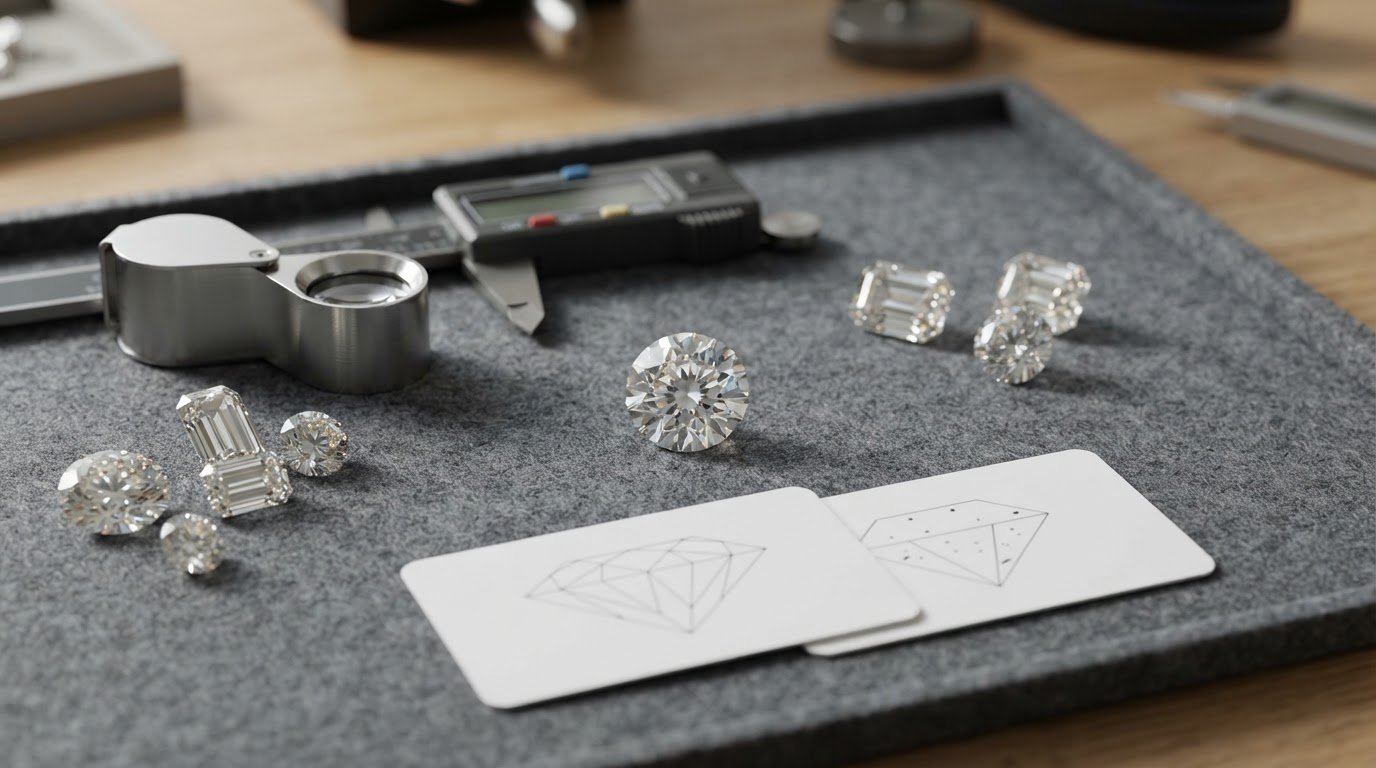
A wholesale label alone doesn’t determine a loose diamond’s price. Loose diamond wholesale pricing for public buyers depends on the individual stone’s carat weight, color, clarity, cut, shape, grading documentation, and the seller’s available inventory. Compare stones with similar characteristics, then assess the specific diamond rather than relying on a pricing label or report alone.
It’s understandable to expect “wholesale” to mean one clear discount, but diamond pricing isn’t a single rate that applies to every stone. Differences in grading and appearance can affect a diamond’s price, while inventory determines which comparable options are available.
This guide explains how certification and the 4Cs inform comparisons, why shape and stock matter, and what to look for in listing photographs, videos, and disclosures. You’ll get a practical way to assess natural diamonds and choose for the balance of size, appearance, and budget that matters to you.
Key Takeaways
- Use the 4Cs to compare diamonds with similar characteristics, and treat grading documentation as one part of your assessment.
- Review the exact diamond’s images, video, and listing details to understand what a certificate may not show.
- Prioritize the features that matter most to your budget and preferred look; small grading differences can affect price and appearance.
- Compare available shapes and inventory before deciding, since selection influences which stones offer the best fit for your priorities.
Diamond certification and grading
To assess quality, authenticity, and fair pricing, compare a diamond’s grading report with the exact stone and with diamonds sharing similar characteristics. Diamonds may be evaluated using grading systems, and certification practices can vary.
GIA Certification
A GIA grading report gives a structured description of a diamond’s characteristics, helping buyers compare stones using consistent terms. Check that the report matches the diamond you’re considering, then review its details alongside the stone’s photographs or video. GIA is one grading laboratory, not the only basis for a considered purchase. A report and accurate listing details help clarify what is documented.
The 4Cs Grading Criteria
The 4Cs are carat weight, color, clarity, and cut. Carat weight measures a diamond’s weight, while color grades describe how much body color is present. Clarity describes internal or surface characteristics, and cut relates to how a diamond’s proportions and facets affect its appearance. Together, these grades help explain differences between stones, but they don’t replace viewing the actual diamond.
For a useful comparison, match shape and carat weight first, then compare color, clarity, and cut details. A higher grade in one category can affect price, so consider whether the visible difference matters to you. For clarity-enhanced natural diamonds, look for clear disclosure of the enhancement. A grading report supports your assessment, while detailed images and listing information help you evaluate the individual stone.
Loose diamond inventory and selection
For U.S. buyers, online diamond listings make it possible to compare individual stones using grading details and images. Before buying, match the listing information to the grading report and examine the diamond’s appearance rather than choosing by category or carat weight alone.
Inventory varies by shape, size, color, and clarity, so start by defining the look you want and the budget you have. Round brilliant, pear, emerald, and heart shapes can create different visual effects, even at a similar carat weight. Carat measures weight, not how large a diamond looks face-up, so compare visible dimensions when listings provide them.
Examples in the market include 0.29-carat heart-shaped diamonds graded G color and VS1 clarity, and E color and SI1 clarity. The grades describe different characteristics, but they don’t tell you which stone looks better to you. Review the exact diamond’s photographs and video, and read listing notes for details that a grading report may not show.
To narrow your options, choose a preferred shape, set a carat range, then compare clarity and color alongside the diamond’s appearance. If visible size matters more to you than a small grade difference, weigh that trade-off against your priorities. For natural diamonds, clear disclosure of any clarity enhancement also supports an informed decision.
Online inventory can help public buyers compare shapes and grading combinations without limiting the choice to a classic round. Explore loose diamond listings to compare individual stones and their details.
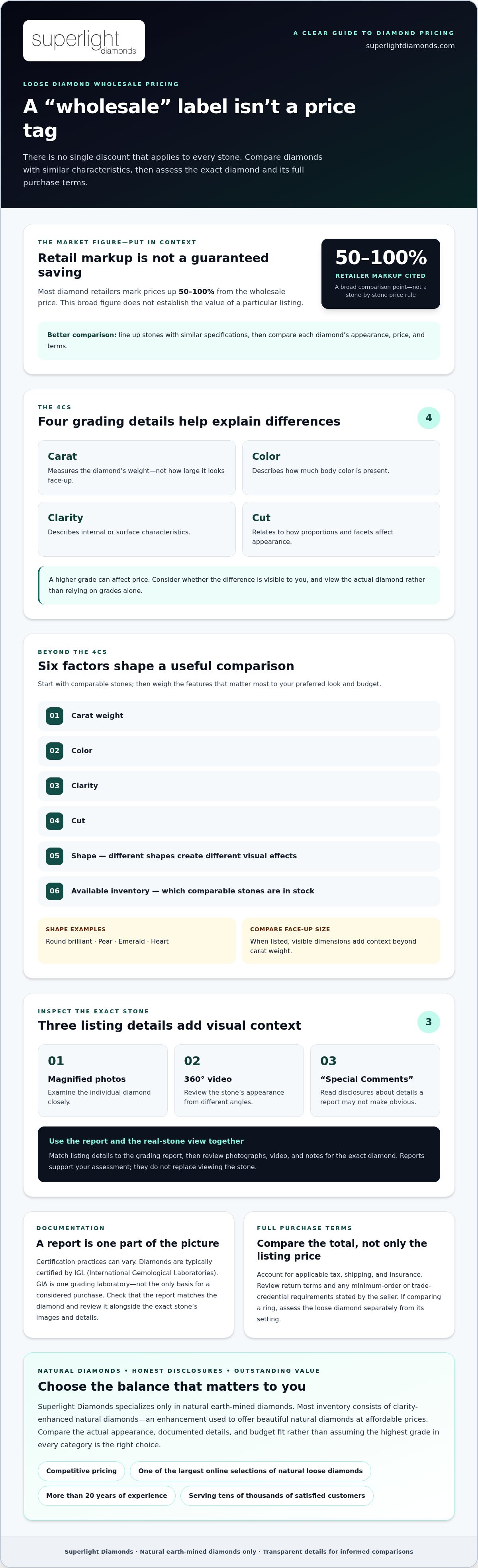
Wholesale pricing for loose diamonds
“Wholesale” describes a pricing position, not a universal discount. As a public buyer, compare the individual diamond and the full purchase terms.
Wholesale and Retail Price Comparison
Most diamond retailers mark up prices by 50-100% from the wholesale price. This broad figure doesn’t establish the value of a particular listing. Compare diamonds with similar characteristics, then look at the price and terms for each one. If you’re buying a diamond for an engagement ring, assess the loose stone separately from the setting so the comparison stays focused.
Natural Diamond Price Factors
This guide focuses on natural earth-mined diamonds. Their prices reflect a stone’s carat weight, cut, color, clarity, shape, and available inventory. Compare diamonds with similar specifications, then decide which characteristics matter most to your budget and preferred appearance. A change in one grading attribute can affect price, so consider the actual visual difference as well as the report.
Minimum order quantities and trade credentials depend on a seller’s terms. Review the stated conditions to see whether individual purchases are available or a larger order is required.
Include applicable tax, shipping, and insurance in your total comparison. Diamond retailers generally include tax in every transaction. Delivery charges and insurance terms can also affect the amount due, so account for them alongside the listed diamond price.
Return terms and listing disclosures clarify the conditions of a purchase. Review the seller’s return policy and compare the diamond’s description with its report and images before buying. This helps you understand what the listing covers and what the stated terms provide if you need to return the stone.
Superlight Diamonds: Round Brilliant Diamonds
Superlight Diamonds specializes only in natural earth-mined diamonds, with a broad online selection that includes Round Brilliant, Princess Cut, Cushion Cut, and Clarity Enhanced Diamonds. Its focus is beautiful diamonds, competitive pricing, honest disclosures, and outstanding value.
For a transparent comparison, review the exact diamond’s highly magnified photographs, 360° video, and detailed “Special Comments.” These listing details can disclose characteristics that may not be obvious from a grading report alone. Consider the stone’s appearance alongside its listed specifications as you choose what best suits your budget and preferences.
Browse Superlight Diamonds online to compare individual diamond listings and find a stone that fits your priorities.
Make Your Next Diamond Choice with Confidence
Use your shortlist to focus on the look you want, then compare individual stones that fit your budget. A thoughtful purchase doesn’t require the highest grade in every category. Choose the balance of size, appearance, and documented characteristics that suits you.
Superlight Diamonds specializes only in natural earth-mined diamonds, including Round Brilliant Diamonds, Princess Cut Diamonds, and Clarity Enhanced Diamonds. Review each listing’s details and actual diamond imagery as you narrow your options, so your decision reflects the stone itself, not just a label. This makes loose diamond wholesale pricing for public buyers easier to assess against your personal priorities.
Contact Superlight Diamonds to explore your options and take the next step at your own pace. A clear set of priorities can help you choose with confidence.
Frequently Asked Questions
What are current wholesale prices for loose diamonds by carat, cut, color, and clarity?
Market prices vary with the diamond’s specific combination of characteristics. An aggregate of loose-diamond offers collected on October 29, 2026, ranged between 428 and 483 USD, with a median about 456. This range isn’t a price table for every carat, cut, color, and clarity grade. Compare stones with similar specifications to make a more meaningful assessment.
Can individual consumers buy loose diamonds at wholesale prices in the United States?
Yes, individual buyers can purchase loose diamonds online in the United States. Superlight Diamonds sells directly to consumers through its website and no-reserve eBay auctions, where buyers bid without a preset minimum sale price. Compare each listing’s terms and diamond details before bidding or buying. A wholesale label alone doesn’t establish that a listing offers the best value.
What diamond grading reports and certifications should buyers require?
Look for a grading report that identifies the diamond and clearly records its characteristics; diamonds are typically certified by IGL, or International Gemological Laboratories. GIA is another recognized grading laboratory, but buyers don’t need to treat one lab as the sole acceptable option. Match the report to the exact stone, and review its actual listing images and disclosures before purchasing.
What are the risks and return policies when buying loose diamonds wholesale?
Review the seller’s return policy and compare the listing with the grading report and the diamond’s photographs or video before buying. Check the full purchase terms, including applicable tax, delivery charges, and insurance.