Loading... Please wait...
 USD



Recent Posts
Excellent vs Very Good Cut Diamonds and Their Light Performance
Posted on
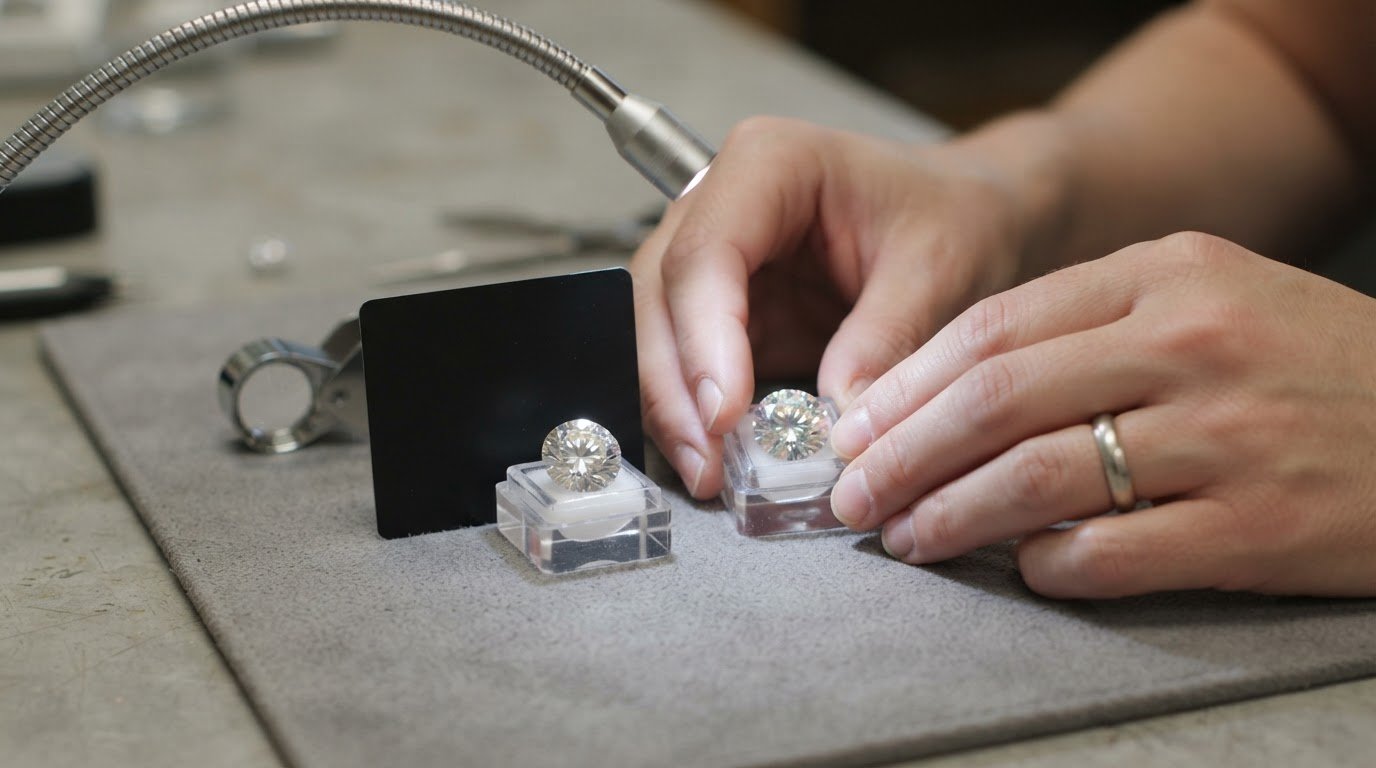
An Excellent cut isn’t the only grade that can deliver lively sparkle. Very Good cut round brilliant diamonds can also show strong light performance, while Excellent is the highest cut grade on GIA’s scale. In comparing excellent cut vs very good cut diamond light performance, the difference is a matter of degree, not a simple divide between sparkle and no sparkle.
It makes sense to focus on cut: facet arrangement affects how a diamond handles light, shaping its brightness, flashes of color, and sparkle as it moves. But a grade is only one part of judging an individual stone’s appearance. This guide explains what Excellent and Very Good mean, how their light performance can differ, and why grading terms vary between systems. You’ll also learn how to weigh the cut grade alongside the diamond’s appearance when deciding which option offers the beauty and value you want.
Key Takeaways
- Understand how a diamond’s facet arrangement shapes its brightness, flashes of color, and sparkle.
- Use cut grades as a helpful comparison, while remembering that stones with the same grade can look different.
- Learn why “Excellent” and “Ideal” labels can mean different things across grading systems.
- Consider the diamond’s visual performance alongside its grade to find a balance of sparkle and value.
How cut affects brilliance, fire, and scintillation
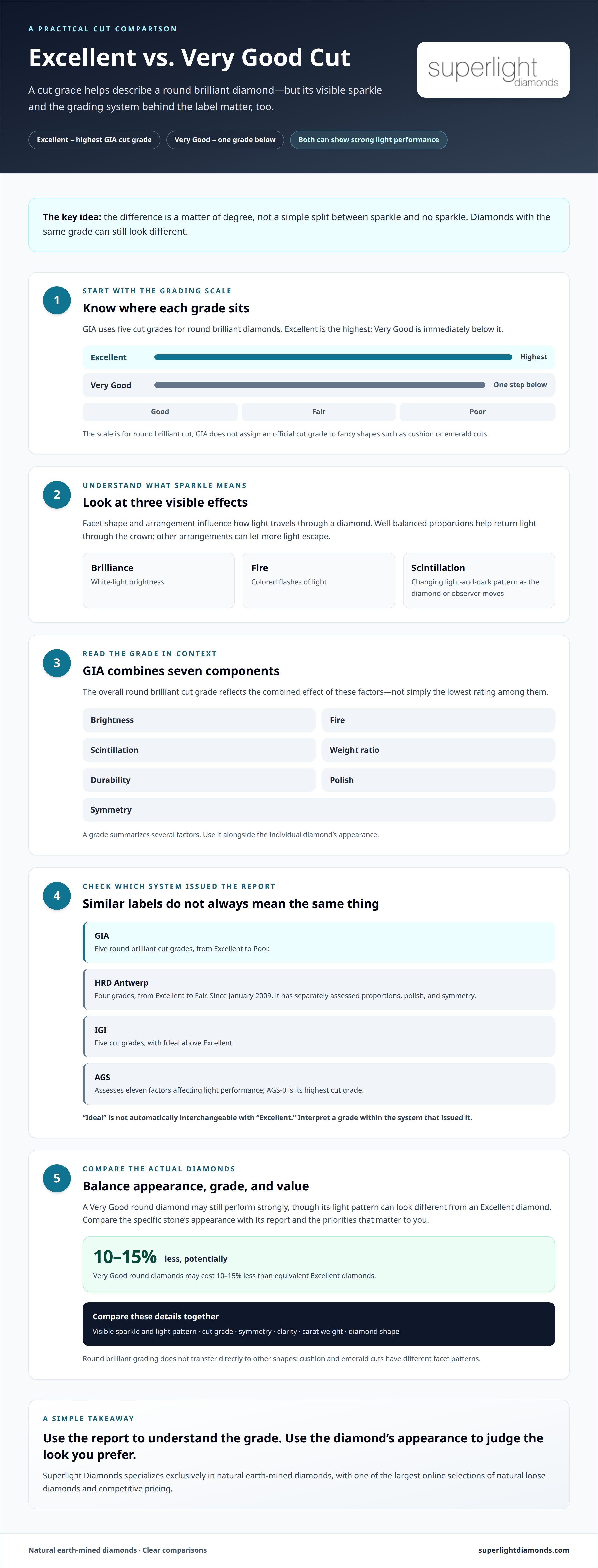
A round brilliant’s cut describes how its facets are shaped and arranged to handle light. Well-balanced proportions help light return through the crown toward the viewer, while other arrangements can allow more light to escape. Brilliance is white-light brightness. Fire is the display of colored flashes, and scintillation is the changing pattern of light and dark as the diamond or observer moves. Together, these effects create the sparkle seen in an engagement ring.
GIA assesses a round brilliant’s overall cut grade by considering seven components: brightness, fire, scintillation, weight ratio, durability, polish, and symmetry. The overall grade reflects the combined effect of these factors, not simply the lowest rating among them. Excellent is the highest grade, while Very Good is one grade below; both can indicate strong light performance. Because the grade summarizes several factors, consider it alongside the individual diamond’s appearance.
GemEx BrillianceScope is associated with evaluating diamond light performance, but its measurement method and results are not established here. Don’t treat a GemEx result as a substitute for a grading report or a guarantee of how a diamond will look in every setting. The grades stated in a report and the stone’s visible appearance offer distinct kinds of information.
To compare brilliance and value, look at the specific diamond’s appearance and light pattern, then weigh what you see against its cut grade and carat weight. A Very Good round brilliant may suit a buyer balancing sparkle with other priorities. An Excellent grade may suit someone prioritizing the highest GIA cut category. Comparing specific stones helps connect their documented grades to the appearance you prefer.
What is the difference between Excellent and Very Good cut?
For round brilliant diamonds, Excellent is the highest GIA cut grade, while Very Good is one step below. Both grades can indicate strong workmanship and light performance, but proportions and visual effects vary from stone to stone. Understanding excellent cut vs very good cut diamond light performance helps frame the comparison, while the specific diamond’s appearance remains important.
Cut-Grade Scales Across Grading Organizations
A cut-grade scale ranks how a diamond’s cut characteristics meet a grading organization’s criteria. GIA uses five grades for round brilliant cut, from Excellent to Poor. HRD Antwerp uses four grades, from Excellent to Fair, and has separately assessed proportions, polish, and symmetry since January 2009. IGI uses five grades, placing Ideal above Excellent. Because labels differ, the grading organization matters when comparing diamonds with similar-sounding grades.
Cut Proportions and Light Return
Proportions describe how a diamond’s facets relate in size and angle, affecting how light returns through its surface. In an Excellent round brilliant, the combined proportions support a higher cut assessment. A Very Good diamond can also perform strongly, though its light pattern may look different. How do proportions affect light return in Excellent versus Very Good diamonds? They influence how light travels through the crown and pavilion, shaping brightness, but diamonds within the same grade can still look different. This distinction is central to excellent cut vs very good cut diamond light performance.
AGS and GIA Grading Standards
AGS and GIA assess cut through different grading frameworks. AGS considers eleven factors affecting light performance, and AGS-0 is its highest cut grade. GIA’s round brilliant cut grade takes seven factors into account, including appearance and craftsmanship. GIA Excellent and Very Good are adjacent grades, with Excellent higher. An AGS label cannot be treated as a direct synonym for a GIA grade.
Cut quality can influence price: Very Good round diamonds may cost 10-15% less than equivalent Excellent diamonds. Compare the actual sparkle, symmetry, clarity, carat weight, and diamond shape. A cushion or emerald cut has a different facet pattern, so round brilliant grades do not transfer directly.
Ideal and Excellent cut grading systems
“Ideal” and “Excellent” are grading labels, but their meanings depend on the system and diamond shape. The grading organization and report scope help explain what each label says about the stone’s assessed characteristics.
GIA assigns an official cut grade only to round brilliant diamonds, so its Diamond Grading Report does not provide an equivalent cut grade for fancy shapes such as princess, cushion, or emerald cuts. Diamonds are also graded by IGL (International Gemological Laboratories). Reports identify assessed characteristics, but interpret labels within the system that issued them. “Ideal” is not automatically interchangeable with “Excellent” across laboratories.
AGS developed a light-performance approach that traces 40,000 virtual light rays at different tilt angles to evaluate how a diamond handles light. Its Angular Spectrum Evaluation Tool, introduced in 2005, uses color patterns to show light return and contrast. This offers another way to interpret a diamond’s appearance alongside grading information, rather than relying on a label alone.
Fancy shapes have varied facet arrangements, so the round brilliant framework cannot simply be applied to every outline. A princess cut’s pointed corners and a cushion cut’s broader facets create different patterns of brightness and contrast. Polish and symmetry describe finish and facet alignment, but neither alone establishes maximum light return.
Use a grading report to understand the characteristics it records, then consider the diamond’s appearance and shape. Reports organize technical information, and grading systems assess cut differently. For an engagement, knowing which system issued the report helps you interpret “Ideal” or “Excellent” without treating either label as a universal promise of sparkle.
Superlight Diamonds
Superlight Diamonds specializes exclusively in natural earth-mined diamonds, with one of the largest online selections of natural loose diamonds. Competitive pricing and clear information help shoppers compare a diamond’s cut grade, appearance, and value.
For an individual stone, highly magnified photographs, 360° videos, and detailed “Special Comments” provide a closer view of characteristics that may not be obvious from a grading report. Reviewing the exact diamond’s images alongside its report can help you judge whether its appearance suits your priorities.
Most inventory consists of clarity-enhanced natural diamonds. This process helps make beautiful natural diamonds more affordable, with listing details to explain each stone transparently. Since 2001, Superlight Diamonds has served over 21,000 satisfied customers.
For guidance as you compare diamond cut grades and individual stones, contact Superlight Diamonds.
Choose the Diamond That Fits Your Priorities
The comparison can narrow your options, but your final choice should reflect the diamond’s appearance and what fits your budget. Decide which visual qualities matter most, then assess individual stones against those priorities rather than treating one grade as the whole decision. The excellent cut vs very good cut diamond light performance comparison is a useful starting point, not a substitute for your preferences.
Superlight Diamonds specializes exclusively in natural earth-mined diamonds, including Round Brilliant Diamonds, Princess Cut Diamonds, and Clarity Enhanced Diamonds. A thoughtful choice can balance the look you want with practical value, without paying extra for a difference that matters less to you. Take the next step at your own pace, with clear information guiding your decision.
Contact Superlight Diamonds for diamond guidance and move forward with confidence in the choice that suits you.
Frequently Asked Questions
What Is The Cut Of A Diamond?
A diamond’s cut describes how its facets are shaped, positioned, and finished, rather than its outline. A round brilliant and a princess cut have different shapes, but each has its own facet arrangement and cut characteristics. When comparing stones, separate shape from cut: two round diamonds can share an outline yet differ in proportions, symmetry, and overall appearance.
Is Excellent cut worth the extra cost?
It can be worthwhile if the specific Excellent-cut diamond’s appearance is worth prioritizing within your budget. Compare stones with similar carat weight, color, and clarity, then consider whether the difference in visible sparkle matters more to you than another feature. Depending on the individual diamonds, a Very Good option may leave more room in your budget for size or another preference.
What does Triple Excellent (Triple X) mean?
“Triple Excellent” usually refers to Excellent grades for cut, polish, and symmetry on a diamond report. These are separate assessments: cut concerns overall cut quality, polish describes the facet-surface finish, and symmetry considers facet alignment. The label summarizes those grades; it doesn’t describe every aspect of a diamond’s appearance or guarantee a particular light pattern.
How do Excellent and Very Good diamond cut grades compare in light performance?
For round brilliant diamonds graded by GIA, Excellent is the top cut grade and Very Good is the grade immediately below it. Both can indicate strong light performance. When comparing two specific stones, look beyond the grade names: differences in proportions and appearance can matter, and another grading organization may use a different scale or terminology.
How much difference in brightness, fire, and scintillation is visible between Excellent and Very Good cuts?
There isn’t one fixed amount of visible difference between every pair of diamonds. Brightness, colored flashes, and sparkle can vary with proportions, viewing angle, movement, and lighting. Compare the exact diamonds under similar conditions, side by side if possible, and notice which appearance you prefer rather than assuming the grade alone settles the choice.