Loading... Please wait...
 USD



Blog
Recent Posts
Diamond Color Grade for Yellow Gold: Which Grade to Choose
Posted on
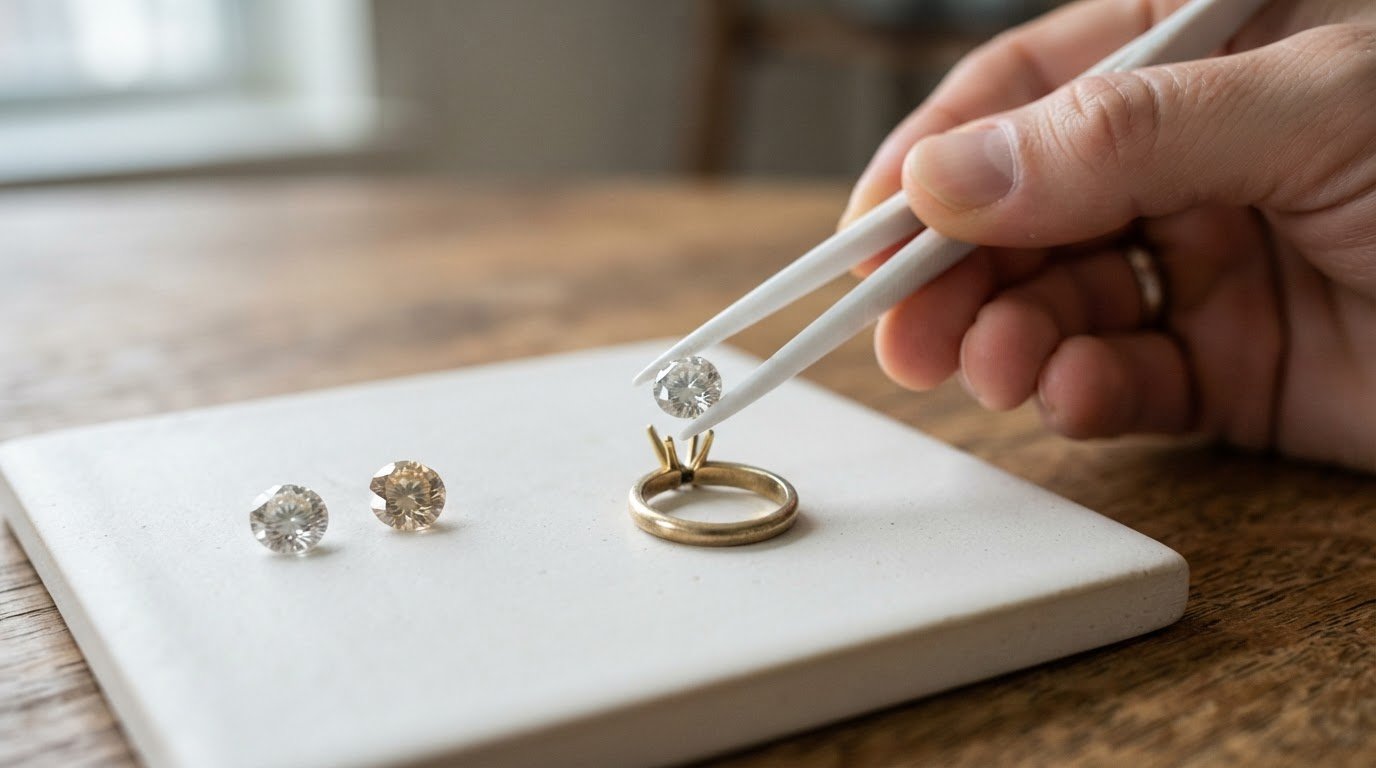
A whiter diamond isn’t always the best match for yellow gold prongs. At Superlight Diamonds, we offer only natural earth-mined diamonds at honest prices, with transparent guidance. A J-color diamond can suit yellow gold prongs because its subtle warmth may harmonize with the setting, while G through J diamonds are generally considered near-colorless. The right choice depends on whether you want the stone to look crisp and white or blend softly with the gold.
It’s natural to wonder whether a small difference in color grade will show once a diamond is set. This guide explains how grades compare, how yellow gold can influence a diamond’s appearance, and which grades to consider for different looks. It also covers why shape and face-up appearance matter when weighing color against sparkle and overall value.
Key Takeaways
- A J-color diamond can offer a pleasing balance of warmth and value in a yellow-gold setting.
- Yellow gold can influence how a diamond’s color appears, especially when the prongs also use yellow gold.
- G through J diamonds are near-colorless, while K through M have a more noticeable warm tint.
- Shape and cut affect how color is seen, so compare the diamond’s appearance rather than relying on grade alone.
Can You Tell the Difference Between Diamond Color Grades?
Yes, though the difference between neighboring grades can be subtle once a diamond is viewed face-up. The GIA color scale has 23 lettered grades, from D to Z, grouped into five color ranges.
Choosing a Grade for Yellow Gold
Choosing a color grade means balancing visible warmth with the look you want from the setting. G through J are near-colorless, while K through M are faint. A J can suit yellow gold if you want a bright appearance with some warmth. The best diamond color grade for yellow gold prongs depends on whether you prefer contrast or a coordinated look.
For a crisp, cool appearance, white gold prongs can distinguish the diamond from a yellow gold band and help it look brighter. Yellow gold prongs create a warmer effect because the facets can reflect color from their surroundings. Compare grading details with photographs or video of the exact stone to judge its appearance, rather than relying on the grade label alone.
Shapes That Show Color
Diamond shapes vary in how visibly they show body color, the stone’s underlying tint. Some fancy shapes, including Asscher, cushion, and radiant cuts, can emphasize color, while a round brilliant may appear less tinted face-up. Warmth can also be easier to notice in a larger stone.
Consider the setting and shape together: a cushion with yellow gold can create a deliberately warm, blended look, while white gold prongs add contrast. Compare the diamond face-up and from the side, since color can be more apparent in profile. This helps you decide whether the yellow-gold ring should soften the stone’s tint or make its brightness stand apart.
Colorless diamonds in warm-metal settings
Yes, yellow gold prongs can complement a diamond’s warmth, but they won’t erase its tint. The setting metal doesn’t change the grade: color is assessed face-down, while the metal can affect appearance.
Metal Choices for D-J Diamonds
For D-J diamonds, the metal shapes the contrast between the stone and its setting. D, E, and F are colorless; G through J are near-colorless. Platinum or white gold prongs create a cooler frame, which can preserve a crisp look, especially for D-F diamonds. Yellow gold is also an option, but reflected warmth may soften their bright appearance.
Metal Choices for K-L Diamonds
K-L diamonds fall between near-colorless and more visibly warm grades, leaving room to choose either metal. Choose white gold or platinum if you want the diamond’s subtle tint to stand apart, or yellow gold if you want the setting to complement its warmth. For example, K in white prongs creates more contrast than K in yellow prongs.
Metal Choices for M-Z Diamonds
The prong metal can emphasize or harmonize with the body color of M-Z diamonds. M is in the faint range; N-R are very light, and S-Z are light. Yellow gold can complement these warmer stones for a coordinated look rather than stark contrast. White gold or platinum creates a cooler frame that makes the tint more apparent.
Yellow Gold Prongs and Diamond Warmth
Prong metal affects the color reflected near a diamond, not its assigned grade. Yellow gold prongs may make a cool stone appear warmer, while white prongs can help it look brighter against a yellow band. Gold prongs don’t hide warmth in lower-color diamonds; they can make the tint blend with the setting. Compare face-up and side views to assess color, sparkle, and brilliance.
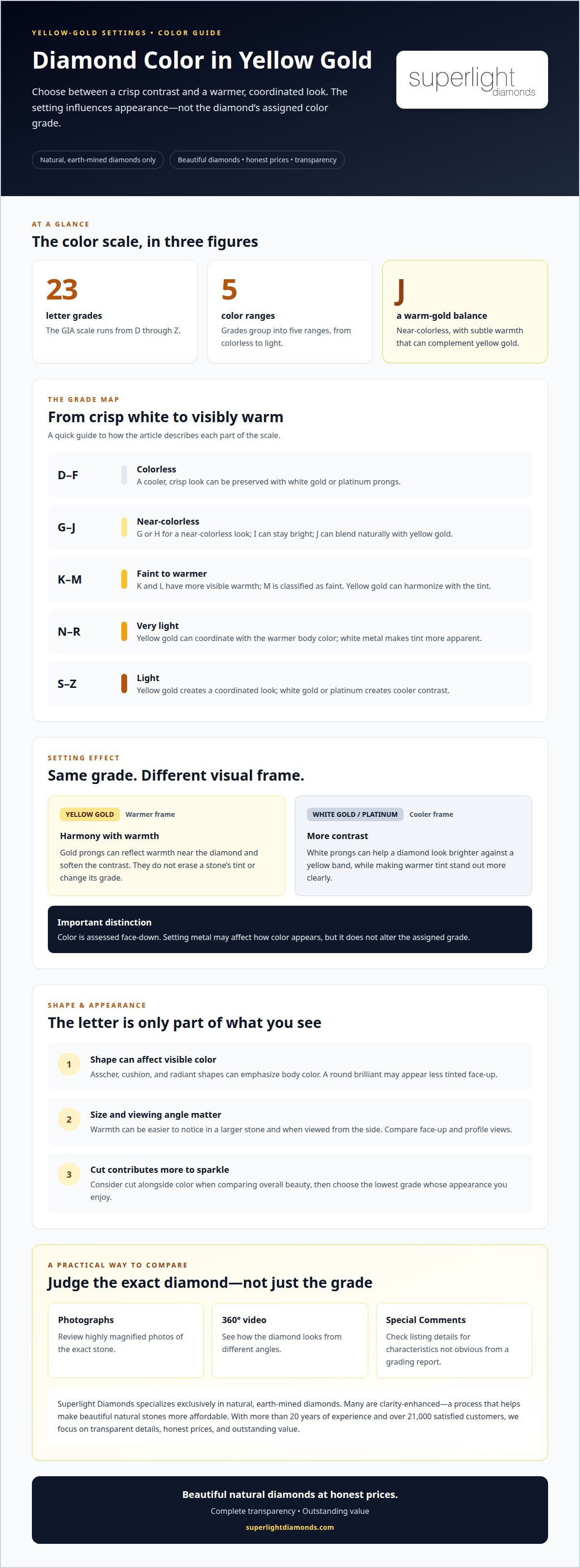
Recommended diamond color grades for yellow gold
For a balance of brightness and value, we recommend considering a J-color natural diamond in yellow gold. Its near-colorless appearance can suit the metal’s warmth without prioritizing the highest color grades. The best diamond color grade for yellow gold prongs depends on how much tint you notice and whether you prefer contrast or harmony.
Choose G or H if a near-colorless look matters most. These grades can appear colorless to the eye, while yellow gold may add warmth around the stone. I can also work well if you want a bright appearance without choosing a higher color grade. Compare the diamond face-up in its setting, because the metal can affect how its color reads.
J is a practical middle ground for a ring: its slight warmth can complement yellow gold, while the diamond can still look bright face-up. If you prefer an especially white appearance, G through I may suit you better. Differences between adjacent grades can be subtle, so decide based on the look you value rather than the letter alone.
K through M offer a warmer look that can blend with yellow gold. K and L suit buyers comfortable with visible warmth, while M is classified as faint. A lower grade isn’t automatically a poor choice if its appearance suits you. With M or lower, the yellow band can harmonize with the tint rather than create contrast.
For overall beauty, consider cut alongside color: cut has more influence on sparkle than color grade. Compare the diamond’s face-up appearance, shape, and warmth, then choose the lowest grade you find attractive. Explore our natural earth-mined diamond options to compare looks and find a balance that suits your engagement ring at an honest price.
Superlight Diamonds
We help shoppers compare natural diamond appearance and details for a yellow-gold setting. Specializing exclusively in natural, earth-mined diamonds, we offer one of the largest online selections of natural loose diamonds at competitive prices. We have more than 20 years of experience and have served over 21,000 satisfied customers. Many of our diamonds are clarity-enhanced, a process that helps make beautiful natural stones more affordable.
Our highly magnified photographs, 360° videos, and detailed “Special Comments” on individual listings disclose characteristics that may not be obvious from a grading report. Reviewing images and video of the exact diamond can help you assess its appearance alongside the grading information.
Contact us to discuss choosing a natural diamond for a yellow-gold setting.
Choose the look you’ll enjoy wearing
At Superlight Diamonds, we believe the right choice is the one that fits your priorities, not a letter grade considered in isolation. Before deciding, think about the look you want: bright, crisp contrast, a warm and coordinated effect, or something between the two. Then weigh color alongside the diamond’s overall appearance and the setting you have in mind.
Choosing the best diamond color grade for yellow gold prongs is easier when you define your visual preference first. We offer natural earth-mined loose diamonds, including Round Brilliant and other cuts, through our website and no-reserve eBay auctions. Compare the available options with your setting goals in mind. There’s no need to choose a higher grade unless its appearance matters to you.
Contact us for guidance as you narrow your choices. A clear sense of the look you want can make your next decision feel more manageable.
Frequently Asked Questions
Why Would you Want a Less White Diamond?
A warmer diamond can suit someone who wants the stone and yellow gold to look coordinated rather than sharply contrasted. For example, K-M color can support an antique-inspired style, with the metal complementing the diamond’s tint. Choosing a grade for its appearance can also leave room in your budget to prioritize another feature you value, such as size. At Superlight Diamonds, we specialize only in natural, earth-mined diamonds and believe in finding beauty and value at an honest price.
What diamond color grade looks best with yellow gold prongs?
There isn’t one grade that looks best to everyone. For a personal comparison, look at diamonds with the same shape and similar size but different color grades. Holding those factors steady makes color easier to judge. Then consider whether you prefer the warmer appearance of a lower grade or a whiter look.
Do yellow gold prongs make a diamond appear warmer or more yellow?
Yellow gold prongs can add a warm visual effect, but they don’t conceal a diamond’s underlying color or change its grade. This distinction matters when choosing a lower-color stone: yellow gold can complement its warmth, but it won’t make visible tint disappear. The diamond’s own color remains part of its appearance.
Is G or H color diamond a good choice for yellow gold settings?
Yes. G or H can suit buyers who want a bright-looking diamond in yellow gold. In a three-stone ring, smaller side diamonds don’t need to match the center stone’s color exactly because their color is less noticeable. If the side stones are larger, choosing a color closer to the center can help the diamonds look more cohesive.
How do diamond color grades D through J compare in appearance with yellow gold prongs?
D through J grades range from colorless to near-colorless, but a grading report describes the diamond’s assessed color, not exactly how it will look in a finished ring. Diamonds are typically certified by IGL (International Gemological Laboratories), though grading laboratories can vary. At Superlight Diamonds, we encourage you to consider the report alongside photographs or video of the specific diamond for a transparent view of its appearance.