Loading... Please wait...
 EUR



Blog
Recent Posts
Near colorless diamond grade G vs H: Compare color and value
Posted on
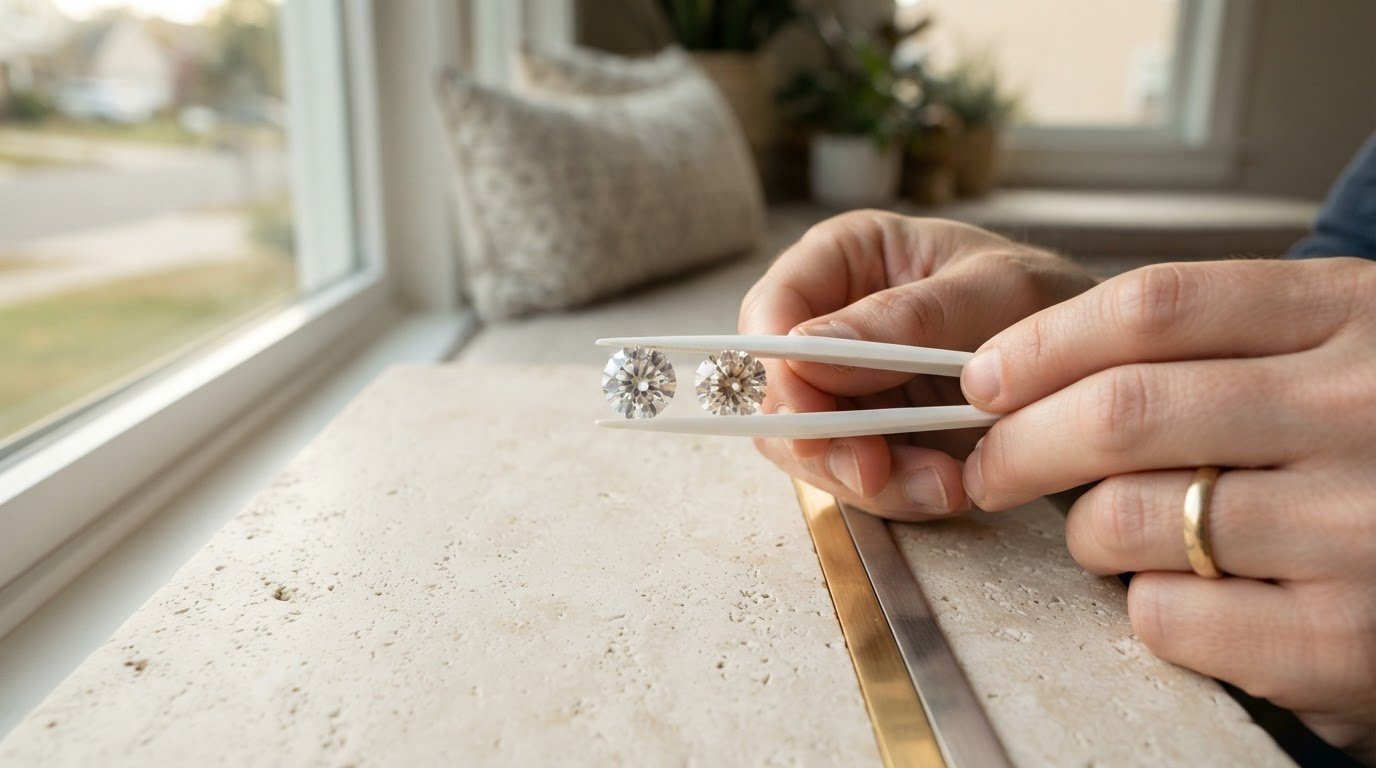
The highest diamond color grade isn’t automatically the best choice. In a near colorless diamond grade G vs H comparison, G is one step closer to colorless, while H may suit buyers who are comfortable with a subtle hint of warmth. Both fall within the near-colorless range, where the setting and diamond shape can affect how color appears.
It’s understandable to focus on color when choosing a diamond, especially when the grades are close together. G and H sit just below the colorless D-to-F grades on the GIA scale, and their difference can be difficult to spot without a direct comparison. This guide explains where G and H fit on the scale, how their color may look in different settings and shapes, and what to weigh when choosing between a whiter appearance and overall value.
Key Takeaways
- Use the D-to-Z scale to understand where G and H sit and what a one-grade difference means.
- Consider diamond size, shape, and metal color together when deciding how noticeable warmth may be.
- Learn how colorless and near-colorless grades differ, and why a higher grade isn’t automatically the best value.
- Review the exact diamond’s images and disclosed details to make a choice that balances appearance and budget.
GIA D-to-Z diamond color grading scale
The GIA color scale gives shoppers a standard way to understand diamond color. G and H are near the colorless end, but the difference can depend on viewing conditions and the individual stone.
Structure of the GIA Color Scale
The GIA D-to-Z color scale grades diamonds from D, colorless, to Z, light yellow or brown. It gives buyers a shared grading reference instead of relying on broad descriptions like “white.” GIA established this color scale in 1953. Earlier systems used A-B-C labels, numbers, and descriptive terms, making comparisons less consistent.
During grading, a diamond is compared with stones of known color under controlled lighting and precise viewing conditions. This matters because surrounding light can affect how yellow tones appear to the eye.
G and H Grade Placement
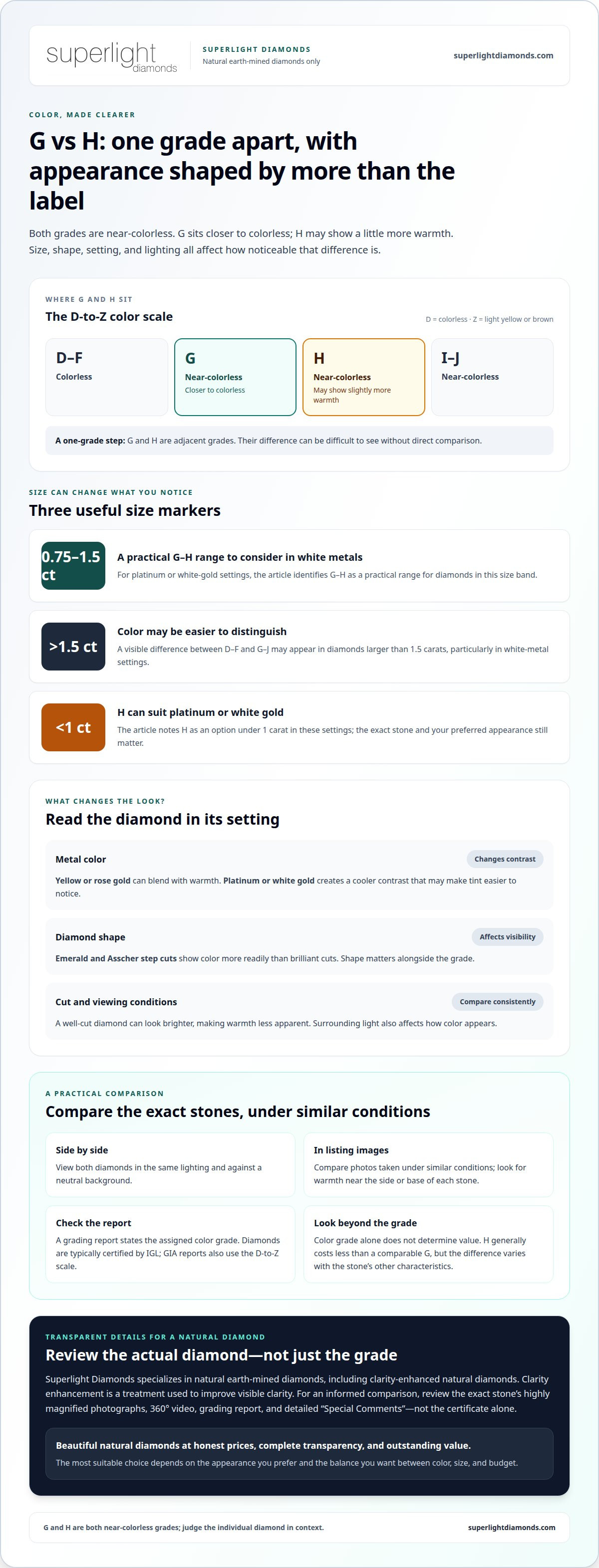
G and H are adjacent grades in the near-colorless range, just below colorless D-F. G is closer to the colorless end, while H may show slightly more warmth. The difference is subtle and can be difficult to see without direct comparison.
An H diamond generally costs less than a comparable G, but the difference varies with the stone’s other characteristics. Color grade alone doesn’t determine a diamond’s value.
Comparing G and H Visually
To compare G and H in person, view both diamonds side by side under the same lighting and against a neutral background. In listing photos, compare images taken under similar conditions and look for warmth near the side or base of each stone.
Cut also affects how noticeable color appears. A well-cut diamond can look brighter, making warmth less apparent, while step cuts such as emerald and Asscher show color more readily. Yellow or rose gold can blend with warmth; platinum and white gold may make it easier to notice.
Color Certification in Grading Reports
A grading report documents the diamond’s assigned color grade. Look for the stated G or H grade on a report from a gemological laboratory; diamonds are typically certified by IGL (International Gemological Laboratories). GIA reports also use the D-to-Z scale, but GIA certification isn’t the only report format buyers may encounter.
What is the best diamond color grade?
The best color grade depends on how a diamond’s size, shape, and setting affect its appearance. For a practical choice, weigh visible color against your budget rather than automatically selecting the highest grade. A near colorless diamond grade G vs H comparison can help clarify whether the difference matters for the look you want.
Carat Size and Color Visibility
As a diamond gets larger, its color can become easier to notice, particularly in white-metal settings. A visible distinction between D-F colorless and G-J near-colorless grades may appear in diamonds larger than 1.5 carats. The stone’s shape matters too: step cuts such as emerald and Asscher show color more readily than brilliant cuts.
Lighting also affects what you see. Compare stones under similar conditions, then consider how the setting changes their appearance. Yellow or rose gold can blend with a light yellow tint, while platinum and white gold provide a cooler contrast.
Choosing Color for Different Sizes
For white-metal settings, G-H color is a practical range to consider for diamonds from 0.75 to 1.5 carats. H can suit a diamond under 1 carat in platinum or white gold. For a platinum setting, a step cut, or a diamond over 1.5 carats, G offers more assurance of a whiter look.
For a 1-carat round brilliant in yellow or rose gold, H may be a sensible value choice. At moderate carat weights, G and H can be hard to distinguish in yellow or rose gold. Use a near colorless diamond grade G vs H comparison to decide whether a whiter appearance matters more than prioritizing size or another feature.
Shape, setting, cut, and viewing conditions all influence whether warmth is visible. A larger H-color stone may suit a buyer prioritizing size, while G may appeal when a whiter appearance matters more, especially in platinum. Weigh those trade-offs against your preferences rather than treating one grade as the right choice for everyone.
Colorless and near-colorless diamonds
On the GIA scale, D-F represent colorless diamonds, while G-J represent near-colorless diamonds. This distinction describes the amount of body color, not whether a diamond is attractive or suitable to wear. Near-colorless stones can appear white in many settings, with slight warmth becoming more noticeable depending on the stone, lighting, and surrounding metal.
G and H are the first two near-colorless grades. G sits closer to the colorless range; H may show a little more warmth. Without direct comparison, an untrained eye may not distinguish adjacent grades such as G and H. The practical question is less about the label alone and more about the diamond’s appearance in its intended setting.
Metal color can change that appearance. Yellow or rose gold can blend with a diamond’s warmth, while platinum and white gold create a cooler contrast that may make tint easier to notice. Shape matters too: the open facets of emerald and Asscher cuts show color more readily than brilliant cuts. Consider these factors together instead of judging color from a grade in isolation.
For many buyers, a near-colorless diamond offers a useful balance: it can look white in everyday viewing conditions without requiring a colorless grade. Choose D-F if minimizing visible tint is the priority; consider G or H if balancing color with budget matters more. Either way, compare the exact stone in images or in person, since lighting and setting influence what you see.
Compare diamond color options with the appearance you prefer in mind.
Superlight Diamonds
Superlight Diamonds helps shoppers weigh color grade against the appearance and value of a specific natural diamond. Its selection includes Round Brilliant, Princess Cut, Cushion Cut, and clarity-enhanced natural diamonds. Clarity enhancement is a treatment used on natural diamonds to improve visible clarity, offering another option when comparing stones.
To compare G and H, review the exact stone’s highly magnified photographs and 360° video alongside its grading report. Detailed “Special Comments” disclose characteristics that may not be obvious from the report alone. This gives you a clearer view of the diamond’s appearance, so you can consider its color, cut, and other details together rather than choosing by grade alone.
For a transparent comparison, contact Superlight Diamonds and discuss what matters most in your diamond choice.
Choose the balance that feels right for you
Use your near colorless diamond grade G vs H comparison to narrow the options, then decide what matters most in the finished piece. A slightly whiter appearance may be your priority, or you may prefer to put more of your budget toward size and sparkle. No single grade suits every buyer, so let your preferred look guide the final choice.
Whether you’re considering a Round Brilliant, Princess Cut, or clarity-enhanced natural diamond, assess the individual stone rather than relying on its color letter alone. Superlight Diamonds specializes only in natural earth-mined diamonds and aims to make selection clear through honest disclosures and detailed listing information. Take the time to consider how the diamond’s color, shape, and setting work together for your preferences.
Ready to discuss your options? Contact Superlight Diamonds today and take the next step toward a diamond that feels right for you.
Frequently Asked Questions
Can you see the difference between D and G color?
Sometimes, but the difference is not equally obvious in every diamond. D is the top of the color scale, while G is several grades lower; a side-by-side comparison can make the contrast easier to notice. For a real-world impression, consider the diamond’s shape, size, and setting together rather than judging its color grade in isolation.
Which Is Better for Which Buyer?
G may suit a buyer who prioritizes a whiter appearance, especially in a white-metal setting. H can suit someone comfortable with slight warmth who would rather direct the budget toward size or another feature. For example, compare two stones with similar cut and clarity, then decide whether the visual difference matters more than the other trade-offs.
What does G color mean on the GIA diamond color scale?
G is a near-colorless grade on the GIA scale. It describes the diamond’s color assessment, not its cut, clarity, or carat weight. A G grade alone can’t tell you how lively a diamond looks or whether its inclusions are visible. Consider those characteristics separately when comparing stones with the same color letter.
What does H color mean on the GIA diamond color scale?
H is a near-colorless grade, one step below G. The letter describes color only, so it doesn’t determine a diamond’s sparkle, clarity, or overall suitability. An H stone can be a sensible choice if its appearance meets your preference and its other characteristics fit your priorities. Judge it as an individual diamond, not as a letter alone.
How visually different is a G color diamond from an H color diamond?
The visual difference is usually subtle, and direct comparison makes it easier to assess. View the stones side by side under the same lighting, with similar backgrounds and settings if possible. In listing photos, use images of each exact diamond and avoid comparing pictures with noticeably different lighting or color balance. Shape and metal can also affect the impression.
Loose Diamond Wholesale Price Guide: How to Secure Real Value in 2026
Why should a microscopic inclusion you can't see without a professional loupe add thousands of dollars to your invoice? Most buyers feel overcharged by traditional stores and confused by technical grading that doesn't match a stone's visual beauty. It's frustrating when a 1 or 2-carat stone is priced out of reach due to "invisible" specs. [...]
The Diamond Clarity Enhancement Process: A Deep Dive into Science and Value
What if you could own a natural, earth-mined diamond that looks twice as expensive as its price tag suggests? Most shoppers feel frustrated when they realize that "eye-clean" diamonds often come with a premium price that feels out of reach. You want the sparkle and size of a high-quality gem, but technical jargon and high [...]
Get a Bigger Diamond for Less: Savvy Buyer's Guide
Why would you pay double the price for a diamond trait that is only visible under a microscope? Most shoppers feel priced out of the natural diamond market because they think they must prioritize technical perfection over size and sparkle. It is a common struggle to feel like you are sacrificing the "wow" factor just [...]
Comprehensive Loose Diamond Buying Guide 2026
Navigating the world of loose diamonds can feel overwhelming, but it is also the most intelligent way to purchase the centerpiece of your jewelry. Buying a stone unmounted allows for complete transparency, letting you evaluate its quality and characteristics without a setting to hide imperfections. This guide is designed to demystify the process, empowering you [...]