Loading... Please wait...
 USD



Blog
Recent Posts
Medium Blue Fluorescence in Faint Yellow Diamonds and Price
Posted on
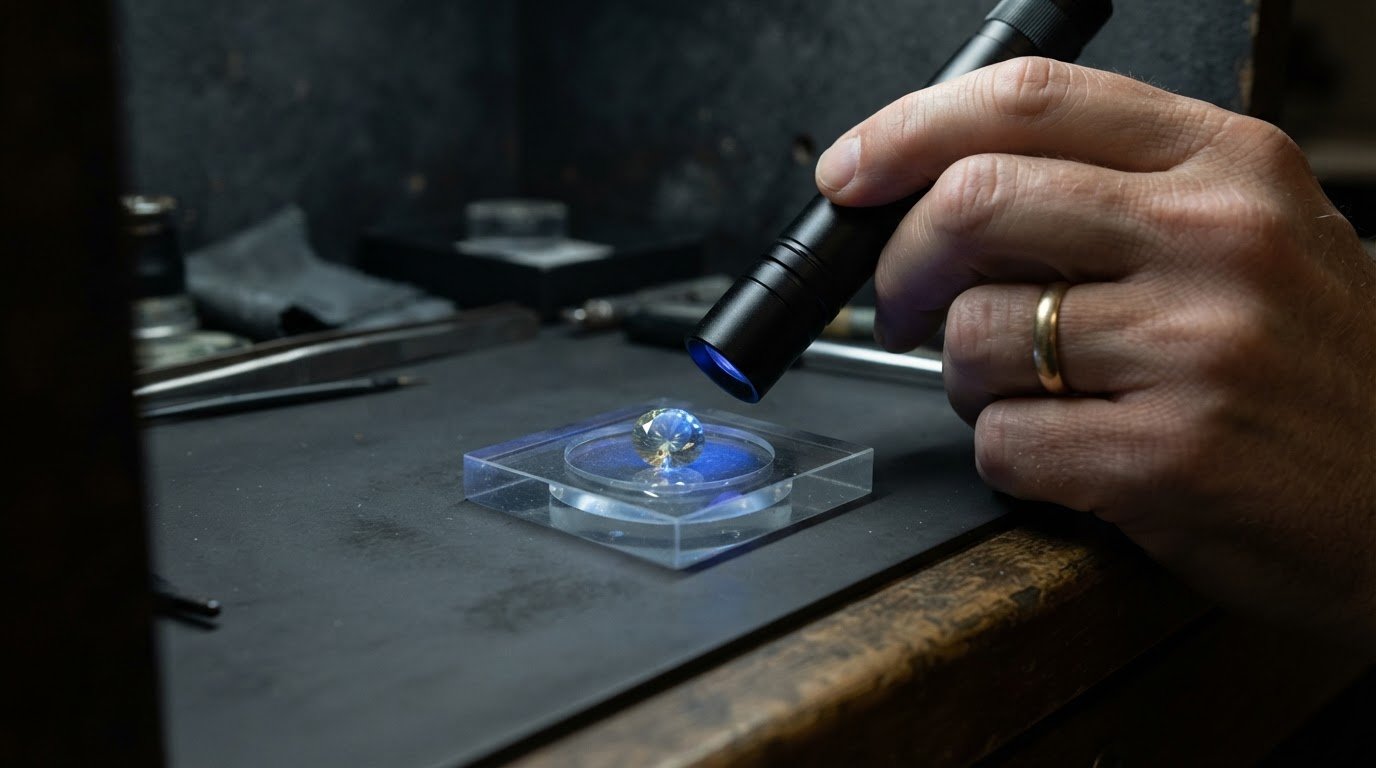
Blue fluorescence doesn’t automatically make a faint yellow diamond look green. Medium blue fluorescence in faint yellow diamonds can affect their appearance in ultraviolet-rich daylight, and fluorescent yellow diamonds generally sell for slightly less than comparable stones without fluorescence. The effect varies by diamond and lighting, so the grading description alone doesn’t tell the whole story.
Consider both appearance and price when comparing diamonds. Fluorescence is visible light emitted under ultraviolet radiation; its color and strength can affect a diamond’s appearance in some settings. This guide explains how fluorescence works, what medium blue fluorescence may mean for faint yellow diamonds, and how it can factor into pricing. It also explains why viewing a diamond in different kinds of light helps you assess its appearance beyond the grading terms.
Key Takeaways
- Learn how fluorescence strength is graded and why the grade alone doesn’t describe a diamond’s full appearance.
- See how lighting conditions can change what you notice when assessing a fluorescent diamond.
- Understand why fluorescence-related market discounts are only one part of a diamond’s pricing picture.
- Explore how blue fluorescence interacts with faint yellow color and what to consider when comparing diamonds.
How does fluorescence affect diamonds in general?
Fluorescence can affect a diamond’s appearance under ultraviolet light, especially in sunlight. Its visible effect depends on the stone and the surrounding lighting.
Fluorescence Across Lighting Conditions
Fluorescence is visible light emitted when ultraviolet radiation reaches a diamond. Sunlight can activate medium or strong blue fluorescence, while most household lighting doesn’t do so noticeably. A diamond may therefore look different outdoors than under indoor incandescent or fluorescent ceiling lights. A grading description alone can’t show how the stone appears in every setting.
Ultraviolet Activation of Fluorescence
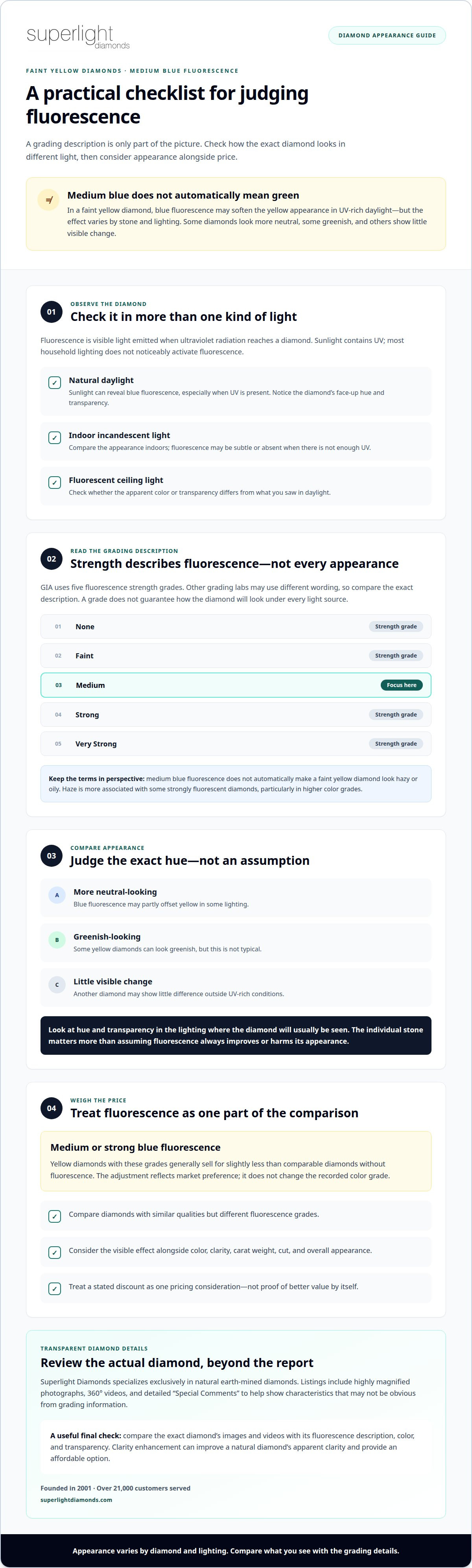
Ultraviolet light provides the energy that makes fluorescence visible; without enough UV, the effect may be subtle or absent. Sunlight contains UV, so it can reveal blue fluorescence in some diamonds. GIA grades fluorescence in five levels: None, Faint, Medium, Strong, and Very Strong. These grades describe fluorescence strength, not a guaranteed change in body color under every light source.
GIA uses these five fluorescence grades. Other grading labs may use different wording, so compare the exact description instead of assuming every lab uses identical terms.
Medium blue fluorescence doesn’t automatically make a faint yellow diamond look hazy or oily. Fluorescence usually doesn’t create haze; a hazy appearance is more associated with some strongly fluorescent diamonds, particularly those in higher color grades.
Assess the diamond in natural daylight, indoor incandescent light, and fluorescent ceiling light. Compare its apparent color and transparency in each setting for a more practical view than ultraviolet light alone can provide.
Market pricing of fluorescent yellow diamonds
Fluorescence can affect market pricing, but it isn’t the only factor. For yellow diamonds, both its strength and its visible effect matter.
Fluorescence and Market Pricing
Market pricing reflects how buyers value a diamond’s fluorescence alongside its color grade and appearance. Yellow diamonds with medium or strong blue fluorescence generally sell for slightly less than comparable diamonds without fluorescence. GIA-graded Fancy Yellow, Fancy Intense Yellow, and Fancy Vivid Yellow stones with medium or strong blue fluorescence may face a market penalty. That adjustment reflects market preference, not a change to the diamond’s recorded color grade.
Pricing Discounts for Fluorescence
Discounts can vary with fluorescence strength and the diamond’s visible appearance. Very strong fluorescence may affect a diamond’s market price, especially if visible haziness changes its appearance. These ranges offer context, not a fixed formula for every yellow diamond. Color, clarity, carat weight, cut, and the stone’s appearance still influence its market position.
Compare diamonds with similar qualities but different fluorescence grades. A medium-blue stone may cost less than a comparable non-fluorescent one, while its daylight appearance may still suit your preference. Treat a stated discount as one pricing consideration, not proof of better value. Compare the visible color and transparency with the grading details, then weigh the difference against the appearance you prefer. For faint yellow diamonds, consider fluorescence’s effect on appearance and its market adjustment together.
Blue fluorescence in yellow diamonds
Medium blue fluorescence is less intense than strong or very strong fluorescence, so its visible effect may be subtler. In faint yellow diamonds, the blue response may soften the yellow appearance under UV-rich daylight, but it won’t necessarily change the hue. Both the individual stone and the lighting matter.
Blue fluorescence can make some yellow diamonds look greenish, though this isn’t typical. With medium blue fluorescence in faint yellow diamonds, the interaction with the stone’s body color may be less noticeable than it is with stronger fluorescence. A grading report describes the color grade but not every appearance under different lighting.
Assess the actual hue in sunlight and indoor lighting. Blue fluorescence may partly offset yellow, while another diamond may show little visible change. Consider whether the face-up color looks more neutral, greenish, or unchanged in the conditions where the stone will usually be seen.
Strong fluorescence can have a more noticeable effect. Some Fancy Intense Yellow diamonds with strong blue fluorescence appear paler in direct sunlight. Other Intense Yellow diamonds show little change outdoors, with fluorescence becoming apparent only under ultraviolet light and against a dark field.
GIA grades colored diamonds using the same type of lighting and bulb as for white diamonds, but everyday viewing conditions still affect appearance. Assess the individual stone’s hue and transparency rather than assuming blue fluorescence automatically improves or harms a faint yellow diamond.
Superlight Diamonds
Superlight Diamonds specializes exclusively in natural earth-mined diamonds, with competitive pricing and one of the largest online selections of natural loose diamonds. Its diamonds are typically certified by IGL (International Gemological Laboratories). Since its founding in 2001, it has served over 21,000 customers.
To assess a diamond’s appearance beyond its report, listings include highly magnified photographs, 360° videos, and detailed “Special Comments” about characteristics that may not be obvious from grading information. The selection includes Round Brilliant and Princess Cut Diamonds, along with clarity-enhanced diamonds. Clarity enhancement improves a natural diamond’s apparent clarity and provides an affordable option.
Review the details and images of the individual diamond as you consider its fluorescence, color, and value.
Choose the Diamond That Fits Your Priorities
Let your next step be a comparison guided by what you value most: the color you see, the way the diamond looks in everyday light, and how it fits your budget. A clear list of priorities can make trade-offs easier to assess without treating any single grading detail as the whole decision.
Review the exact diamond’s available images and listing details, and consider how its appearance aligns with your preferences. If you’d like help thinking through those details, contact Superlight Diamonds for diamond advice.
Take the time you need to choose a diamond that feels right for you.
Frequently Asked Questions
What is fluorescence?
A diamond’s report lists fluorescence separately from its color, clarity, and cut assessments. This lets you consider each characteristic on its own. For example, a fluorescence notation doesn’t change the diamond’s listed carat weight or clarity grade. Treat it as one descriptive detail alongside the other grading information, not as a separate measure of overall quality.
What does medium blue fluorescence mean on a diamond grading report?
“Medium blue” records the observed fluorescence strength and color. It doesn’t replace the diamond’s body-color grade or describe its cut or clarity. For example, a report can list a faint yellow color grade and separately note medium blue fluorescence. Read both entries together, but don’t treat the fluorescence notation as a revised color grade.
How does medium blue fluorescence affect the appearance of faint yellow diamonds?
Fluorescence may influence the color impression, but a setting can also affect how a diamond’s hue appears. Yellow metal may visually harmonize with a faint yellow stone, while white metal creates a different contrast. Separating the setting’s influence from the diamond’s own appearance helps explain why the same stone may look different once mounted.
Does blue fluorescence make faint yellow diamonds look whiter or brighter?
A diamond may look less warm to some viewers, but “whiter” and “brighter” describe different qualities. Whiter refers to a color impression; brightness describes light returned to the eye. A fluorescence notation alone can’t establish how lively a diamond will appear. Consider its color impression separately from its cut and visible sparkle.
How often does medium blue fluorescence cause haziness in diamonds?
A medium-blue report notation alone doesn’t establish whether a diamond looks hazy. Fluorescence is one characteristic, while transparency is a separate visual quality. The medium grade itself doesn’t indicate how often haze occurs. Consider the report entry and the stone’s visible transparency as distinct details when assessing an individual diamond.