Loading... Please wait...
 USD



Recent Posts
Strong Diamond Fluorescence and a Milky Look in Sunlight
Posted on
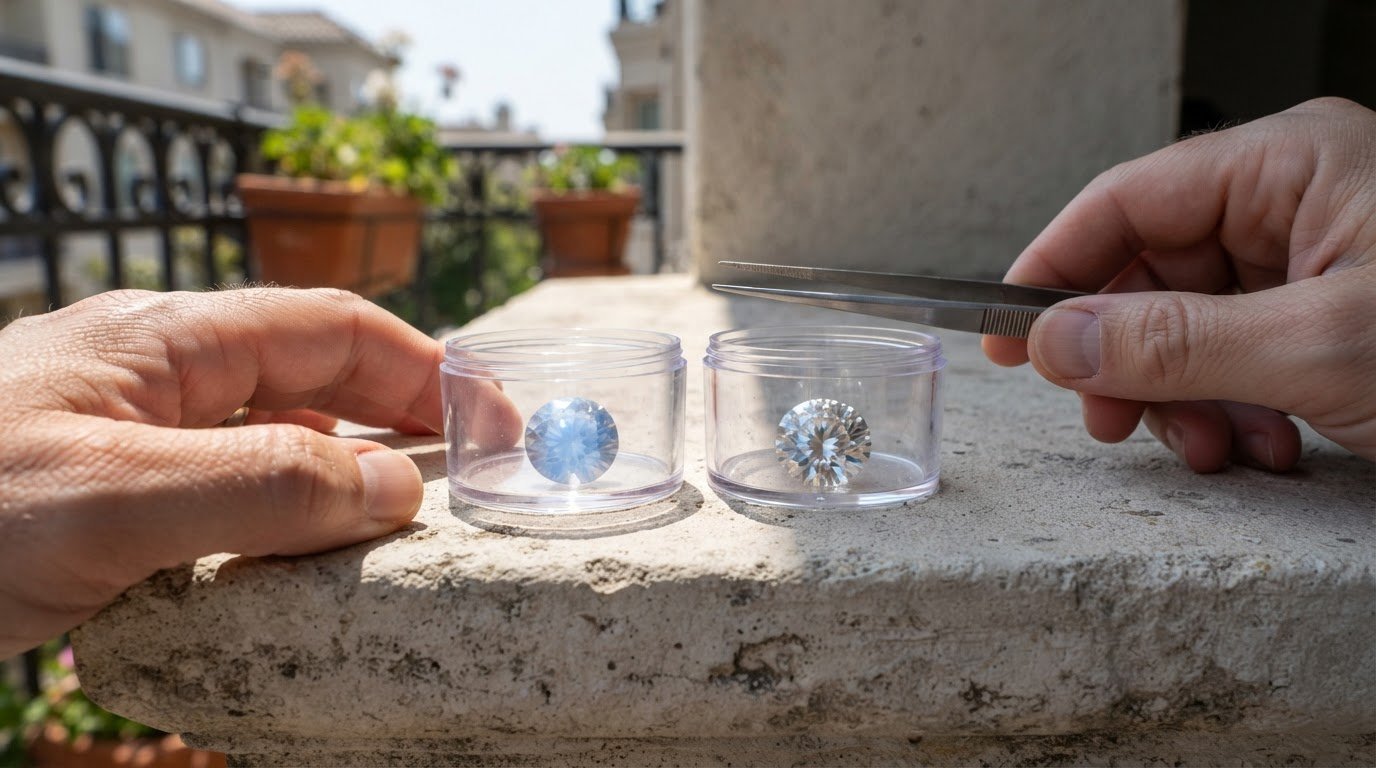
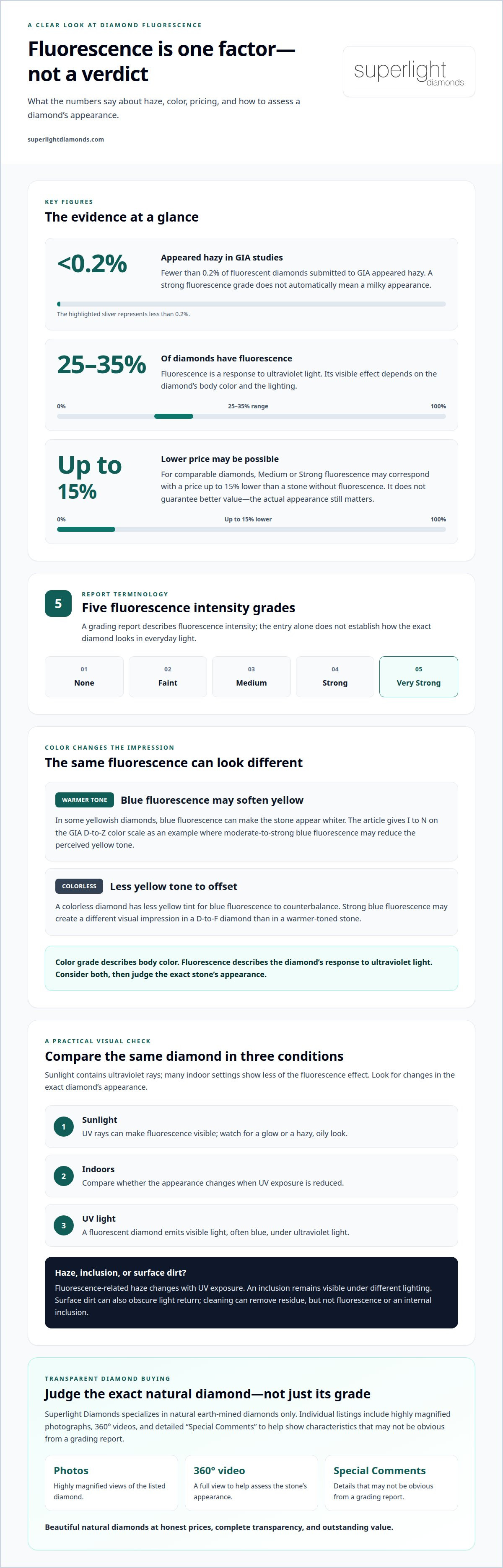
Strong fluorescence isn’t automatically a flaw. A milky effect from strong diamond fluorescence in sunlight can happen, but it’s uncommon: GIA studies found that less than 0.2% of fluorescent diamonds submitted to GIA appeared hazy. Sunlight contains ultraviolet rays that can make fluorescence visible, so a diamond’s appearance may shift between lighting conditions.
It’s understandable to worry that bright outdoor light will reveal a problem you didn’t notice indoors. But fluorescence doesn’t make every diamond look cloudy; in some stones, it can make a yellow tint less noticeable.
This article explains when strong or very strong fluorescence may create a hazy look, how fluorescent diamonds compare with non-fluorescent stones, and why fluorescence is best assessed alongside color, cut, and appearance in different lighting. You’ll have a clearer basis for deciding whether it matters to your choice.
Key Takeaways
- Fluorescence can soften the look of yellowish tones in some diamonds, while its effect on colorless stones may be different.
- A hazy or milky appearance is uncommon, so judge the diamond’s actual appearance rather than fluorescence alone.
- Compare a fluorescent diamond and a non-fluorescent one in different lighting to understand how each looks in everyday conditions.
- Consider fluorescence alongside color, cut, and overall appearance when deciding which diamond offers the best value for you.
Diamond Fluorescence: Good, Bad, or Misunderstood?
Fluorescence can affect a diamond’s appearance, but the effect depends on its body color and the lighting. Grading reports describe fluorescence intensity and, at certain levels, its color. Diamonds are typically certified by IGL (International Gemological Laboratories), though reports from other laboratories may also be considered. This information does not establish that a stone will look hazy.
Fluorescence Across Diamond Colors
Fluorescence is visible light emitted after ultraviolet exposure excites trace elements in a diamond. Its appearance matters because body color influences how the glow is perceived. Blue fluorescence may make a warmer-toned diamond appear less yellow, while a colorless diamond has less yellow tint to offset. About 25% to 35% of diamonds have fluorescence.
Blue Fluorescence and Perceived Color
Blue fluorescence can make some yellowish diamonds appear whiter. For example, moderate-to-strong blue fluorescence may reduce the perceived yellow tone in a diamond graded I to N on the GIA D-to-Z color scale. GIA research found that some strongly blue-fluorescent diamonds appeared to have better color when viewed table-up, but showed no consistent trend table-down. Appearance can differ from grade.
Color Grades and Fluorescence
A color grade describes a diamond’s body color; fluorescence describes its response to ultraviolet light. GIA uses five intensity categories: None, Faint, Medium, Strong, and Very Strong. Fluorescence color may also be recorded. Strong blue fluorescence, for instance, can create a different visual impression in a D-to-F diamond than in a warmer-toned stone. Consider both the grade and the diamond’s appearance.
Fluorescence Notes on Grading Reports
GIA notes fluorescence color when intensity is Medium, Strong, or Very Strong, but that detail doesn’t certify a hazy appearance in sunlight. A grading report can help describe a diamond, though its details may not show exactly how it looks in everyday lighting. A report helps describe grading characteristics; the fluorescence entry alone doesn’t determine how the exact diamond looks in everyday lighting.
Strong fluorescence and a hazy or milky appearance
A strong diamond fluorescence milky effect in sunlight is possible, but strong fluorescence does not always make a diamond look hazy. The key is whether its appearance changes with the lighting.
Appearance in Sunlight and Indoors
Sunlight contains ultraviolet rays, so a fluorescent diamond may look different outdoors than under indoor lighting. Strong blue fluorescence can appear as a glow or make a stone seem slightly oily or hazy in direct sun. To assess a strong diamond fluorescence milky effect in sunlight, compare the diamond outdoors and indoors. Fluorescence-related appearance should lessen when UV exposure is removed.
Strong Blue Fluorescence and Milkiness
A milky appearance is a hazy, less-transparent look that can occur in a small number of strongly fluorescent diamonds. Studies found that less than 0.2% of fluorescent diamonds submitted to GIA appeared hazy. Strong blue fluorescence can also look oily or yellow-tinged in certain lighting. These effects are possible, not automatic consequences of a Strong or Very Strong grade.
Fluorescence Under Ultraviolet Light
Under UV light, a fluorescent diamond emits visible light, often blue. Sunlight can reveal fluorescence because it contains UV rays, while many indoor settings show less of the effect. Before buying, compare the exact diamond under UV light, in sunlight, and indoors. Note whether its appearance changes between these conditions.
Distinguishing Haze from Inclusions
Fluorescence-related haze changes with UV exposure, while an inclusion is an internal feature that remains visible under different lighting. Surface dirt can also obscure light return and make a diamond look cloudy. A jeweler can clean residue or assess the cause, but cleaning won’t remove fluorescence or an internal inclusion.
Comparing fluorescent diamonds with non-fluorescent stones
For a fair comparison, pair diamonds with similar color, cut, clarity, and carat weight, then consider fluorescence as one factor. Fluorescence can affect appearance and pricing, but it does not determine sparkle; cut is the primary factor influencing how a diamond returns light. Compare what you see, not just the fluorescence label.
For comparable diamonds, Medium or Strong fluorescence may correspond with a price up to 15% lower than a stone without fluorescence. That difference doesn’t guarantee better value: the diamond’s appearance still needs to suit you. The strong diamond fluorescence milky effect in sunlight is relevant if you notice a hazy look outdoors, especially in a colorless stone.
Color also shapes the comparison. Blue fluorescence can make some yellow-tinted diamonds appear whiter, which may appeal to buyers who value that face-up look. In a colorless diamond, there’s less yellow tone to offset. To assess the strong diamond fluorescence milky effect in sunlight, compare both stones under the same lighting and look for visible haziness or an oily appearance.
Weigh the report’s fluorescence grade against the exact stone’s appearance, cut, and color. A non-fluorescent diamond isn’t automatically more attractive, and fluorescence alone doesn’t establish quality. If you’re comparing options for value, compare natural diamond listings alongside their available images and details.
Superlight Diamonds
Superlight Diamonds specializes in natural earth-mined diamonds only, with one of the largest online selections of natural loose diamonds and competitive pricing. With more than 20 years of experience serving tens of thousands of satisfied customers, the brand focuses on honest disclosures and value. Individual listings include highly magnified photographs, 360° videos, and detailed “Special Comments” to show characteristics that may not be obvious from a grading report. Reviewing the exact diamond’s images and video helps you assess its appearance alongside its report.
Superlight Diamonds offers natural Round Brilliant, Princess Cut, and Cushion Cut diamonds. Most of its inventory consists of clarity-enhanced natural diamonds. Clarity enhancement is a positive way to offer beautiful natural diamonds at more affordable prices.
For help weighing fluorescence as you choose a diamond, contact Superlight Diamonds.
Choose the Diamond That Fits Your Priorities
Your next step is to decide which qualities matter most in everyday wear. If you’re weighing how a strong diamond fluorescence milky effect in sunlight could affect your choice, consider whether you prefer a consistent appearance across lighting or are comfortable with a look that shifts outdoors. Then weigh that preference alongside the diamond’s overall appearance and value within your budget.
There isn’t one fluorescence grade that suits every buyer. A useful decision comes from matching the stone’s visible character to your preferences, rather than treating a single report detail as the whole story. If you’d like help considering your options, contact Superlight Diamonds. A clear sense of what you value most can make the choice feel more straightforward.
Frequently Asked Questions
But do I need to worry about my stone fluorescence?
Usually, no: fluorescence by itself is an optical feature, not evidence that a diamond is damaged. If you already own the stone, consider whether its appearance suits you in the conditions where you wear it. If you’re choosing a diamond, weigh fluorescence alongside its overall appearance and other characteristics rather than rejecting it automatically.
Is Fluorescence a Deal-Breaker or a Hidden Gem?
It depends on your preferences and the particular diamond. A buyer who likes the stone’s appearance may consider fluorescence an acceptable characteristic, while someone who dislikes its visible effect may prefer a different option. Treat the fluorescence description as one detail in your decision, not a verdict on the diamond’s value or appeal.
Is a Strong Glow a Bad Thing?
No. Strong or Very Strong describes fluorescence intensity, not overall quality. It does not, by itself, establish that a diamond will look cloudy or unattractive. Use the grading information to understand the feature, then base your decision on the particular stone’s appearance and whether it suits your preferences.
What Makes a Diamond Glow?
Trace elements in a diamond, including nitrogen or boron, can react to ultraviolet radiation and produce visible fluorescence. Blue is a familiar fluorescence color, and a grading report may record the color alongside intensity. The glow is an optical response to UV exposure, not a light source inside the diamond; its visibility depends on the lighting.
What causes a diamond to look milky or hazy in sunlight?
A milky appearance can occur in a small proportion of diamonds with very strong fluorescence, as sunlight’s ultraviolet rays make the effect visible. Sunlight itself doesn’t damage the stone. If cloudiness remains without UV exposure, fluorescence alone may not explain it; surface residue or inclusions can also affect the diamond’s appearance.