Loading... Please wait...
 EUR
EUR


Recent Posts
How to Verify Diamond Carat Weight on a Gem Scale
Posted on
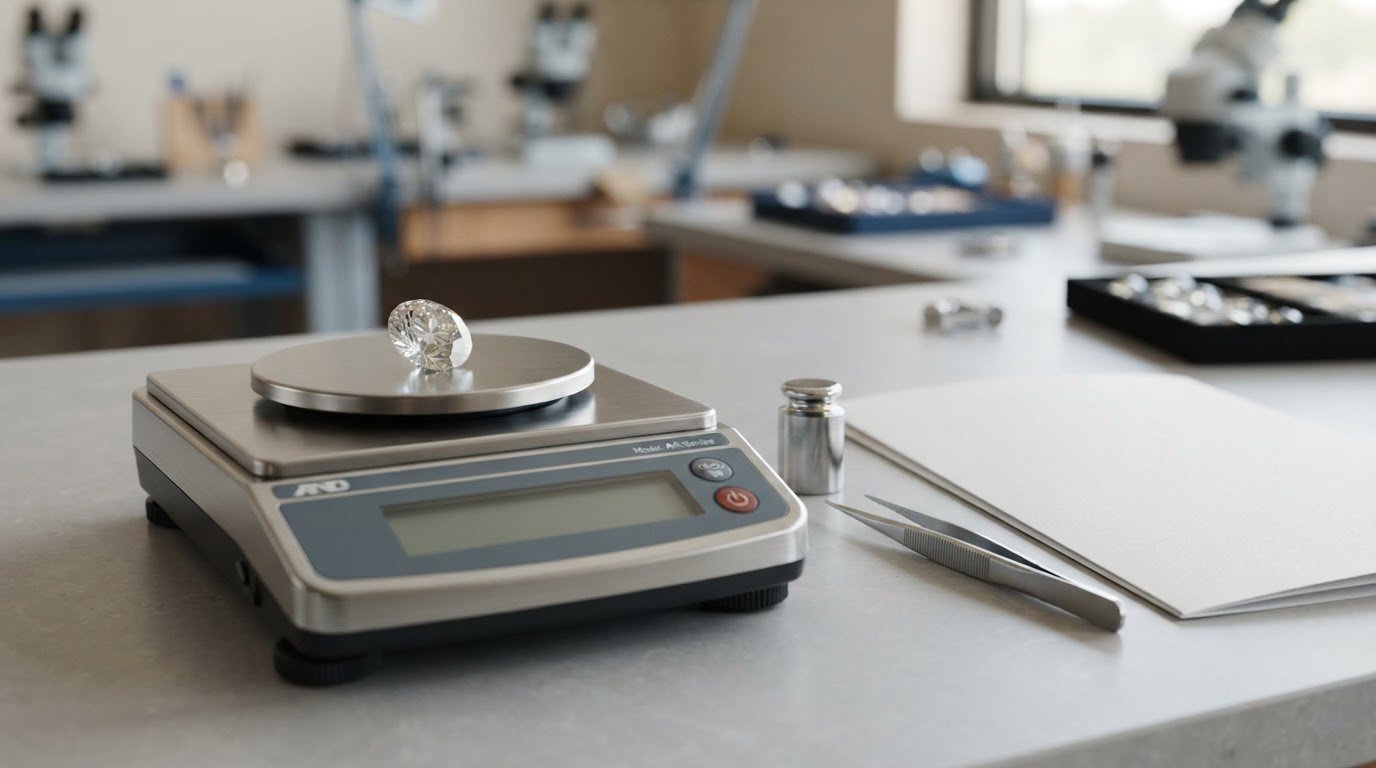
A gem scale can check a diamond’s weight, but it cannot tell you everything about the stone. If you’re wondering how to verify diamond carat weight on a gem scale, begin with a loose diamond and a properly set up scale. Carat measures weight, not visible size, so two diamonds with the same carat weight can look different.
This guide covers how to prepare the scale, take repeatable readings, interpret the displayed value, and compare it with the diamond’s report and listing. At Superlight Diamonds, we specialize exclusively in natural, earth-mined diamonds, with a focus on honest prices, clear information, and value. A weight reading is one useful specification. Reviewing photographs, a 360° video, and the Special Comments for the exact diamond gives you more context about its appearance and disclosed characteristics.
Key Takeaways
- To verify diamond carat weight on a gem scale, follow the manufacturer’s instructions and use the same careful setup for each reading.
- Check the selected unit and the scale’s readability before interpreting the displayed value. The display cannot provide more precision than the scale can measure.
- Compare repeat readings with the weight on the report for the exact diamond. Scale precision, handling, and rounding can explain a small difference.
- A scale measures weight, not identity or grading. Use the report and listing details to understand the wider picture.
What a gem scale can, and cannot, verify about diamond carat weight
To understand how to verify diamond carat weight on a gem scale, first be clear about what the instrument measures: mass. Weighing a loose stone can help you check its weight, but a scale cannot confirm that it is a diamond, match it to a particular report, or establish its color, clarity, cut, or authenticity. A matching number is a useful comparison, not proof of the stone’s identity or grading.
Carat weight, points, and the limits of a scale reading
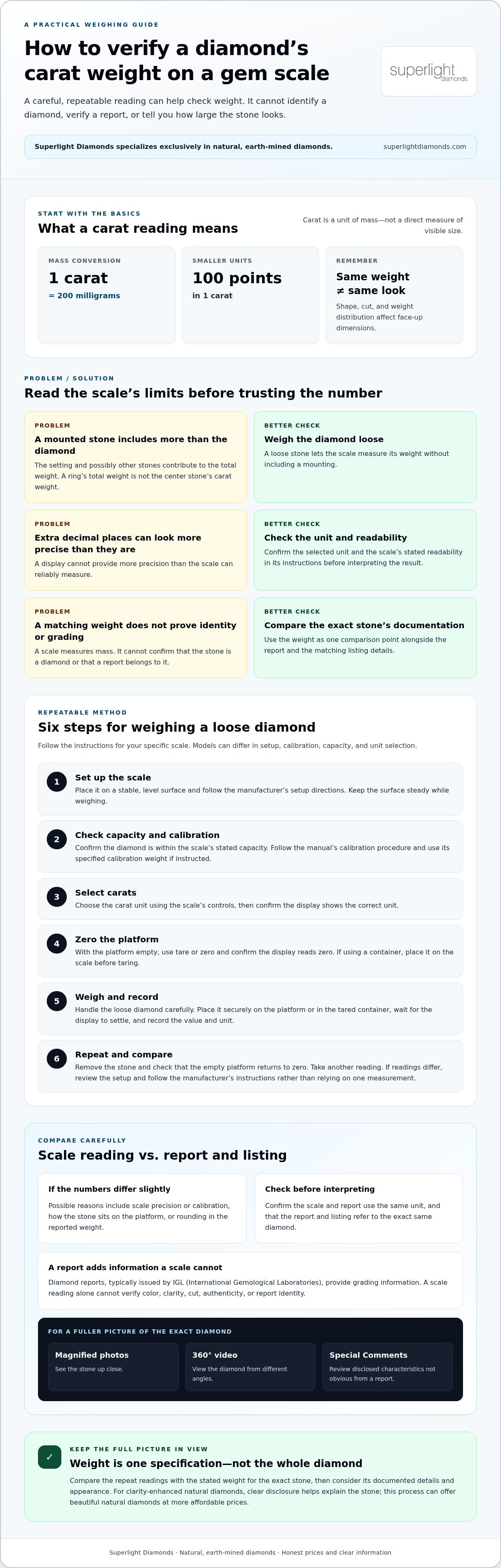
One carat equals 200 milligrams and contains 100 points. The Carat (mass) reference explains the carat as a unit of mass used for gemstones. A scale may display carats, grams, or another unit. Check the selected unit and the scale’s stated readability in its instructions before interpreting the result. A display showing several decimal places does not mean the scale can reliably measure to all of them.
Carat weight is not a direct measure of visible size. Shape, cut, and the way a diamond’s weight is distributed all affect its face-up dimensions. Two stones with the same weight can therefore look different in size. Consider the measurements and appearance alongside carat weight rather than treating the number as a size guarantee.
For an individual diamond reading, weigh the stone loose. A mounted stone includes the weight of its setting and possibly other stones, so the scale cannot isolate the center diamond’s weight. The total weight of a ring is not the carat weight of its center stone.
A diamond report, typically issued by IGL (International Gemological Laboratories), provides grading information a scale cannot supply. A detailed listing can also show the stone’s stated specifications alongside highly magnified photographs, a 360° video, and Special Comments that disclose characteristics not obvious from a report.
How to weigh a loose diamond on a gem scale, step by step
When learning how to verify diamond carat weight on a gem scale, use the manufacturer’s instructions for that model. Scales differ in setup, calibration, capacity, and unit selection. Read the manual before weighing a valuable stone, and keep the setup consistent so you can compare readings meaningfully.
Prepare the scale, take repeat readings, and record the result
Zero the scale before weighing, place the loose stone securely on the platform, and repeat the measurement. If you use a container to hold the diamond, tare the scale with the empty container in place first. This makes the displayed reading reflect the contents rather than the container.
- 1. Set up the scale. Place it on a stable, level surface and follow the manufacturer’s setup directions. Keep the surface steady while weighing.
- 2. Check capacity and calibration. Confirm that the diamond’s weight is within the scale’s stated capacity. Follow the manual’s calibration procedure and use the specified calibration weight if instructed.
- 3. Select carats. Choose the carat unit using the scale’s controls, then confirm that the display shows the correct unit.
- 4. Zero the platform. With the platform empty, use the tare or zero function. Confirm that the display reads zero before weighing the stone. If using a container, place it on the scale before taring.
- 5. Weigh the stone. Handle the loose diamond carefully and place it securely on the platform or in the tared container. Wait for the display to settle, then record the value and unit.
- 6. Repeat and compare. Remove the stone and check that the empty platform returns to zero. Take another reading. If the readings differ, review the setup and follow the manufacturer’s instructions instead of relying on one measurement.
These steps create a repeatable way to check a stone’s weight. To compare weight with disclosed specifications and visual details, browse the natural loose diamond listings from Superlight Diamonds.
Compare the gem-scale result with a diamond report and listing
Compare repeat readings with the carat weight stated for the exact diamond. A small difference can relate to the scale’s precision or calibration, how the stone sits on the platform, or rounding in the reported weight. Check that the scale and report use the same unit, and confirm that the report and listing refer to the same stone before interpreting a difference.
Use the exact diamond’s documentation and visual evidence
A gem scale measures weight. It cannot identify a diamond or independently verify its grading report. A matching reading also does not prove that a report belongs to that stone. Treat weight as one comparison point, and review the report’s other details alongside the listing rather than relying on the scale alone.
For clarity-enhanced natural diamonds, clear disclosure helps you understand the stone you’re considering. Clarity enhancement is a way to offer beautiful natural diamonds at more affordable prices. Review the relevant listing details as well as the exact diamond’s magnified photographs, 360° video, and “Special Comments.” These provide a closer view of characteristics that may not be apparent from a report.
For round brilliant stones, our guide to buying round brilliant loose diamonds online explains listing details you can use to make a considered choice. Compare the exact stone’s visual evidence with its stated specifications, then prioritize the features that matter to you and your budget.
Make your next diamond decision with confidence
Use a weight check as one part of a considered buying decision. Then look at whether the exact diamond’s documented details and appearance suit your priorities. Knowing how to verify diamond carat weight on a gem scale helps you compare one specification, but the number alone cannot show how the diamond looks or whether it fits your budget.
Superlight Diamonds has served customers since 2001, with more than 21,000 satisfied clients and top-rated seller status on eBay. We specialize exclusively in natural, earth-mined diamonds and offer a wide online selection at competitive prices. Highly magnified photographs, 360° videos, and detailed listing comments help you compare the actual stone, not just a number on a report.
Explore natural, earth-mined loose diamonds with transparent listing details and compare the features that matter to you.
Frequently Asked Questions
Can I verify a diamond’s exact carat weight with a home gem scale?
A suitable home gem scale can provide a useful weight reading, but it may not establish the diamond’s exact weight. The result depends on the scale’s precision, calibration, and correct use. To verify diamond carat weight on a gem scale, compare a stable reading with documentation for that specific stone. The scale alone cannot confirm its identity, grading, or authenticity.
How do I convert milligrams to diamond carats?
Divide the weight in milligrams by 200 to convert it to carats: 400 milligrams equals 2 carats. One metric carat contains 100 points, so each point represents one-hundredth of a carat. This calculation converts units only. It does not verify whether a diamond has been graded correctly or whether a report belongs to that particular stone.
Can I weigh a diamond while it is set in a ring?
You can place a ring on a scale, but the reading is the weight of the entire item, including its metal setting and any other stones. It will not isolate the center diamond’s carat weight. Rather than trying to remove a stone yourself, use suitable documentation for the loose diamond’s weight, if available, to assess its stated carat weight.
Why does my gem scale show a different weight from the diamond report?
A difference may result from the scale’s precision or calibration, how the stone sits on the platform, or rounding in the report. Check the unit setting, follow the manufacturer’s instructions, and repeat the measurement consistently. Do not assume a particular tolerance or treat the reading as proof that the report is authentic. Compare it with documentation for the exact diamond.