Loading... Please wait...
 USD



Recent Posts
How to Spot Glass Filled Diamond Treatments Before You Buy
Posted on
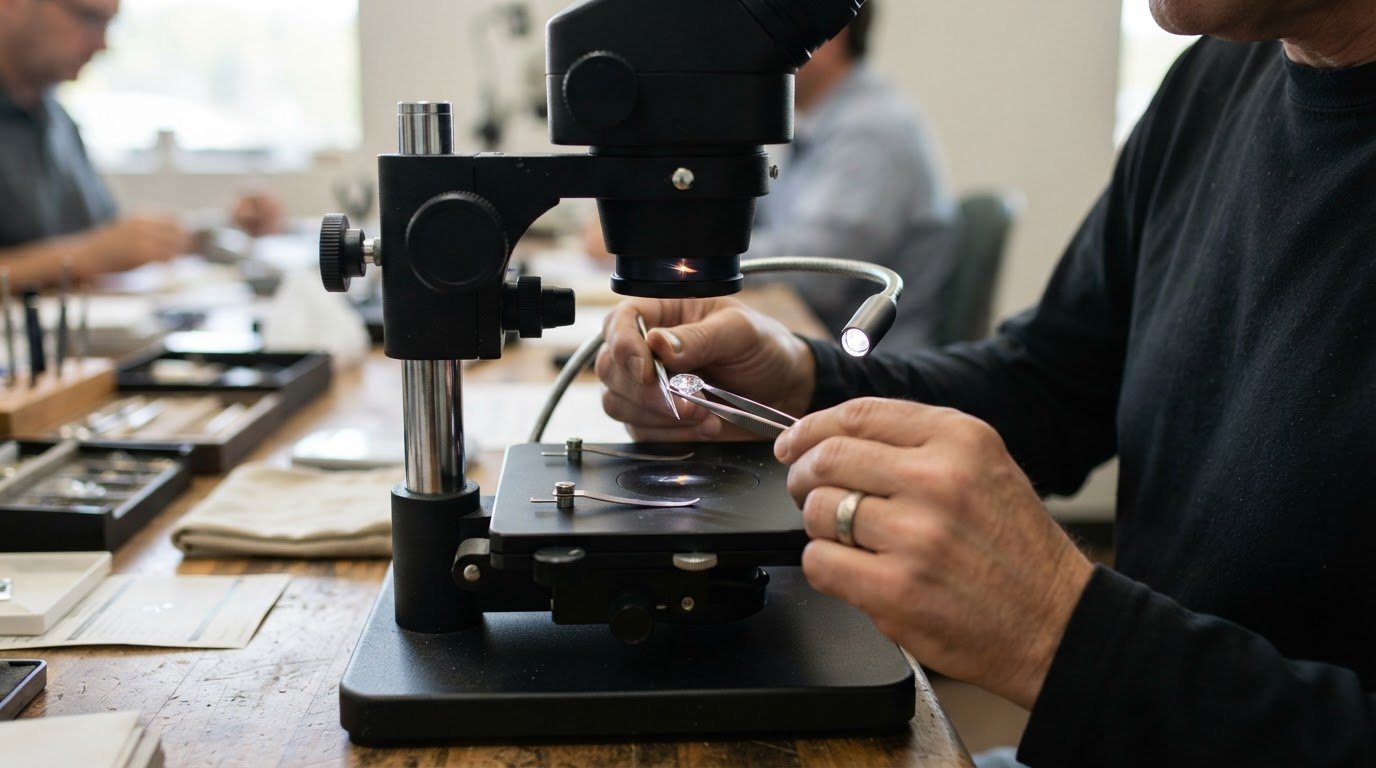
A diamond can look clearer after fracture filling, but the treatment may be hard to recognize without magnification or specialized testing. Knowing how to spot glass filled diamond treatments starts with looking for telltale flashes of color and features inside surface-reaching fractures. Visual clues alone, however, may not confirm whether a diamond has been treated.
It’s reasonable to want clear information about a diamond’s appearance and treatment before buying. This guide explains how fracture filling works, what disclosure to look for, and how specialized analysis can identify glass fillers. You’ll also learn why documentation and transparent details matter when evaluating a treated natural diamond, so you can make a decision that fits your priorities and budget.
Key Takeaways
- Look for unusual orange, blue, or purple flashes and flow-like features within fractures, but treat visual clues as indicators rather than a substitute for expert testing.
- Understand how glass filling can make surface-reaching fractures less noticeable by changing how they interact with light.
- Expect the specific treatment to be disclosed clearly before purchase; a vague description alone may not explain what was done.
- Learn how advanced analytical techniques can identify glass-filler compounds when visual inspection is inconclusive.
Disclosure when buying a treated diamond
A glass-filled diamond is still a natural diamond, and fracture filling is one way to make a diamond with surface-reaching fractures more affordable. The glass improves the fractures’ appearance, but it is an added clarity treatment, not a permanent one. Its apparent clarity may change if the filler changes or is lost.
Before buying, look for disclosure that specifically says “fracture filling” or “glass filling,” rather than relying on broad wording such as “clarity enhanced.” That distinction matters because clarity enhancement can refer to different processes. Laser drilling, for example, creates internal channels, while fracture filling places glass in surface-reaching fractures. Specific wording tells you what treatment the diamond received.
Laboratory documents also need context. Fracture-filled diamonds may not receive a standard grading report. A laboratory report may note the filling but may not provide clarity or color grades. Read the report alongside the seller’s disclosure, as it may not provide the grades found on a standard report.
Care differs, too. Clean a fracture-filled diamond with warm, soapy water and a soft brush. Avoid ultrasonic cleaning, steam, and chemical dips, which may affect the filler. Tell a jeweler about the treatment before repair, since torch heat can melt or vaporize glass.
A coating may scratch or wear away, while irradiation and HPHT are distinct from fracture filling, which uses glass in fractures. A yellow color alone doesn’t identify which process was used. Specific disclosure before purchase helps you understand the diamond’s appearance, documentation, and care needs before deciding.
Refractive-index matching and how fracture filling works
A glass-filled diamond is a natural diamond with glass-like filler in its surface-reaching fractures. The treatment changes how those fractures look, rather than removing them, and can make some natural diamonds more affordable.
Surface-Reaching Fractures
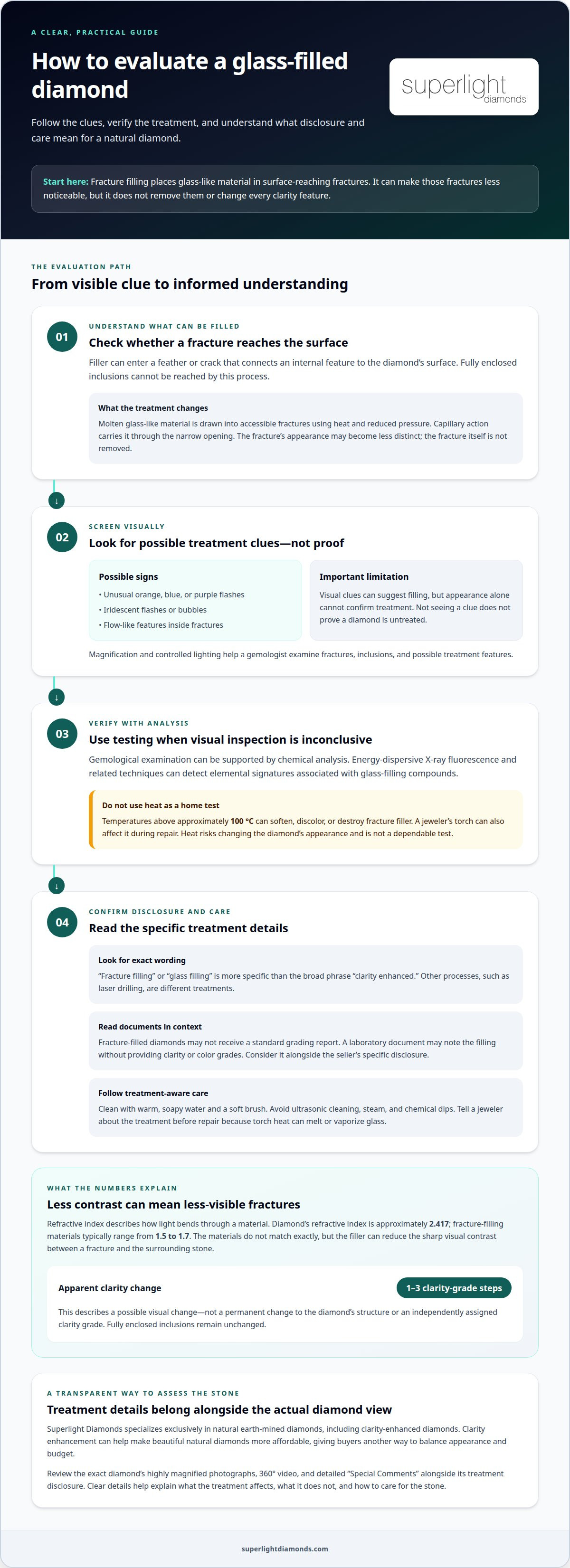
A surface-reaching fracture is a feather or crack that connects an internal feature to the diamond’s surface. This connection matters because filler can enter the fracture; fully enclosed inclusions cannot be reached or changed by this process. For example, filling may make a surface-connected white feather less noticeable, while a separate internal crystal inclusion remains unchanged. The treatment affects specific features, not every clarity characteristic.
The Fracture-Filling Process
Fracture filling places molten glass-like material into accessible fractures using heat and reduced pressure. Capillary action draws the filler through the narrow opening, where it occupies the fracture and changes its appearance. The process may also fill laser-drill holes as a secondary step. While the filler is less stable than the diamond itself, this treatment can help make natural diamonds more affordable. Buyers should review its disclosure and follow care guidance, since heat or cleaning can alter the filler’s effect.
Refractive-Index Matching
Refractive index describes how light bends as it passes through a material. Diamond’s refractive index is approximately 2.417, while fracture-filling materials typically range from 1.5 to 1.7. The filler does not match diamond exactly, but it can reduce the sharp visual contrast between a fracture and surrounding stone. That interaction helps explain why filled feathers may appear less distinct under ordinary viewing conditions.
Improving Apparent Clarity
By making surface-reaching fractures less visible, glass filling can improve a diamond’s apparent clarity by one to three clarity-grade steps. This is a visual change, not a permanent change to the diamond’s structure or an independently assigned clarity grade. Fully enclosed inclusions remain unchanged. Understanding this distinction helps buyers see what the treatment can affect and why its specific process and results should be disclosed.
Advanced testing to detect diamond treatments
Knowing how to identify glass-filled diamond treatments starts with understanding what visual inspection can and cannot establish. Gemological testing examines the material, helping distinguish filled fractures from untreated features when visible clues are subtle.
A gemologist can use magnification and controlled lighting to inspect fractures, inclusions, and possible treatment features. An iridescent flash or bubbles may indicate filling, but their absence doesn’t prove a diamond is untreated. Internal laser drilling can open a feather to the surface, making the resulting feature harder to interpret by appearance alone.
Chemical analysis can provide evidence beyond visual inspection. Energy-dispersive X-ray fluorescence and related analytical techniques can detect elemental signatures associated with glass-filling compounds. These methods examine the material, which is useful when filler sits in a narrow fracture and is difficult to see under ordinary lighting.
Heat is not a safe home test. Temperatures above approximately 100 °C can soften, discolor, or destroy fracture filler, and a jeweler’s torch can affect it during repair. Applying heat to identify filler risks changing the diamond’s appearance without producing a dependable result. Knowing about the treatment can help buyers choose an affordable, beautiful natural diamond with clear expectations.
For a reliable understanding of glass-filled diamond treatments, consider both examination and documentation. Fracture-filled diamonds can offer an affordable way to enjoy the beauty of natural diamonds, and their treatment should be clearly disclosed. A treatment report and a gemological examination provide different information, while appearance alone cannot establish whether a diamond is treated.
Superlight Diamonds
Superlight Diamonds specializes exclusively in natural earth-mined diamonds, including clarity-enhanced diamonds. Clarity enhancement can make beautiful natural diamonds more affordable, giving buyers another way to balance appearance and budget.
For a clearer view of an individual stone, listings include highly magnified photographs, 360° videos, and detailed “Special Comments.” Review the images and video of the exact diamond alongside its certificate, so you can consider its visible characteristics as well as its documented details.
For help understanding a listing or choosing a natural diamond, contact Superlight Diamonds.
Choose With Confidence in Your Next Step
Knowing how to spot glass filled diamond treatments can help you approach a purchase with clear expectations. Consider the look you enjoy, the treatment details disclosed for the specific diamond, and how its characteristics fit your budget. Round Brilliant and Princess Cut diamonds offer different style options, while a clarity-enhanced diamond is another natural-diamond choice to consider.
There’s no need to focus on microscopic distinctions that don’t matter to you. Choose the diamond whose documented features and actual appearance feel right for your needs. If you’d like to discuss your options, contact Superlight Diamonds for guidance. Take the next step at your own pace, with the information that helps you make a confident choice.
Frequently Asked Questions
How can you visually identify a glass-filled diamond?
Tilt the diamond under fibre-optic or darkfield illumination and look for an iridescent flash, which may appear orange-yellow or blue-purple. Under magnification, a trained observer may also notice unusual features inside a fracture. These signs can suggest treatment, but visibility depends on viewing conditions. Appearance alone cannot reliably rule treatment out.
What inclusions, flashes, or color effects indicate lead-glass filling?
Under magnification, flow lines, gas bubbles, or a crackled texture inside a fracture can indicate glass filling. A characteristic orange or blue flash may also appear as the diamond moves under suitable lighting. These features occur within or around a fracture, not across the diamond’s overall body color. They are clues to treatment, not a measure of the stone’s beauty.
Can a jeweler identify glass-filled diamonds with a loupe or microscope?
A jeweler may recognize clues with a loupe or microscope, especially if the fracture is visible and the lighting reveals a flash. A 10× loupe can help inspect inclusions and facet junctions, while a microscope offers a closer view of features within fractures. However, a subtle or obscured feature may be difficult to interpret visually, so magnification doesn’t replace specialized testing.
What tests can distinguish glass-filled diamonds from untreated diamonds?
A gemological examination can combine magnified inspection with analytical testing. Energy-dispersive X-ray fluorescence can detect elemental signatures associated with glass-filling compounds, providing evidence beyond surface appearance. A report that describes treatment can also clarify a diamond’s status. Don’t try heat or chemical tests at home, as they can damage the filler and alter the diamond’s appearance.
How are glass-filled diamonds described and documented?
Glass filling is a clarity-enhancement treatment that can improve a natural diamond’s visible appearance. The treatment and its extent should be disclosed in the diamond’s documentation so buyers can make an informed choice. Review the report and the actual diamond’s images and videos to understand its appearance and treatment details.