Loading... Please wait...
 USD



Recent Posts
How to Arrange Overnight Insured Shipping for Loose Diamonds
Posted on
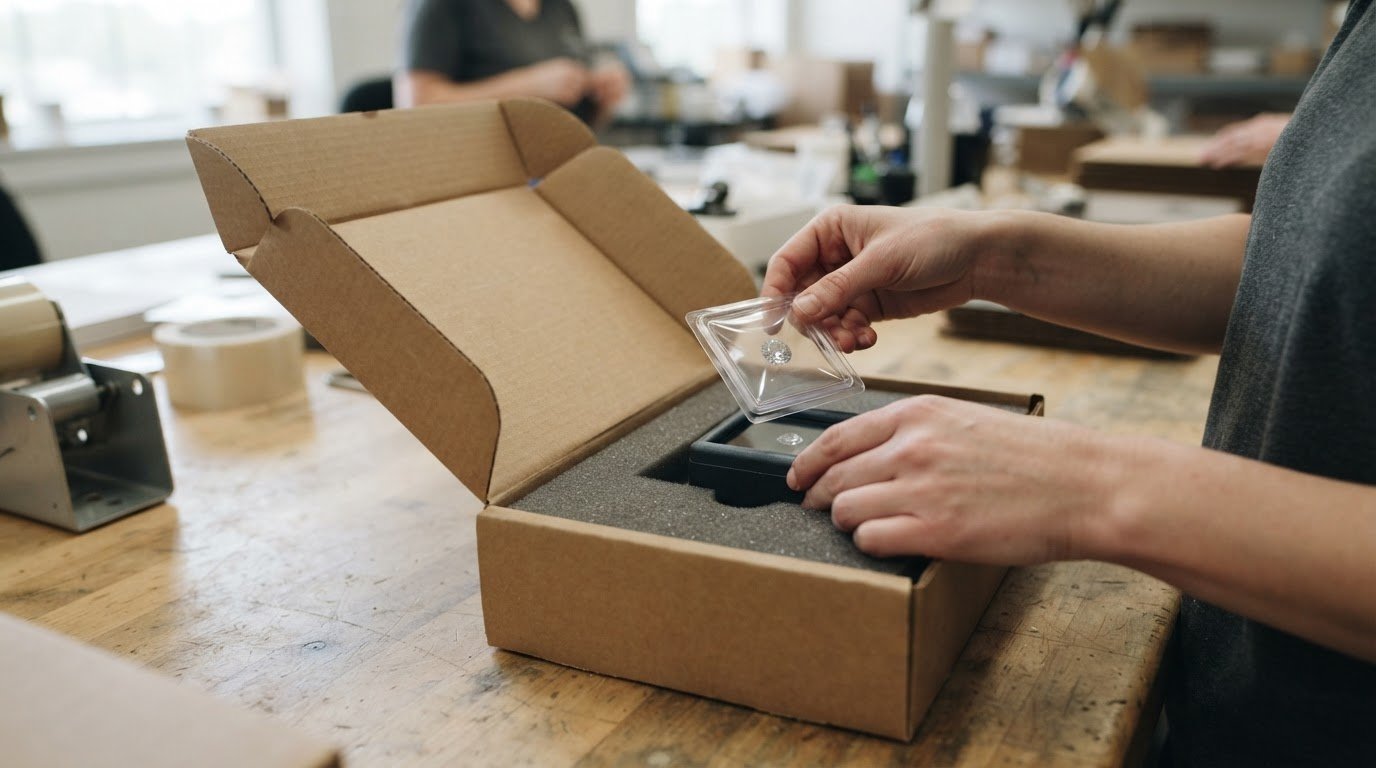
The fastest shipping label isn’t automatically the safest choice for a loose diamond. A sound plan for overnight insured shipping procedures for loose diamonds starts with confirming that the specific carrier service accepts loose diamonds and that coverage applies to the shipment. Declared value alone does not mean the parcel is insured.
It makes sense to want speed without leaving responsibility or protection unclear. This guide explains how to check carrier eligibility, understand jewelry coverage limits, and clarify declared value, claims, and return-shipping arrangements. Careful packaging, signature-controlled delivery, and thorough records can help keep the process organized from handoff to arrival.
Key Takeaways
- Confirm that the specific overnight service accepts loose diamonds before preparing a shipment.
- Separate declared value from insurance coverage, and clarify what protection applies to the diamond.
- Agree in advance who handles claims, return shipping, and responsibility for packaging and dispatch.
- Use secure packaging and keep shipment records so key details are available if a delivery problem arises.
Clarifying declared value, insurance coverage, and claim responsibility
To document chain of custody, obtain a handover receipt and acceptance scan, then arrange signature-controlled delivery and confirm the recipient will be available. For domestic U.S. shipments, consider the origin, destination, and any applicable state or local requirements alongside the carrier’s terms.
-
Check Domestic Declared-Value Limits
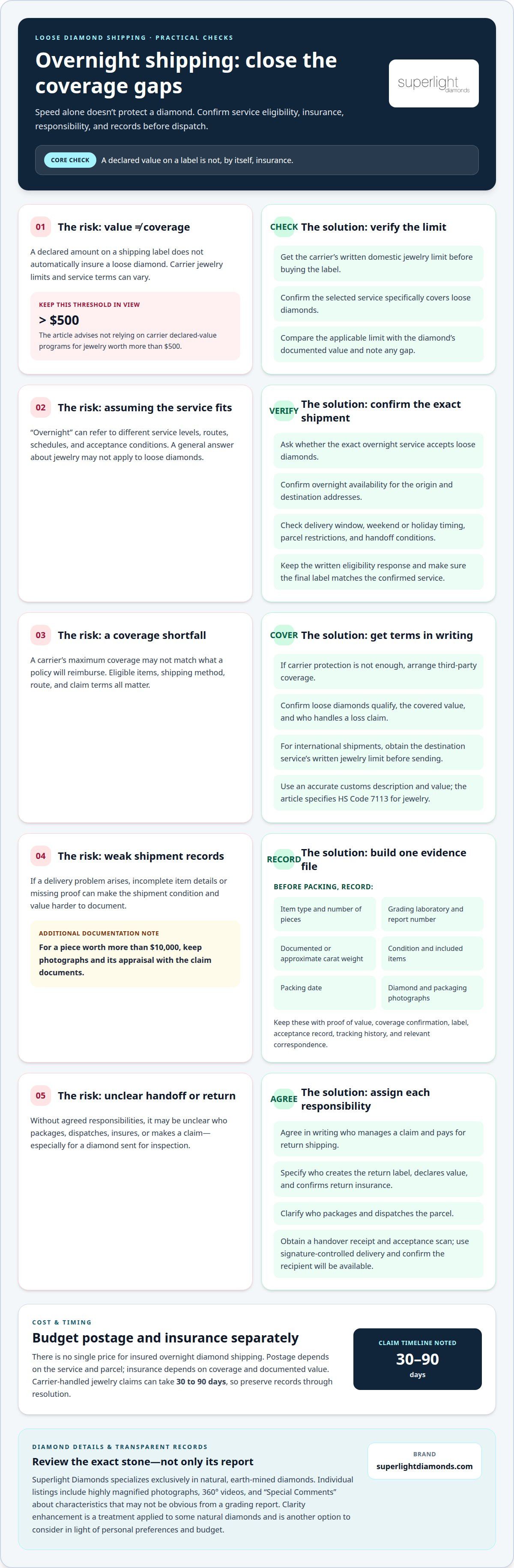
Before buying a label, get the carrier’s written domestic jewelry limit and confirm whether the selected service covers loose diamonds. Declared value is not automatic insurance, so don’t rely on carrier declared-value programs for jewelry worth more than $500. Compare the applicable limit with the diamond’s documented value, and record any coverage gap before dispatch.
-
Confirm Third-Party Insurance and Claim Responsibility
If carrier protection does not meet the shipment’s needs, arrange third-party coverage and obtain the policy terms in writing. Confirm that loose diamonds qualify, what value is covered, and who handles a loss claim. A declared value on the shipping label does not establish insurance. Keep the insurer’s coverage confirmation with the label, grading report, proof of value, and shipment photographs.
- For an international shipment, obtain the selected service’s written jewelry limit for the destination before sending the parcel. Enter an accurate description and value on the customs invoice, and use HS Code 7113 for jewelry. Keep the customs paperwork with the shipment record; the applicable carrier limit and coverage can differ by service and route.
- Before releasing a diamond for inspection, agree in writing on who manages a claim and pays for return shipping. Specify who creates the return label, the declared value, whether the return is insured, and who packages and dispatches it. Keep the acceptance proof, tracking history, coverage confirmation, correspondence, and delivery confirmation to document custody and support a claim.
Insurance limits for jewelry shipments
- Separate postage from insurance when budgeting for overnight shipping. There is no single cost for insured overnight diamond shipping: postage depends on the service and parcel, while insurance depends on the coverage and documented value. These are insurance estimates, not quotes for overnight loose-diamond shipping.
- Compare the policy limit with the diamond’s documented value. A carrier’s maximum coverage may not equal the amount recoverable under every policy. The eligible item, shipping method, and claim terms all matter. For a one-time shipment, get written confirmation that the policy covers the specific parcel, its contents, and its route. Keep that confirmation with the shipping records.
- Record the diamond’s details before packing. List the item type, number of pieces, grading laboratory and report number, documented or approximate carat weight, condition, included items, and packing date. Photograph the diamond and its packaging. For a piece worth more than $10,000, keep photographs and its appraisal with the claim documents.
- Keep a single evidence file for a potential claim. Include the grading report, proof of value, coverage confirmation, shipping label, carrier acceptance record, tracking history, item and packaging photographs, and relevant correspondence. Carrier-handled jewelry claims can take 30 to 90 days, so preserve records through resolution. This documentation links the declared value, insured amount, and shipment condition.
There is no single price: the total depends on postage, the parcel, and the insurance coverage.
Confirming carrier and service eligibility for loose diamonds
- Ask the carrier whether the exact overnight service accepts loose diamonds, rather than asking only about jewelry in general. The first step in overnight insured shipping procedures for loose diamonds is confirming eligibility for the selected service and route. Request the applicable terms in writing and keep the response with your shipping records.
- Confirm that overnight delivery is available between the shipment’s origin and destination. Service names can sound similar but have different delivery schedules or route availability. Ask which service level applies to your addresses, what its delivery window means, and whether the estimated arrival day includes weekends or holidays.
- Review the service’s acceptance conditions before selecting a label. Check for restrictions on parcel dimensions, drop-off locations, scheduled pickup, or how the shipment must be handed over. Make sure the quoted service matches the service shown on the final label, since choosing a different label may mean different terms.
- Keep the carrier’s written eligibility response alongside the service confirmation and shipment record. These details make overnight insured shipping procedures for loose diamonds specific to the actual carrier product, rather than assumptions based on a general overnight option. For a natural diamond choice, you can also explore loose diamond options while considering your shipping needs.
Superlight Diamonds
Superlight Diamonds specializes exclusively in natural, earth-mined diamonds, helping buyers compare options with clear product information. If you’re selecting a loose diamond before arranging shipment, review the actual stone’s details, not only its grading report. Individual listings include highly magnified photographs, 360° videos, and “Special Comments” that describe characteristics that may not be obvious on a report.
The selection includes Round Brilliant, Princess Cut, Cushion Cut, and Clarity Enhanced Diamonds. Clarity enhancement is a treatment applied to some natural diamonds, giving buyers another option to consider. Review the images and disclosures to choose a stone that suits your preferences and budget. Settle shipping eligibility and insurance separately with the carrier and insurer.
Contact Superlight Diamonds for help choosing a natural loose diamond.
Make Your Next Diamond Decision With Confidence
A careful plan for overnight insured shipping procedures for loose diamonds begins before a parcel is prepared: choose the diamond that suits your priorities, then align the shipment details with the carrier and insurer. Superlight Diamonds specializes exclusively in natural, earth-mined diamonds, with Round Brilliant, Princess Cut, and Clarity Enhanced options to consider. Clear listing details can help you assess a particular stone and make a choice that fits your preferences and budget.
Shipping requirements are specific to the carrier, service, and coverage selected. Keep those decisions distinct from your diamond purchase, and rely on written terms for the shipment itself. For help considering a natural loose diamond, contact Superlight Diamonds about your selection.
With a considered choice and a documented shipping plan, you can move forward with greater clarity and confidence.
Frequently Asked Questions
Quick Answer: How Do You Ship a Diamond Safely?
Choose a service that accepts loose diamonds, then package the stone securely and arrange insured, trackable delivery. Before dispatch, confirm that the recipient can accept the parcel and sign for it. Keep the grading report and transaction record together. For a single diamond, these documents help identify the item and document its value.
Should You Ship Before a Weekend or Holiday?
Plan dispatch around the recipient’s availability and the carrier’s schedule. Before a weekend or holiday, confirm the service’s operating days, delivery estimate, and acceptance cutoff. Even a scheduled overnight service can be affected by non-delivery days or holiday operations. If timing matters, choose a dispatch date when the recipient can be present to receive and sign for the parcel.
How should loose diamonds be packaged for overnight shipping?
Place the diamond in a closed inner container, then cushion it inside a rigid outer carton. Check that the inner container cannot shift and that the carton has no empty space that allows movement. Avoid letter envelopes, unsealed pouches, and lightly padded mailers. Keep the exterior plain, without wording that identifies the contents as a diamond.
Which carriers offer overnight shipping for loose diamonds?
Carrier eligibility depends on the exact service, so don’t assume that a carrier’s general overnight option accepts loose diamonds. Ask whether the specific service permits the item and provides the coverage you need. Confirm service acceptance and delivery timing in writing.
How can loose diamonds be insured for shipment, and what coverage limits apply?
Compare the diamond’s documented value with the policy’s limit and exclusions, then keep written proof of coverage. Don’t treat declared value as automatic insurance, and don’t rely on carrier declared-value programs for jewelry worth more than $500. Separate insurance terms from postage and delivery terms before dispatch.