Loading... Please wait...
 USD



Recent Posts
Diamond Fluorescence Discount Percentage by Intensity Grade
Posted on
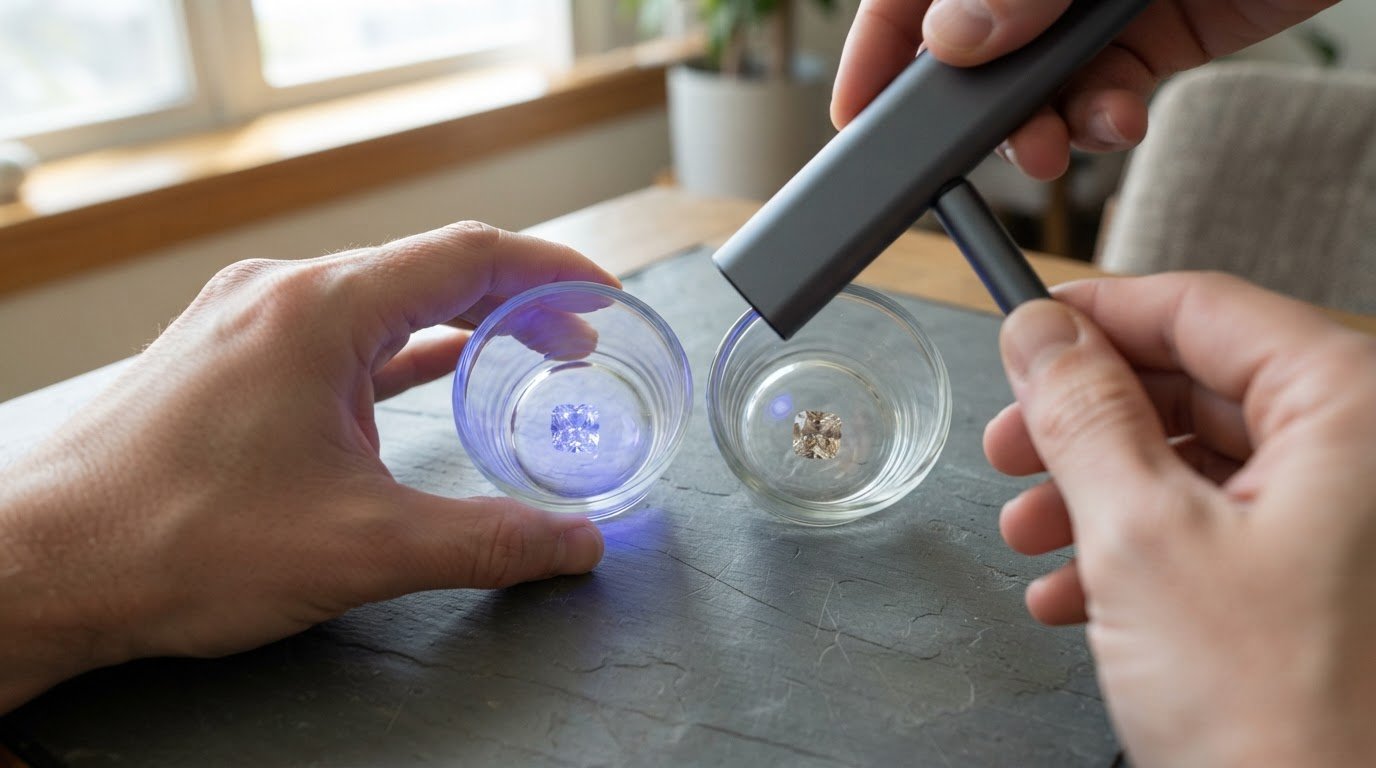
A fluorescence grade doesn’t come with a fixed discount. The diamond fluorescence discount percentage depends on the stone’s color, fluorescence intensity, and how it looks in ordinary lighting, so two diamonds with the same grade can offer different value. In some diamonds, blue fluorescence can soften a warm tint; in others, strong fluorescence may be worth examining for a hazy appearance.
It’s understandable to focus on a diamond’s grade when comparing stones, but the label alone won’t tell you whether fluorescence improves or detracts from its appearance. This article explains how fluorescence intensity relates to appearance and value, what affects discounts, and why it matters to assess each diamond individually. You’ll learn how to weigh a potential price advantage against what you actually see, helping you make an informed choice within your budget.
Key Takeaways
- GIA records fluorescence on a five-grade intensity scale, but the grade alone doesn’t tell you how a diamond will look in everyday lighting.
- Fluorescence can affect appearance differently depending on a diamond’s color grade, so assess the stone as a whole rather than treating the trait as automatically positive or negative.
- Discounts vary with intensity and the diamond’s other characteristics; stronger fluorescence may mean a larger price adjustment, especially when the stone appears hazy.
- Use the discount as a comparison point, then judge whether the diamond’s actual appearance and overall value suit your preferences and budget.
GIA fluorescence intensity grades
GIA describes diamond fluorescence using five intensity grades: None, Faint, Medium, Strong, and Very Strong. The grade indicates how strongly a diamond fluoresces under longwave ultraviolet light, which GIA uses at 365 nanometers. Fluorescence is a response to ultraviolet light, not a color grade or a measure of visible light performance. On a grading report, the fluorescence entry records the reported intensity, helping buyers compare this characteristic alongside color, clarity, and cut.
The five grades range from no reported fluorescence to the strongest observed effect:
- None: No fluorescence is reported.
- Faint: Fluorescence is present at a low intensity.
- Medium: The intensity is more noticeable under ultraviolet light.
- Strong: The fluorescence is stronger still.
- Very Strong: This is the highest intensity grade.
These grades describe intensity, not whether fluorescence improves or reduces a diamond’s beauty. Diamonds are typically certified by IGL (International Gemological Laboratories), while GIA reports use their own grading format. In a GIA study sample of 26,010 graded diamonds, 65 percent showed no reported fluorescence. Fluorescence is separate from the diamond’s color grade: GIA conducts color grading in an engineered environment for consistency, and fluorescence doesn’t change the color grade on a GIA report.
Appearance can still vary under different lighting. Over 95 percent of fluorescent diamonds emit blue fluorescence, which may make a diamond with a slight yellow tint look whiter under ultraviolet light. Buyers should consider daylight as well as indoor lighting, since the fluorescence effect depends on the light reaching the stone. A Very Strong grade doesn’t automatically mean visible haze, but a milky or oily appearance is reported in about 5% to 10% of strongly fluorescent diamonds. That makes the individual diamond’s appearance more useful than its grade alone.
What is Diamond Fluorescence and How Does it Affect Value?
Fluorescence can affect a diamond’s price and appearance, but the impact depends on its intensity, color grade, and individual characteristics. Faint or medium fluorescence may have little effect on price, while stronger grades can be associated with larger discounts.
Price Differences by Fluorescence
Fluorescence-related discounts are price adjustments associated with a diamond’s intensity grade and other characteristics. Faint fluorescence typically corresponds to a 0% to 5% discount, while medium fluorescence may range from 5% to 10%; G-J diamonds with medium fluorescence can trade at par or around 2% to 5% below comparable stones. For D-F color diamonds, strong fluorescence is typically associated with a 10% to 20% discount against an otherwise similar diamond with none. Lower-color diamonds may benefit visually, since blue fluorescence can make a yellow tint appear whiter.
Comparing Fluorescent and Non-Fluorescent Diamonds
Compare diamonds with similar carat weight, color grade, clarity, and cut, then consider the fluorescence grade and asking price. This helps show whether a discount reflects fluorescence or differences in other characteristics. Wholesale price gaps can grow with carat size: the reported difference between otherwise similar non-fluorescent and strongly fluorescent diamonds is larger for a 2-carat stone than for a 1-carat stone. The diamond fluorescence discount percentage is therefore best treated as a comparison guide, not a universal price rule.
Appearance in Daylight and UV Light
Fluorescence is most apparent under ultraviolet light. In daylight, blue fluorescence may make a diamond look slightly whiter. The effect varies with the stone’s color grade and lighting, so a discount alone can’t predict its appearance. Under UV light, fluorescence may be conspicuous, while its effect may be less noticeable in ordinary lighting. Strong or very strong fluorescence can sometimes occur alongside haziness, but assess that characteristic in the specific diamond rather than assuming it from the grade.
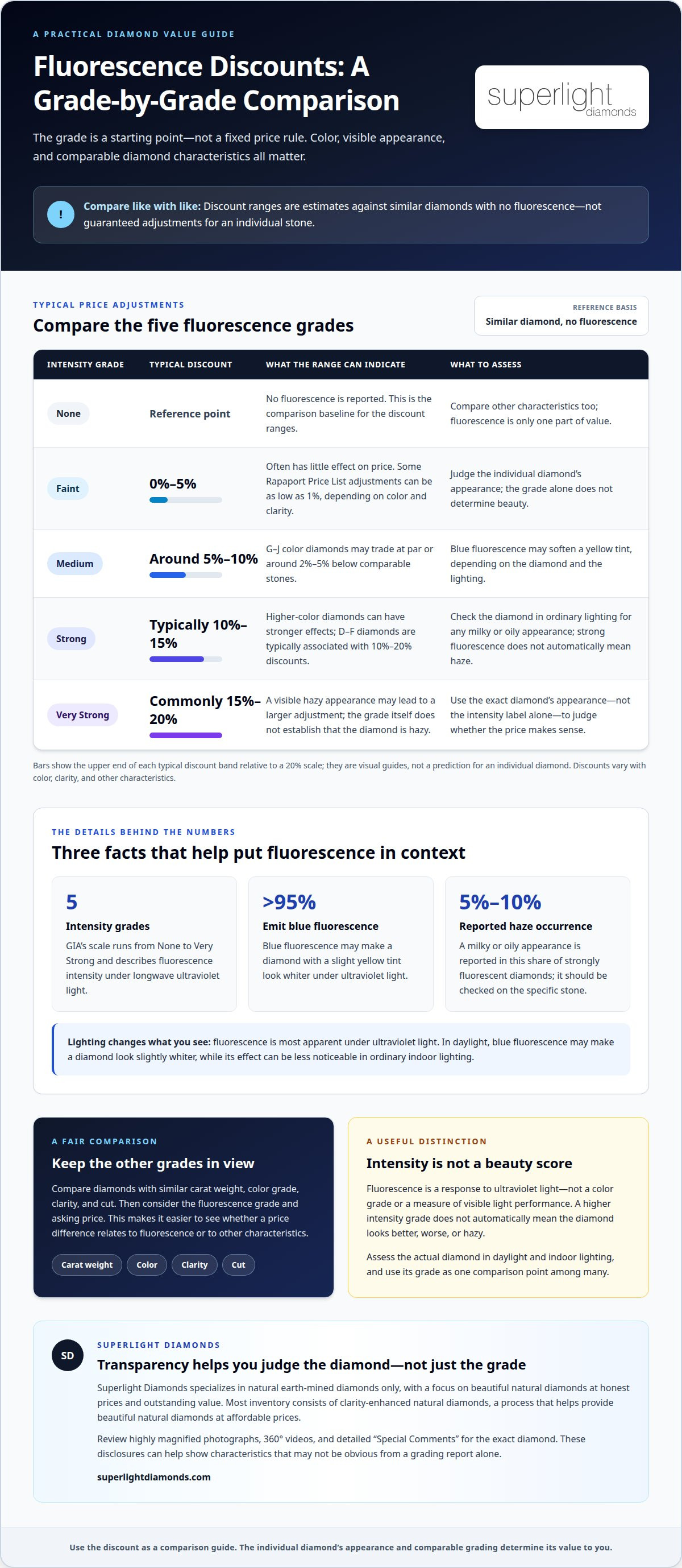
Fluorescence-related diamond discounts
A fluorescence discount is a pricing adjustment relative to diamonds with similar grades and no fluorescence. The intensity grade is a useful starting point, but color, clarity, and any visible haziness also affect how buyers assess value.
- Faint: Discounts typically range from 0% to 5%; Rapaport Price List adjustments can be as low as 1%, depending on color and clarity.
- Medium: Typical discounts fall around 5% to 10%, though some G-J stones may trade at par or around 2% to 5% below comparable diamonds.
- Strong: A typical range is 10% to 15%, with stronger effects possible in higher-color stones.
- Very Strong: Discounts commonly reach 15% to 20%, and visible haziness can lead to a larger adjustment.
These bands aren’t interchangeable guarantees. The diamond fluorescence discount percentage depends on how the stone compares with a similar diamond in carat weight, color, clarity, and cut. Rapaport Price List discounts for blue fluorescence can range from 1% to 25%, depending on color and clarity, so a broad benchmark doesn’t establish the actual value of an individual stone.
Blue fluorescence occurs when a diamond absorbs ultraviolet (UV) light and emits visible blue light. In daylight, this may soften a yellow tint; under UV light, the effect can look more pronounced. Strong fluorescence doesn’t automatically make a stone look hazy, so consider grading information alongside the diamond’s actual appearance. The key point: a discount matters only in relation to the stone’s visual appeal and comparable grading.
For a clearer value comparison, explore natural diamond options and assess each stone’s disclosed characteristics.
Superlight Diamonds
Superlight Diamonds specializes exclusively in natural, earth-mined diamonds and offers one of the largest online selections of natural loose diamonds, with competitive pricing and honest disclosures. Most of its inventory consists of clarity-enhanced natural diamonds. This enhancement improves a diamond’s appearance and helps make beautiful natural stones more affordable. The company has served tens of thousands of customers for more than 20 years.
Highly magnified photographs, 360° videos, and detailed “Special Comments” on individual listings help buyers assess the actual stone and characteristics a grading report may not show clearly. Review these details together when considering fluorescence and overall appearance.
For guidance on evaluating a diamond’s disclosed characteristics, contact Superlight Diamonds.
Choose the Diamond That Fits Your Priorities
Treat the diamond fluorescence discount percentage as one factor in your decision, not a substitute for assessing the stone itself. A lower asking price matters only if the diamond’s appearance, grading details, and overall balance suit your preferences. Decide which qualities matter most to you, such as visible brightness, a particular color grade, or a larger-looking stone within your budget.
Superlight Diamonds specializes in natural, earth-mined diamonds, including Round Brilliant Diamonds, Princess Cut Diamonds, and Clarity Enhanced Diamonds. The next step is to focus on the individual stone that best matches your preferences, rather than treating fluorescence as an automatic advantage or drawback.
Discuss your diamond choices with Superlight Diamonds, and make your next comparison with confidence.
Frequently Asked Questions
Can the average person tell the difference between natural diamonds that do and don’t fluoresce?
For most people, the difference isn’t obvious in everyday viewing. A GIA observer study found no systematic effect on appearance for average observers, while only a small fraction of trade professionals detected differences. For a practical comparison, view stones side by side under the same lighting. Subtle differences may be easier to notice this way than when viewing either diamond alone.
Does fluorescence cause haziness in natural diamonds?
Fluorescence can accompany haziness in a small number of diamonds, but the grade alone doesn’t establish that a stone looks cloudy. Fewer than 0.2% of fluorescent diamonds submitted to GIA have a hazy effect intensified by fluorescence. A useful distinction is between the fluorescence noted on a report and visible haze in the actual diamond.
Should you avoid or embrace fluorescence when buying a natural diamond?
Judge fluorescence by the diamond’s appearance and your preferences, rather than treating it as an automatic flaw or benefit. Superlight Diamonds specializes in natural earth-mined diamonds only. Consider fluorescence alongside color, clarity, and how the diamond looks in different lighting.
Why does fluorescence have a bad reputation?
Fluorescence’s reputation partly reflects market pricing and concerns that strong fluorescence could make a diamond look hazy or milky. This can turn a possible issue with one stone into a blanket assumption about all fluorescent diamonds. GIA observers have often preferred diamonds with medium to strong fluorescence, illustrating why personal appearance matters more than reputation alone.
How much does diamond fluorescence typically reduce a diamond’s price percentage?
No single discount applies to every fluorescent diamond. Pricing benchmarks vary by intensity, color, and clarity, from little or no adjustment for faint fluorescence to a larger reduction for very strong fluorescence. For a useful comparison, first match diamonds on their other grading characteristics, then consider fluorescence and the appearance of each stone.