Loading... Please wait...
 USD
USD


Recent Posts
Marquise Cut vs. Pear Shaped Diamond: Which Offers the Best Carat Illusion?
Posted on
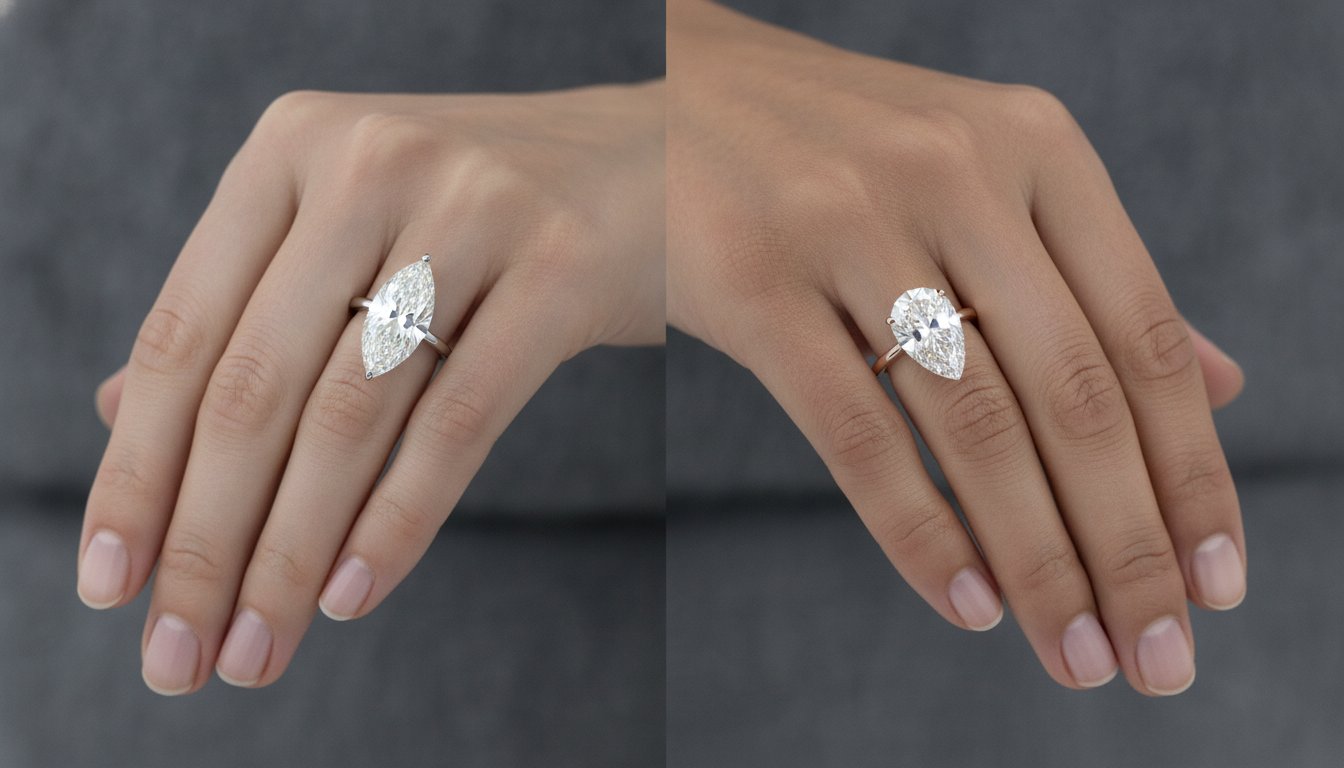
A higher carat weight doesn't always mean a larger diamond; in fact, much of that expensive weight is often tucked away in a deep pavilion where it's completely invisible. It's a common frustration for value-conscious buyers who feel priced out of traditional round cuts, only to realize they're paying for "hidden" mass. When you evaluate a marquise cut vs pear shaped diamond, the focus shifts from raw weight to visual face-up area. These elongated silhouettes are designed to maximize surface area, creating a "big look" that can appear 10% to 25% larger than a round stone of the same weight.
In this guide, we'll help you decide which shape offers the best carat illusion for your specific budget. You'll learn how to save 30% to 50% by choosing clarity-enhanced natural diamonds that prioritize sparkle and size over microscopic grading details. We'll also explain how to use our IGL certification data and high-magnification 360° videos to ensure your selection is eye-clean and brilliant. By the end, you'll have the veteran expertise needed to find a stunning, earth-mined diamond that feels much more substantial than its price suggests.
Key Takeaways
- Understand how elongated silhouettes maximize face-up area, allowing you to achieve a "big look" without paying for the hidden weight found in deeper round diamonds.
- Discover why a marquise cut vs pear shaped diamond comparison often favors the marquise for pure surface area, while the pear offers a versatile hybrid style.
- Learn to evaluate light performance and manage the bow-tie effect by reviewing actual 360° videos and high-magnification photography of the exact stone.
- Explore how clarity enhancement provides a significant value advantage, enabling you to purchase a larger, eye-clean natural diamond for 30% to 50% less than traditional options.
- Gain confidence in online purchasing by utilizing professional "Special Comments" and objective IGL certification to verify a diamond's visual impact and quality.
Face-Up Area: Why Both Shapes Look Larger Than Rounds
Evaluating a marquise cut vs pear shaped diamond requires moving past the carat weight on a certificate and looking at the actual footprint of the stone. Most buyers are surprised to learn that carat is a measure of weight, not physical size. In a traditional round brilliant diamond, a significant portion of that weight is "hidden" in the depth of the stone to ensure light reflects correctly. This mass sits below the girdle and becomes invisible once the diamond is set in a ring. You're essentially paying for weight you can't see.
Fancy shapes behave differently. Because they are cut with shallower proportions, they spread their weight horizontally rather than vertically. This creates a much larger visual impact for every point of carat weight. While a round diamond focuses on depth for its sparkle, elongated shapes prioritize surface area. By choosing these cuts, you're effectively bypassing the "hidden weight" tax and putting your budget toward the parts of the diamond people actually notice.
The Science of Surface Area
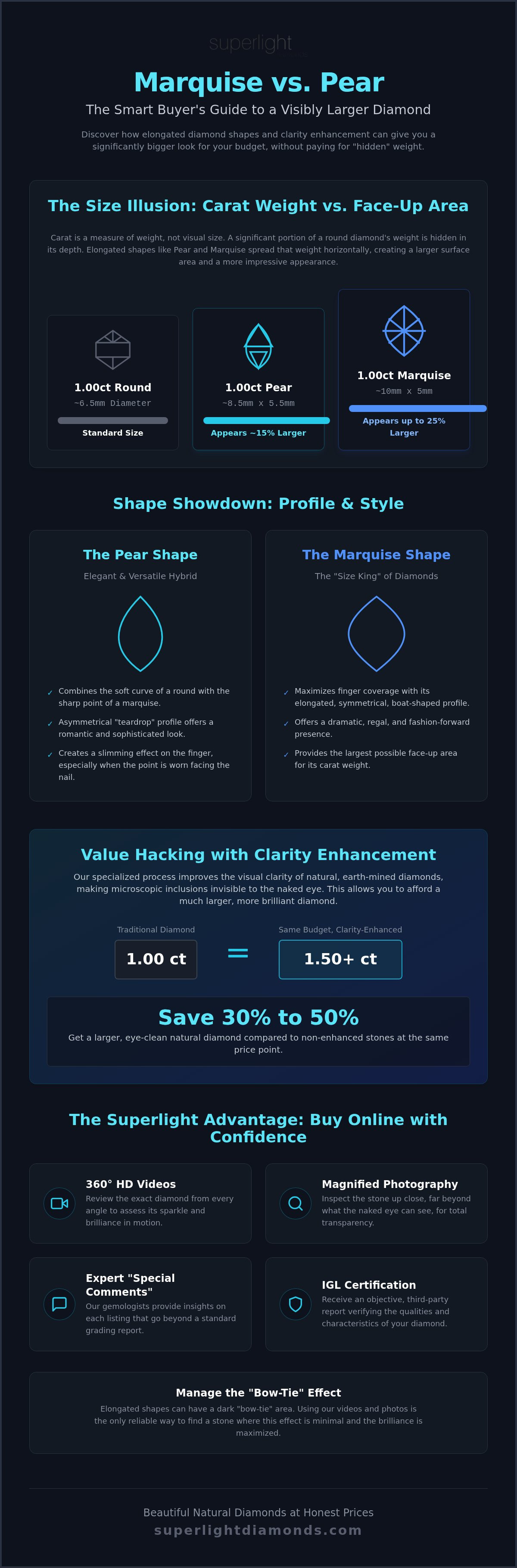
Face-up area is the visible dimensions of the diamond when it's set in jewelry. When comparing a 1.00ct round brilliant to a 1.00ct pear or marquise, the difference is striking. A standard round diamond typically measures about 6.5mm across. In contrast, a well-proportioned pear shape might measure 8.5mm by 5.5mm. The marquise is even more dramatic, often stretching to 10mm in length. This strategic Diamond cut allows these fancy shapes to appear 10% to 25% larger than a round stone of identical weight. At Superlight Diamonds, we use this to our advantage by sourcing clarity-enhanced stones that offer a massive "big look" at a fraction of the cost of smaller, standard round diamonds.
Finger Coverage: Slenderizing the Hand
The visual appeal of a marquise cut vs pear shaped diamond extends to how the stone interacts with the wearer's hand. Both shapes provide superior finger coverage, meaning they take up more "real estate" on the finger than square or round cuts. This vertical orientation creates a lengthening illusion that makes the diamond look larger while making the finger appear more slender.
The pear shape offers a sophisticated, asymmetrical profile that blends the soft curves of a round with the sharp point of a marquise. However, the marquise cut is widely considered the "size king" of the diamond world. Its two pointed ends stretch further across the finger than any other shape, creating a bold and fashion-forward presence. When you combine these elongated silhouettes with our clarity-enhancement process, you can often step up to a 1.50ct or 2.00ct appearance while staying within a 1.00ct budget. Our IGL-certified listings include detailed "Special Comments" to help you identify the specific stones that offer the most impressive face-up dimensions.
Silhouette and Style: Comparing the Pear and Marquise Profiles
When you weigh the options of a marquise cut vs pear shaped diamond, you're choosing between two distinct silhouettes that offer very different aesthetic experiences. While both provide the finger-lengthening benefits discussed previously, their physical outlines dictate the overall character of the jewelry. Understanding the geometry of these fancy shapes is essential for finding a stone that complements your hand shape and personal style. At Superlight Diamonds, our 20 years of experience has shown that the "personality" of a diamond is often found in the subtle curves of its profile.
The Elegant Asymmetry of the Pear Cut
The pear shape is a unique hybrid. It combines the soft, brilliant curves of a round diamond with the tapered point of a marquise. This "teardrop" profile is inherently asymmetrical, offering a romantic and sophisticated look that appeals to many modern brides. To ensure a beautiful silhouette, you should examine the "wings" and "shoulders" of the stone. Ideally, these should be gently rounded without appearing too flat or too bulged. Because the shape is asymmetrical, it offers versatility in how it's worn, though most prefer the point facing the fingernail to maximize the slimming effect.
The Bold Symmetry of the Marquise Cut
The marquise cut is defined by its perfect symmetry. Often called a "navette" or boat-shaped stone, it features two pointed ends and an elliptical center. This shape offers a dramatic, regal presence that has been a staple of vintage and high-fashion designs for decades. Symmetry is the most critical factor here; the two points must align perfectly to ensure the stone looks balanced on the finger. It's an excellent choice for a solitaire setting, as the stone draws the eye evenly along its length, creating a powerful focal point that feels both classic and bold.
Choosing the right silhouette often depends on the proportions of your hand. A marquise cut works exceptionally well for shorter fingers, as its elongated points create the most dramatic lengthening effect possible. Conversely, a pear shape is often favored by those with wider hands, as the rounded base provides a softer transition while the point still adds length. Proportions are key to these silhouettes. While the GIA Diamond Quality Factors provide a baseline for understanding how cut impacts beauty, the visual "personality" of a fancy shape is best judged through high-magnification media. This is why our listings include "Special Comments" that describe the specific silhouette and proportions of each stone, ensuring you find a shape that meets your expectations.
We recommend viewing our 360° videos of clarity-enhanced pear and marquise diamonds to see how these distinct profiles catch the light and interact with different settings.
Managing the Bow-Tie Effect in Elongated Diamonds
When you evaluate a marquise cut vs pear shaped diamond, you'll inevitably encounter the "bow-tie effect." This term describes a dark, bow-tie shaped shadow that appears across the center of many elongated fancy cuts. It isn't a physical inclusion or a defect in the diamond's material. Instead, it's a result of how light interacts with the specific angles of an elongated pavilion. While some retail competitors portray any bow-tie as a critical flaw, our 20 years of experience suggests a more nuanced reality. A subtle shadow can actually provide necessary contrast, which makes the surrounding facets appear even more brilliant.
What Causes the Bow-Tie Shadow?
The physics behind this effect is straightforward. In the center of a marquise or pear shape, the facets are often cut at different angles than the facets at the tapered ends. This can cause light to pass through the bottom of the stone rather than reflecting back to your eye. When this happens, a dark area forms. A well-cut stone will have a minimal shadow that disappears as the diamond moves. However, an "aggressive" bow-tie remains dark regardless of the viewing angle, creating a dead spot that kills the stone's overall sparkle. Symmetry and depth play massive roles here; stones that are too shallow or poorly aligned will almost always exhibit a more distracting shadow.
Using 360° Video to Screen for Light Leakage
Static photographs are often misleading because a photographer can easily tilt the stone to hide a bow-tie. This is why transparency is a core pillar of our business model. We provide highly magnified 360° videos for every diamond in our inventory, allowing you to see exactly how light moves through the stone. You don't need to be a gemologist to spot a bad bow-tie when you can see the diamond in motion. By focusing on visual beauty rather than just a grading report, you can find a stone that "faces up" brilliantly without paying for microscopic perfection.
Many of our clients choose Diamond enhancement to maximize their budget. This process ensures a beautiful, eye-clean appearance while allowing for a much larger stone than traditional retail prices would permit. If you're still deciding between shapes, our Guide to Buying Round Brilliant Loose Diamonds Online in 2026 offers additional insights into how light performance differs across various cuts. Always look for the "Special Comments" on our listings, where we specifically note if a stone has an exceptionally clean center or a particularly lively light return.
Value Hacking: Using Clarity Enhancement for a Bigger Stone
Choosing between a marquise cut vs pear shaped diamond is already a strategic move for maximizing your visual footprint. However, to truly hack the value of your purchase, you should consider the advantages of clarity enhancement. This process allows you to prioritize visual beauty and scale without paying the massive premiums associated with rare, microscopically perfect stones. While many traditional retailers ignore or discourage this option to protect high-margin inventory, we believe in providing a transparent path to owning a large, impressive natural diamond that fits a realistic budget. It's the most effective way to ensure your diamond is eye-clean and brilliant without compromising on size.
Natural Diamonds Without the 'Museum Price'
Our selection process focuses on natural earth-mined diamonds with specific types of inclusions that respond beautifully to enhancement. By treating these natural characteristics, we create stones that appear eye-clean to the naked eye, looking identical to their more expensive counterparts. For a deeper dive into the technical side of this process, read our Clarity Enhanced Diamonds: The Savvy Buyer’s Guide to Natural Brilliance. We steer our clients toward IGL-certified stones that offer the best visual impact, rather than paying for microscopic perfections that don't contribute to the diamond's actual sparkle.
Comparing Price-to-Size Ratios
The "Carat Jump" is perhaps the most significant benefit of this approach. It's common for our customers to find a 1.50ct clarity-enhanced diamond for the same price as a 1.00ct unenhanced stone. Because a marquise cut vs pear shaped diamond already provides a larger visual footprint than a round cut, this effect is even more pronounced. You're getting a stone that not only weighs more but also looks significantly larger on the hand. Clarity enhancement is a permanent and stable process designed for everyday wear, ensuring your diamond remains brilliant for a lifetime. This method focuses on transparency and visual appeal rather than market rarity.
With over 20 years of experience and tens of thousands of satisfied customers, we've perfected the art of sourcing stones that offer 30% to 50% savings compared to traditional retail. You can browse our current inventory of clarity enhanced natural diamonds to see how much more size your budget can actually buy.
The Superlight Advantage: Buying Fancy Shapes with Confidence
Purchasing a marquise cut vs pear shaped diamond online requires more than just a basic understanding of the four Cs. It demands a level of transparency that traditional retail models often fail to provide. We eliminate the unnecessary retail markup by operating as a direct e-commerce platform; often utilizing no-reserve auctions to ensure our clients receive the best possible value. With over 20 years of experience and more than 21,000 satisfied clients since 2001, we've developed a system that prioritizes honest disclosure over high-pressure sales tactics. This veteran expertise is particularly crucial when sourcing fancy shapes, where visual proportions matter just as much as technical grades.
IGL Certification and Transparent Grading
Every diamond in our inventory carries a report from International Gemological Laboratories (IGL). We present IGL certification as a reliable, expert-led standard that provides an objective baseline for your purchase. When you review an IGL report for an elongated cut, you should look specifically at the symmetry, polish, and physical dimensions. These factors dictate how the stone will actually look on your hand. While some buyers get distracted by microscopic clarity details, we encourage you to focus on the color and cut quality that impact the stone's daily brilliance. For those looking to optimize their selection, The Ultimate Diamond Color Scale Guide: Maximizing Beauty and Value in 2026 provides a roadmap for choosing a shade that looks white without the premium price of a "colorless" grade.
The Power of 'Special Comments' and Magnified Media
The most significant challenge of buying fancy shapes online is the reliance on generic stock photos. We solve this by providing highly magnified 360° videos and actual photographs of the exact diamond you're buying. This media allows you to inspect the stone's silhouette and light performance from every angle, effectively replacing the need for an in-person showroom visit. Our experts also provide "Special Comments" on individual listings. These notes are essential for identifying stones that "face up larger" than their carat weight indicates. If a 1.00ct pear shape has the surface area typically found in a 1.20ct stone, our team will highlight that value for you. This level of detail ensures you aren't just buying a certificate; you're buying a visually impressive natural diamond. If you're ready to start your search, our guide on Mastering the No Reserve Diamond Auction: A Buyer’s Guide to Maximum Value explains how to use our transparent listings to secure a stunning stone at an honest price.
Find Your Perfect High-Impact Diamond
Deciding between a marquise cut vs pear shaped diamond comes down to your personal style and the silhouette that best flatters your hand. Both shapes successfully eliminate the "hidden weight" problem found in round diamonds, providing a much larger visual footprint for every carat you purchase. You don't have to pay for microscopic perfections that are invisible to the naked eye. By choosing clarity-enhanced natural stones, you can secure an even more impressive "big look" while staying within your target budget.
We invite you to leverage our 20 years of veteran expertise to find a stone that truly stands out. As a Top Rated eBay Seller with over 21,000 satisfied clients since 2001, we prioritize total transparency in every transaction. You can find your high-impact Marquise or Pear Diamond at Superlight Diamonds and inspect every detail through the magnified 360° video provided on every listing. Start your search today and discover how beautiful an honest, value-driven natural diamond can be.
Frequently Asked Questions
Does a marquise diamond look larger than a pear shaped diamond?
Generally, a marquise diamond offers the largest face-up area of any diamond shape. Its weight is spread across a longer, narrower silhouette with two pointed ends, which maximizes finger coverage. While a pear shape also looks significantly larger than a round cut of the same weight, the marquise is often considered the "size king" for creating the most dramatic carat illusion on the hand.
Which is more expensive: a marquise or a pear cut diamond?
In traditional retail markets, the marquise cut can carry a premium due to limited supply and the technical skill required for cutting. However, both shapes are typically 15% to 35% more affordable than round diamonds. When you compare a marquise cut vs pear shaped diamond in our inventory, you'll find that clarity enhancement allows you to secure either shape at a significant discount compared to unenhanced stones.
Are clarity enhanced marquise and pear diamonds real natural diamonds?
Yes, every clarity-enhanced diamond we offer is a 100% natural, earth-mined stone. The enhancement process targets natural characteristics within the diamond to improve its visual clarity and brilliance. This makes the stone eye-clean and beautiful for everyday wear. It's an honest, transparent way for buyers to maximize their budget and own a larger natural diamond without paying for microscopic perfections they can't see.
Is a pear shaped diamond more fragile than a marquise cut?
Neither shape is inherently more fragile, but both have delicate points that require proper protection. A pear shape has one point, while a marquise has two. To ensure your diamond remains secure, we recommend settings with V-prongs that shield these tapered ends from impact. Because we've served over 21,000 satisfied clients since 2001, we've seen that both shapes are perfectly durable for daily wear when set correctly.
What is the best length-to-width ratio for a marquise diamond?
The classic length-to-width ratio for a marquise diamond typically falls between 1.75 and 2.15. Proportions in this range ensure the stone looks balanced and elegant rather than too "stubby" or too narrow. We provide the exact dimensions for every stone we sell, and our experts often include "Special Comments" to help you identify which specific diamonds offer the most impressive visual footprint for their carat weight.
How do I avoid a bad bow-tie effect in a pear shaped diamond?
The most reliable way to screen for a distracting bow-tie is to view the diamond in motion. Static photos often hide these shadows, but our magnified 360° videos reveal exactly how light moves through the stone. A slight bow-tie is a natural part of an elongated cut's character, but you want to avoid "dead" spots that don't sparkle. Our transparent media ensures you can verify light performance before buying.
Why does Superlight Diamonds use IGL certification?
We utilize International Gemological Laboratories (IGL) because they provide an objective and professional standard for diamond grading. IGL reports are technically proficient and focus on the factors that truly impact a diamond's beauty, such as symmetry and polish. This allows us to steer our customers toward visually stunning natural diamonds that offer better value than stones graded by labs that focus on microscopic rarity and higher markups.
Can I buy these fancy shapes through no-reserve auctions?
Yes, we frequently sell marquise and pear shaped diamonds through no-reserve auctions on eBay, where we maintain Top Rated Seller status. This auction model allows you to find market-driven pricing and incredible value on high-quality natural stones. Every auction listing includes the same level of transparency as our fixed-price inventory, including high-magnification videos and detailed expert notes to help you bid with total confidence.